
Published 2 November 2026 · By Jatin Dua, Broker of Record, RE/MAX Quantum Realty
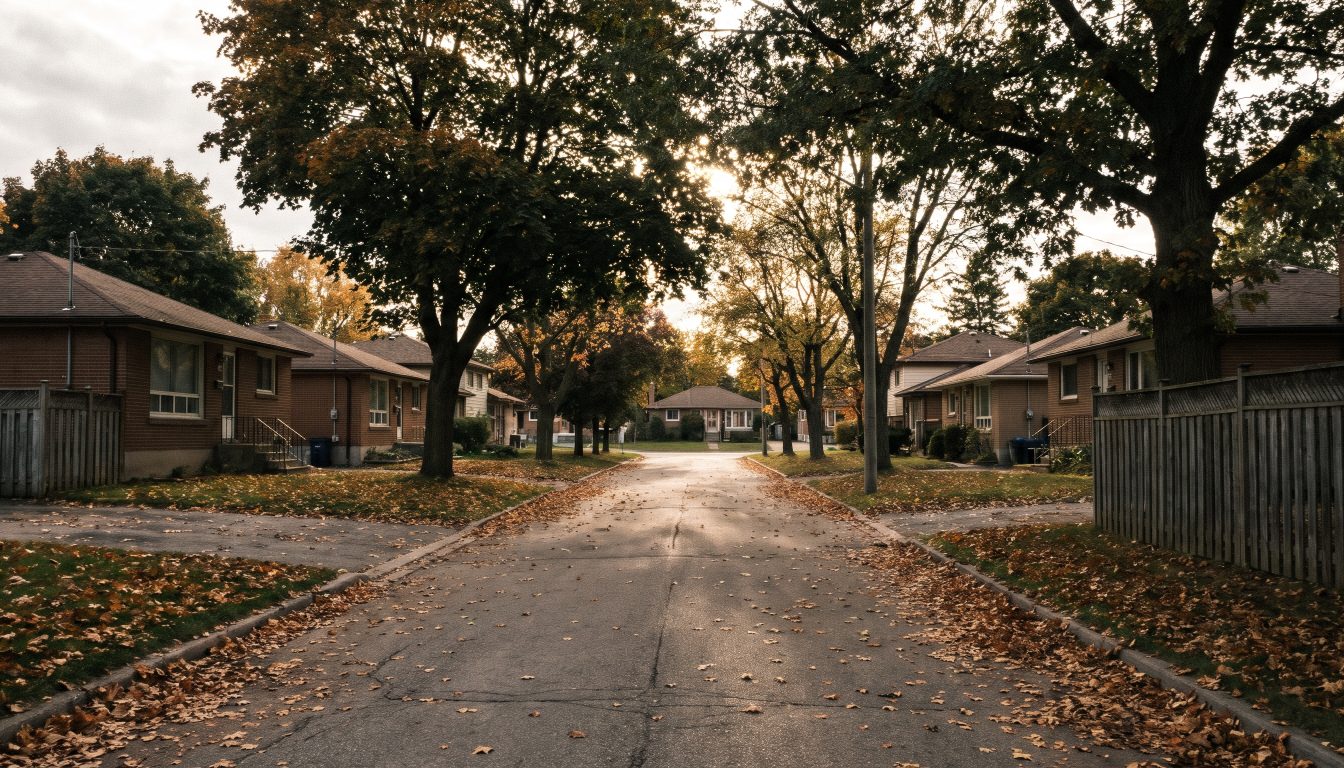
Scarborough is usually cheaper for detached homes, with a combined average of about $1.02 million from January to October 2026 against $1.13 million in Pickering, and its 2026 tax rate is far lower (0.767311% vs 1.337288%). Pickering avoids Toronto’s municipal land transfer tax. Pick Scarborough for subway access and lower yearly tax; Pickering for lower closing costs and newer homes.
This guide is for buyers choosing between Scarborough and Pickering in 2027, and for Scarborough owners thinking about crossing the Rouge River into Durham Region. You will get side-by-side prices by home type, the big property tax and land transfer tax difference, the commute facts, and a plain answer on who each place suits.
How do we compare Scarborough with Pickering?
Pickering is its own city in Durham Region, with 99,186 people in the 2021 census, so the Toronto Regional Real Estate Board (TRREB) reports it as one area. Scarborough is the eastern part of the City of Toronto, with more than 600,000 people, and TRREB splits it into eight districts. To build Scarborough’s numbers I combined E04, E05, E06, E07, E08, E09, E10 and E11.
Those districts cover Clairlea, Dorset Park, Kennedy Park and Wexford (E04), L’Amoreaux and Tam O’Shanter (E05), Birchcliffe-Cliffside and Oakridge (E06), Agincourt and Milliken (E07), Cliffcrest, Guildwood and Scarborough Village (E08), Bendale, Morningside and Woburn (E09), Highland Creek and West Hill (E10), and Malvern (E11). Because there is no single Scarborough median, I show the range of district medians and a combined average weighted by sales.
Scarborough vs Pickering: how do prices compare side by side?
| Jan–Oct 2026 | Scarborough (E04–E11) | Pickering |
|---|---|---|
| Detached median | $866,500 to $1,148,250 by district | $1,039,999 (−8.0%) |
| Detached average | $1,022,406 (−8.4%) | $1,130,377 (−6.3%) |
| Detached sales | 1,598 (−8.0%) | 546 (−0.2%) |
| Semi-detached average | $835,498 (−6.6%) | $810,642 (−5.8%) |
| Freehold townhouse average | $798,600 (−9.2%) | $793,993 (−6.5%) |
| Condo apartment median | $380,000 to $569,500 by district | $470,000 (−13.6%) |
| Condo apartment average | $472,481 (−10.3%) | $489,979 (−13.8%) |
| Average days on market, detached | 26 | 26 |
| Average days on market, condo apartment | 39 | 33 |
| 2026 total residential tax rate | 0.767311% | 1.337288% |
| Municipal land transfer tax | Yes (Toronto) | No |
| English school boards | TDSB and TCDSB | DDSB and DCDSB |
Source: TRREB MLS data via REALM, January–October 2026 vs the same period of 2025 (changes in brackets); Scarborough averages are weighted by each district’s sales. Tax rates: City of Toronto and City of Pickering, 2026.
A median is the middle sale; an average can be pulled up by a few expensive homes. Use these as a guide to each area, not as a value for one house.
Is Scarborough cheaper than Pickering?
For detached houses, usually yes. The combined detached average was $1,022,406 in Scarborough and $1,130,377 in Pickering, about $108,000 apart. Every Scarborough district’s detached median was below Pickering’s $1,039,999 except E05 (L’Amoreaux, Tam O’Shanter), at $1,148,250. The cheapest were E09 (Bendale, Woburn) at $866,500 and E04 (Wexford, Dorset Park) at $870,000.
For attached homes the two are close. Freehold townhouses averaged about $799,000 in Scarborough and $794,000 in Pickering. Semis averaged about $835,000 and $811,000. Condo apartments averaged $472,481 in Scarborough and $489,979 in Pickering, and Scarborough had far more choice, with 916 condo apartment sales against 117.
Detached medians by Scarborough district
| District | Detached median | Sales |
|---|---|---|
| E04 Wexford, Dorset Park, Kennedy Park | $870,000 | 307 |
| E05 L’Amoreaux, Tam O’Shanter, Steeles | $1,148,250 | 176 |
| E06 Birchcliffe-Cliffside, Oakridge | $955,000 | 180 |
| E07 Agincourt, Milliken | $1,003,000 | 153 |
| E08 Cliffcrest, Guildwood, Scarborough Village | $938,750 | 166 |
| E09 Bendale, Morningside, Woburn | $866,500 | 248 |
| E10 Highland Creek, West Hill | $1,025,000 | 249 |
| E11 Malvern | $910,000 | 119 |
Source: TRREB MLS data via REALM, January–October 2026.
Which has lower property taxes, Scarborough or Pickering?
Scarborough, by a wide margin. As part of the City of Toronto, Scarborough’s 2026 residential rate is 0.767311%. Pickering’s 2026 total is 1.337288%: 0.403528% for the City of Pickering, 0.780760% for Durham Region and 0.153% for education.
In dollars, a home assessed at $700,000 would pay about $5,371 a year in Scarborough and about $9,361 in Pickering at the 2026 rates, close to $4,000 more. Your real bill depends on your home’s assessed value from the Municipal Property Assessment Corporation (MPAC), not the price you pay, so ask for the seller’s latest bill.
But Toronto charges a second land transfer tax
Buying in Scarborough means paying both the Ontario land transfer tax and the Toronto municipal land transfer tax. In Pickering you pay only the Ontario tax. On a $1,000,000 home, each tax is $16,475, so a Scarborough buyer pays $32,950 at closing and a Pickering buyer pays $16,475. First-time buyers can get up to $4,000 back on the Ontario tax. In my example, Pickering’s higher yearly tax would use up that one-time saving in about four years. See our guide to Toronto’s municipal land transfer tax for the full rates.
Instant Home Valuation
What’s your home
worth today?
Answer six quick questions and get an instant value range built from current Toronto & GTA sale data — property type, size, condition, lot and location all weighted the way a real pricing conversation weighs them. Takes about ninety seconds.
Reading recent GTA sale data…
Building your estimate
Estimated market value
—
$0–$0
Most likely value $0 · roughly $0 per square foot
What moved the number
Starting from the area baseline for your property type, here’s what each answer added or subtracted.
Market context
Recent local averages for comparison.
—
A range is a starting point.
A strategy is what sells.
This model doesn’t know that your neighbour’s identical semi went $80,000 over asking last month, or which two upgrades actually pay back in your area. That conversation is free and takes twenty minutes.
How do Scarborough and Pickering compare for commuting downtown?
Both are on the GO Lakeshore East line into Union Station. Pickering has Pickering GO. Scarborough has four Lakeshore East stations (Scarborough, Eglinton, Guildwood and Rouge Hill) plus Kennedy, Agincourt and Milliken on the Stouffville line. Metrolinx’s GO Expansion plan aims for service every 15 minutes or better, all day in both directions, on Lakeshore East as far as Oshawa GO, so both places are inside that core section. I am not quoting trip times here because they depend on the train and the schedule; check the current GO timetable.
Subway and LRT
Scarborough has TTC rapid transit; Pickering does not. Line 2 Bloor-Danforth ends at Kennedy station, with Victoria Park and Warden stations also in Scarborough. Line 5 Eglinton opened on 8 February 2026 and runs west from Kennedy to Mount Dennis. The old Line 3 Scarborough RT closed in 2023. Metrolinx is building the Scarborough Subway Extension, which will carry Line 2 about 7.8 km from Kennedy to Sheppard Avenue and McCowan Road with three new stations.
Driving
Highway 401 crosses both places. Pickering also has Highway 407, which runs through the middle-north of the city, handy for trips toward York Region.
What about schools in Scarborough and Pickering?
They use different boards. Scarborough is served by the Toronto District School Board (TDSB) and the Toronto Catholic District School Board (TCDSB). The TDSB says it is Canada’s largest board, with about 235,000 students in 579 schools. Pickering is served by the Durham District School Board (DDSB) and the Durham Catholic District School Board. The DDSB says it runs 138 schools and learning centres for more than 80,000 day students. French-language boards also serve both areas. Check the school for each address with the board. Our list of top schools in Scarborough is a good place to start.
What is it like to live in Scarborough vs Pickering?
Scarborough
Scarborough has the Scarborough Bluffs, a cliff line along Lake Ontario about 14 km long and over 60 m high in places. Rouge National Urban Park covers the Rouge River valley on its east side, and the Toronto Zoo sits in that valley. The University of Toronto Scarborough campus and Scarborough Town Centre, one of the GTA’s largest malls, are here too. If you are looking near the cliffs, read our guide on buying a home on the Scarborough Bluffs first.
Pickering
Pickering sits on Lake Ontario at Frenchman’s Bay, where the Nautical Village area has a boardwalk, restaurants and shops. Pickering Town Centre is a two-storey mall, and an enclosed pedestrian bridge crosses Highway 401 beside it. In the north, Seaton is a large planned community that is still being built. The federal government formally cancelled plans for a Pickering airport, and most of the remaining federal lands are being moved into Rouge National Urban Park.
For most of my clients the choice comes down to two numbers: the yearly tax bill and the commute. Scarborough wins on yearly tax and on subway access. Pickering wins on the upfront cost because there is no Toronto land transfer tax, and it has more new-build choice in Seaton. If you plan to stay a long time, Scarborough’s lower tax adds up. If you are short on closing cash, Pickering can be easier to get into. Run both numbers for the actual homes you like.
Do not compare a Pickering median with a single Scarborough district and assume you have the full picture. Scarborough’s district medians ranged from $866,500 to $1,148,250 for detached homes in 2026. Also, if you are looking at a lot near the top of the Bluffs, ask about erosion and any conservation authority limits before you firm up an offer.
Who should pick Scarborough?
- Owners who plan to stay long-term and want the lower City of Toronto tax rate.
- Subway and LRT riders near Line 2 or Line 5, or future Scarborough Subway Extension stations.
- Condo buyers who want choice. Scarborough had 916 condo apartment sales against Pickering’s 117.
- Detached buyers on a budget in districts such as E04 or E09, where medians were near $870,000.
- Students and staff at the University of Toronto Scarborough.
Who should pick Pickering?
- Buyers short on closing cash, since there is no municipal land transfer tax.
- Buyers who want new construction in a planned community such as Seaton.
- Drivers who use Highway 407 as well as the 401.
- Lake lovers drawn to Frenchman’s Bay and the waterfront.
- Sellers of condos, who saw faster sales: 33 days on average against 39 in Scarborough.
What to do next
- Pick two or three Scarborough districts and compare them with Pickering using the tables above.
- Work out your closing costs and five-year tax bill in each place for the same price.
- Test your commute at rush hour, by GO and by car.
- Check school boundaries with the TDSB, TCDSB, DDSB or Durham Catholic board.
- If you own in Scarborough, see what your Scarborough house is worth, and read our guide to moving from Toronto to Durham Region.
Need help with this? Talk to me.
I’m Jatin Dua, Broker of Record at RE/MAX Quantum Realty, and I’m the best agent to do this kind of work for you in Toronto and across the GTA. Over $100 million in GTA sales and 100+ families helped sell. Feel free to contact me any time: call or text 833-330-1925 or email [email protected].
Frequently asked questions
Is Scarborough better than Pickering?
It depends on your priorities in 2027. Scarborough has a much lower property tax rate (0.767311% vs 1.337288% in Pickering for 2026), subway access and more condo choice. Pickering has no municipal land transfer tax, newer housing in Seaton and Highway 407 access. Detached prices were usually lower in Scarborough, per TRREB MLS data via REALM.
Is Scarborough cheaper than Pickering in 2026?
For detached houses, mostly yes. From January to October 2026 Scarborough’s combined detached average was $1,022,406, against $1,130,377 in Pickering, per TRREB MLS data via REALM. Seven of Scarborough’s eight TRREB districts had detached medians below Pickering’s $1,039,999. Townhouses, semis and condos were close in price.
What is the property tax rate in Pickering for 2026?
Pickering’s total 2026 residential property tax rate is 1.337288%, according to the City of Pickering. That is 0.403528% for the City, 0.780760% for Durham Region and 0.153% for education. It is much higher than Toronto’s 0.767311%, which applies in Scarborough. Your bill is based on your MPAC assessed value.
Do you pay Toronto land transfer tax in Pickering?
No. Pickering is in Durham Region, so buyers pay only the Ontario land transfer tax. Scarborough is in the City of Toronto, so buyers there pay both the Ontario and the Toronto municipal land transfer tax. On a $1,000,000 home in 2026, that is $16,475 in Pickering and $32,950 in Scarborough, before first-time buyer refunds.
Which TRREB districts make up Scarborough?
For this 2027 comparison, Scarborough is TRREB districts E04, E05, E06, E07, E08, E09, E10 and E11. They run from Wexford and Kennedy Park (E04) and Birchcliffe-Cliffside (E06) out to Highland Creek and West Hill (E10) and Malvern (E11). TRREB reports Pickering as a single municipality.
Is there a GO train from Pickering to Toronto?
Yes. Pickering GO is on the Lakeshore East line, which runs to Union Station through Scarborough’s Rouge Hill, Guildwood, Eglinton and Scarborough stations. Metrolinx’s GO Expansion plan aims for service every 15 minutes or better, all day in both directions, on Lakeshore East as far as Oshawa GO. Check the current schedule for trip times.
When will the Scarborough subway extension open?
No firm opening date is set as of November 2026. Metrolinx is building the Scarborough Subway Extension, which will extend Line 2 about 7.8 km from Kennedy station to Sheppard Avenue and McCowan Road, with three new stations. Construction began in 2021, and completion has been reported as expected around 2030.
Are house prices falling in Pickering?
Yes, in 2026. Pickering’s detached median was $1,039,999 from January to October 2026, down 8.0% from $1,130,000 a year earlier, per TRREB MLS data via REALM. Condo apartments fell 13.6% to $470,000, and townhouses fell 7.2% to $789,000. These are past results, not a forecast for 2027.
How long does it take to sell a house in Scarborough?
Detached homes in Scarborough’s TRREB districts E04 to E11 averaged about 26 days on market from January to October 2026, per TRREB MLS data via REALM, the same as Pickering. Condo apartments averaged about 39 days in Scarborough and 33 in Pickering. Pricing and condition still matter most.
Sources
- City of Pickering – 2026 tax rates
- City of Toronto – Property tax rates and fees
- City of Toronto – Municipal Land Transfer Tax rates
- Metrolinx – Scarborough Subway Extension
- Metrolinx – GO Expansion
- Durham District School Board – About DDSB
- Scarborough, Toronto (Wikipedia)
- Pickering, Ontario (Wikipedia)
Related reading
- Mississauga vs Oakville in 2027: Prices, Commute and Which Fits You
- Brampton vs Mississauga in 2027: Prices, Commute and Which Fits You
- Markham vs Richmond Hill in 2027: Prices, Commute and Which Fits You
- Vaughan vs Markham in 2027: Prices, Commute and Which Fits You
About the author — Jatin Dua, Toronto and GTA real estate broker
I am Jatin Dua, Broker of Record and co-founder of RE/MAX Quantum Realty Inc., Brokerage, Unit 101, 799 The Queensway, Toronto. I work with buyers and sellers across Toronto and the GTA and have helped more than 100 families sell. Four-plus years of active GTA transactions and over $100 million in sales volume.
Reach me at [email protected] or 833-330-1925, or book a call.