
Published 7 September 2026 · Updated 29 September 2026 · By Jatin Dua, Broker of Record, RE/MAX Quantum Realty
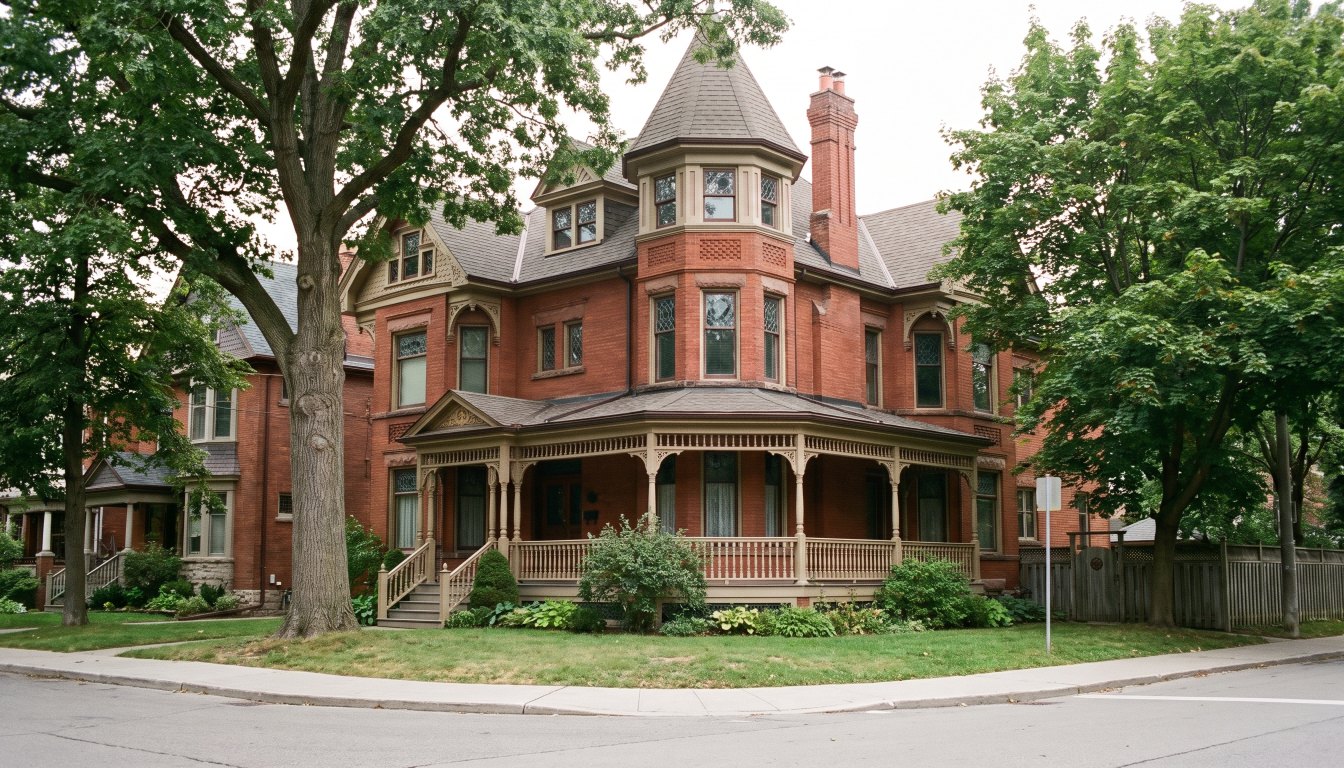
Part IV designates a single property. It protects that building’s exterior and any interior features specifically named in the designating bylaw, and it makes the owner eligible for Heritage Property Tax Relief. Part V designates a whole district, and applies an area-wide Heritage Conservation District plan that governs exterior alterations, additions and demolition for every property inside it.
What is typically exempt from a heritage permit surprises most buyers: interior work, ordinary repair and maintenance in kind, exterior painting, and landscaping. In practice that means a fully contemporary interior behind a preserved street elevation is both permitted and, in Toronto’s top neighbourhoods, the most valuable combination available.
Two instruments, two different effects
| Part IV — individual designation | Part V — district designation | |
|---|---|---|
| Applies to | One specific property | Every property inside a defined district |
| Governed by | The designating bylaw for that property | The Heritage Conservation District plan |
| Protects | Exterior, plus any interior attributes named in the bylaw | Exterior alterations, additions, demolition, streetscape character |
| Tax relief | Eligible for Heritage Property Tax Relief | Not through the district designation itself |
| Toronto examples | Casa Loma, designated 1987 | South Rosedale, North Rosedale, Wychwood Park, Yorkville–Hazelton, East Annex, West Annex Phase 1, Teiaiagon–Baby Point |
Since the 2005 amendments to the Ontario Heritage Act a property can carry both designations at once. Where that happens, the district plan generally governs exterior and demolition matters while the individual designation still controls any separately listed interior features.
What a district plan actually requires
Reading the Rosedale district plans, the pattern is consistent across Toronto’s districts:
- Demolition of buildings rated as significant contributors is vigorously opposed; demolition of lesser-rated buildings is discouraged.
- Additions should be located at the rear where possible.
- Street-facing changes must not alter the window-to-wall ratio that defines the elevation.
- Materials must match what predominates in the district.
- New construction must be compatible in scale, massing and fenestration — compatible, not identical.
What is exempt
This is the part buyers consistently get wrong. In a Part V district, a heritage permit is typically not required for:
- Interior work of any kind
- Landscaping
- Exterior painting
- Repairs in kind — replacing like with like
- Weatherstripping
- Exterior lighting
So the fear that designation means you must live in a museum is misplaced. In Rosedale, the Annex or Baby Point, you can gut the interior, raise the level of finish to anything you want, and modernise every system, while the street elevation stays what it has been for a century.
Why serious buyers treat this as an asset
You are paying several million dollars for a location. What guarantees that location in thirty years? Not goodwill. A district plan that says the house across the road cannot be replaced with something twice its size. In the January to April 2026 count, Rosedale — covered by two heritage districts — tied for the highest number of $3 million-plus sales of any Toronto neighbourhood at twenty. Protection and price go together.
The districts that matter in the luxury market
| District | Designated | Character |
|---|---|---|
| Wychwood Park | 1985 | About 60 houses on private roads, founded as an artists’ colony by painter Marmaduke Matthews; Arts and Crafts homes including Eden Smith’s own house at 5 Wychwood Park, c. 1906. The first residential area in Ontario to receive heritage district status. |
| East Annex | 1994 | Annex-style houses combining Richardsonian Romanesque and Queen Anne Revival, built from the 1880s after Simeon Janes subdivided the land in 1886. |
| South Rosedale | 2002 | Toronto’s oldest planned suburb, developed from 1850 to 1910 after the Glen Road Bridge opened in 1881. |
| Yorkville–Hazelton | 2002 | Surviving village-scale housing from a settlement founded in 1830 and annexed to Toronto in 1883. |
| North Rosedale | 2004 | Curvilinear City Beautiful streets from Harton Walker’s 1908 subdivision plan; ravine lots on the Don Valley and Park Drive Reservation. |
| West Annex Phase 1, Madison Avenue | 2015 | Continuation of the Annex fabric; a 1975 development freeze had already capped new buildings at 45 feet. |
| Teiaiagon–Baby Point | — | A Home Smith subdivision from 1912 on the site of Teiaiagon, a Seneca village abandoned before 1700. Stone entrance gates at Jane and Baby Point Road, restored 2011. |
| Old Oakville (Halton) | By-law 1981-144, 20 Oct 1981 | 162 mostly one and two storey 19th-century residences in Neoclassical, Gothic, Georgian and Italianate styles. |
Buying into a district: the practical checklist
- Confirm the property’s status: Part IV, Part V, both or neither.
- Obtain and read the district plan that applies, and the designating bylaw if there is one.
- Establish whether the building is rated as a contributing property.
- Ask whether any past alterations were done without a heritage permit — that becomes your problem on closing.
- Have your architect confirm what a rear addition of the size you want would realistically be permitted to look like, before you buy.
- If you are individually designated under Part IV, ask about Heritage Property Tax Relief.
Frequently asked questions
What is the difference between Part IV and Part V designation?
Part IV applies to one individual property and protects its exterior plus any interior heritage attributes named in the designating bylaw; it also makes the owner eligible for Heritage Property Tax Relief. Part V applies to a whole Heritage Conservation District through a district plan governing exterior alterations, additions and demolition. Since 2005 amendments to the Ontario Heritage Act a property can carry both.
Which Toronto neighbourhoods are Heritage Conservation Districts?
Toronto has 27 designated HCDs. Those most relevant to the luxury market are South Rosedale (2002), North Rosedale (2004), Wychwood Park (1985), Yorkville–Hazelton (2002), East Annex (1994), West Annex Phase 1 Madison Avenue (2015) and Teiaiagon–Baby Point. In Halton, Old Oakville was designated by By-law 1981-144 on 20 October 1981.
Can I renovate the inside of a heritage house?
In a Part V district, interior work is typically outside the heritage permit process, so interiors can generally be modernised freely. Under a Part IV individual designation, the position depends on whether specific interior attributes were named in the designating bylaw — if they were, those are protected. Always check the actual bylaw for the property.
Can I demolish a designated heritage building?
Demolition of contributing buildings in a Heritage Conservation District is strongly resisted, and demolition of an individually designated property requires City approval. Treat demolition as unlikely rather than merely difficult, and plan around retention.
Does heritage designation lower my property value?
In Toronto’s established luxury neighbourhoods it more often does the opposite. The district plan is what guarantees the streetscape a buyer is paying several million dollars to live on. Rosedale, which is covered by two districts, produced 20 sales above $3 million in the January to April 2026 count — the joint highest of any Toronto neighbourhood.
What work does not need a heritage permit?
Typically: interior work, ordinary repair and maintenance in kind, exterior painting, landscaping, weatherstripping and exterior lighting. This list comes from district plans such as the Rosedale HCD plans and is not identical everywhere, so confirm against the plan that applies to your property.
Thinking about buying or selling at the top end?
Send me the address, or the shortlist you are considering. I will tell you what the property is actually worth today, what the land is worth without the house, what the transfer tax and carrying costs will be, and whether the deal makes sense. Confidential, always.
[email protected] · 833-330-1925 · Book a free consultation
Confidential. Read personally and answered within 24 hours. I never share, sell or distribute your information.
Related reading
- Rosedale real estate: north vs south, and what the heritage district means
- Baby Point: a heritage district on top of a 17th-century village
- Wychwood Park: Ontario’s first heritage neighbourhood
- Teardown or renovate? How to judge a $3M Toronto lot
- Heritage designation under the Ontario Heritage Act, explained
Sources
Everything above that is a rule, a rate or a published number comes from these. Verify anything that matters to your own deal.
- City of Toronto — Heritage Conservation Districts and planning studies
- City of Toronto — North Rosedale Heritage Conservation District Plan
- City of Toronto — South Rosedale Heritage Conservation District Study
- University of Waterloo Heritage Resources Centre — Part IV and Part V compared
About the author — Jatin Dua, Broker of Record
I’m the Broker of Record at RE/MAX Quantum Realty, 799 The Queensway in Etobicoke, and I work with buyers, sellers and investors across Toronto and the west GTA. A large part of my work sits in the upper end of the market, where the comparables are thin, the rules are heavier and the cost of a wrong number is measured in hundreds of thousands of dollars.
The free estimators on this site are mine. I built them because the first question every owner asks is “what is it worth?” and the honest answer starts with a number you can check yourself. [email protected] or 833-330-1925.