
Published 7 September 2026 · Updated 29 September 2026 · By Jatin Dua, Broker of Record, RE/MAX Quantum Realty
What's Your Home Worth Right Now?
Get a free AI-powered price range for your property in under 90 seconds, based on recent GTA comparable sales. No name or address required.
Get My Free Estimate →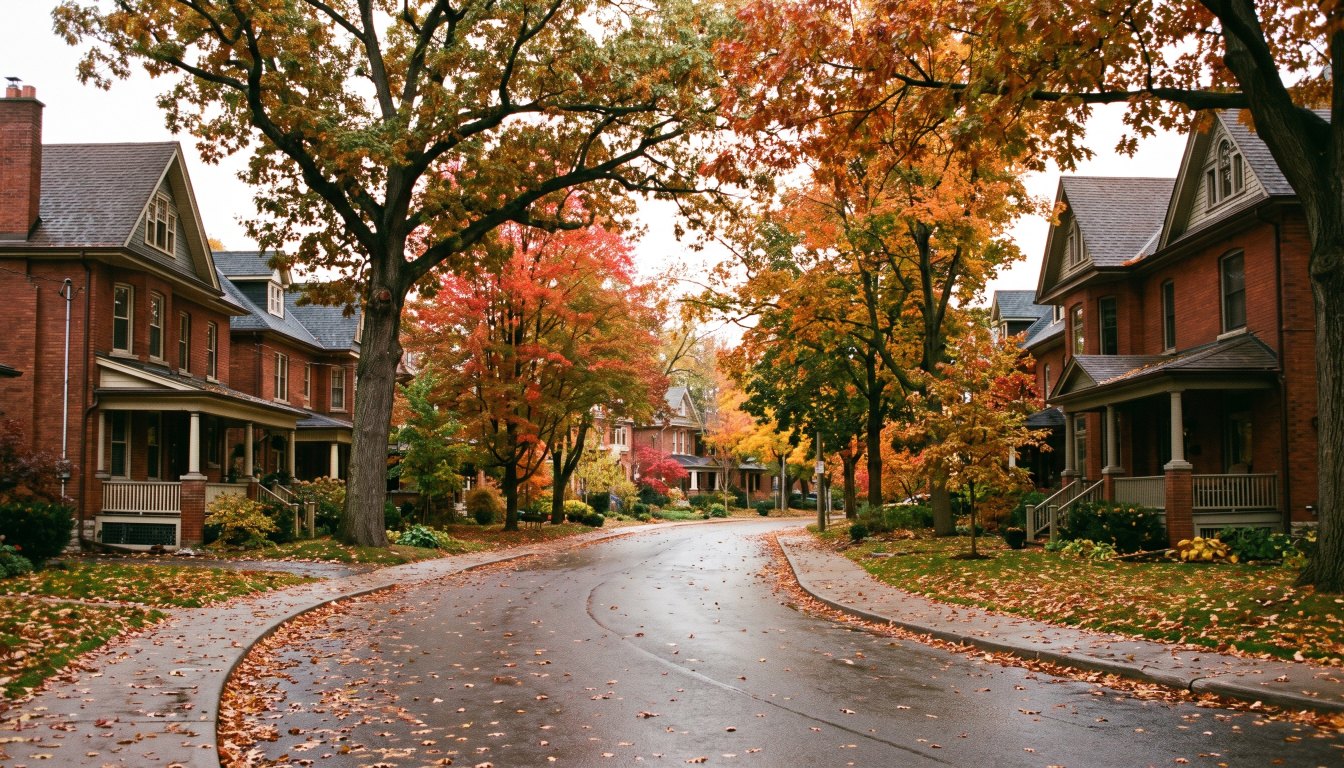
Rosedale is covered by two designated Heritage Conservation Districts — South Rosedale, designated 2002, and North Rosedale, designated 2004. A district plan governs exterior alterations, additions and demolition across both, and demolition of significant contributing buildings is vigorously opposed.
It is also defined by ravines. North Rosedale is bounded by the CPR line to the north, the Don Valley and Moore Park ravine to the east, the Park Drive Reservation ravine to the south and Mount Pleasant Road and David A. Balfour Park to the west. Those two facts — heritage protection and ravine topography — are why Rosedale tied with Lawrence Park for the most $3 million-plus sales of any Toronto neighbourhood at 20 between January and April 2026.
Two districts, one name
| South Rosedale | North Rosedale | |
|---|---|---|
| Designated | 2002 | 2004 |
| Main development period | 1850–1910 | 1910–1950 |
| What opened it up | Glen Road Bridge, 1881 | Belt Line Railway, 1892; Harton Walker’s 1908 subdivision plan |
| Street pattern | Toronto’s oldest planned suburb | Curvilinear, on City Beautiful principles |
North Rosedale is bounded by the CPR line to the north, the Don Valley and Moore Park ravine to the east, the Park Drive Reservation ravine to the south, and Mount Pleasant Road and David A. Balfour Park to the west. Mount Pleasant Road was cut through the Park Drive Reservation in 1950.
The housing stock, by era
- Pre-1900: Victorian and Queen Anne
- 1900–1916: Edwardian Classicism and Arts and Crafts
- 1917–1929: Tudor and Georgian revival
- 1930–1945: Art Deco and Moderne
- 1946–1967: ranch houses and heavy renovation of earlier stock
- 1968 onward: modernist and postmodern infill by notable architects
What the district plan actually does
Demolition of buildings rated A or B is vigorously opposed; C rated buildings are discouraged. Additions should be located at the rear where possible, cannot alter the street-facing window-to-wall ratio, and must match predominant materials. New construction must be compatible in scale, massing and fenestration.
What is typically exempt from a heritage permit: interior work, landscaping, exterior painting, repairs in kind, weatherstripping and exterior lighting.
Why this raises value rather than lowering it
Buyers here are paying several million dollars for a streetscape. What guarantees that streetscape in 2050 is not goodwill — it is a district plan saying the house opposite cannot be replaced with something twice its size. Rosedale tied for the highest number of $3 million-plus sales of any Toronto neighbourhood in the January to April 2026 count, with twenty. Protection and price go together.
The ravine layer
The topography that defines Rosedale also regulates it. Inside a mapped ravine protected area, Chapter 658 requires a permit to injure, destroy or remove a tree, place or dump fill, or alter the grade of land, with fines from $500 to $100,000 per tree and the power to order restoration. Where a property falls in a TRCA regulated area under O. Reg. 41/24, TRCA clearance is required before the City will issue a building permit.
For an owner planning a pool, a rear addition or regrading for drainage, that is the sequence that governs the project.
Lot types matter more than the address
- Ravine Lands — the largest lots, with the valley outlook and the heaviest regulation
- St. Andrew’s College Lands — mid-sized and comparatively consistent
- Gore Lands — the smallest lots with the narrowest frontages
Two houses of identical size, both “in Rosedale,” can sit in completely different markets depending on which of these they occupy. Always compare on the survey rather than the postcode.
The transaction record
Three of the ten largest publicly reported GTA sales of 2025 were on Rosedale streets: 11 Thornwood Road at $16,180,340, 20 Elm Avenue at $13,200,000 and 18 Chestnut Park Road at $12,200,000. Branksome Hall is in the neighbourhood.
The practical takeaway
In Rosedale, buy the lot type and read the district plan before you buy the house. The heritage rules govern what the street will look like — which is what you are paying for — and the ravine rules govern what you can do behind it. Interiors, in both districts, are largely yours.
Frequently asked questions
What is the difference between North and South Rosedale?
They are separately designated heritage districts with different development histories. South Rosedale developed first, from 1850 to 1910, after the Glen Road Bridge opened in 1881. North Rosedale opened up with the Belt Line Railway in 1892 but developed slowly until Harton Walker’s 1908 subdivision plan, which used curvilinear City Beautiful streets.
What does the heritage district restrict?
Demolition of A and B rated buildings is vigorously opposed and C rated discouraged. Additions must be at the rear where possible and cannot alter the street-facing window-to-wall ratio, and must match predominant materials. New construction must be compatible in scale, massing and fenestration. Interior work, landscaping, exterior painting, repairs in kind, weatherstripping and exterior lighting are typically exempt from a heritage permit.
Can I renovate the inside of a Rosedale house?
Interior work is typically outside the heritage permit process, so interiors can generally be modernised freely. The district plan governs what is visible from the street and the public realm.
What are the lot types in Rosedale?
They vary by sub-area. The Ravine Lands carry the largest lots, the St. Andrew’s College Lands are mid-sized and more consistent, and the Gore Lands are the smallest with the narrowest frontages.
How many Rosedale homes sell above $3 million?
Twenty between January and April 2026, tied with Lawrence Park for the highest count of any Toronto neighbourhood in that window. Three of the ten largest publicly reported GTA sales of 2025 were on Rosedale streets — Thornwood Road at $16,180,340, Elm Avenue at $13,200,000 and Chestnut Park Road at $12,200,000.
Do the ravines affect what I can do with the garden?
Yes. Inside a mapped ravine protected area, Municipal Code Chapter 658 requires a permit to injure, destroy or remove a tree, place or dump fill, or alter the grade of land, with fines from $500 to $100,000 per tree. Where TRCA jurisdiction applies under O. Reg. 41/24, clearance is required before a building permit issues.
Thinking about buying or selling at the top end?
Send me the address, or the shortlist you are considering. I will tell you what the property is actually worth today, what the land is worth without the house, what the transfer tax and carrying costs will be, and whether the deal makes sense. Confidential, always.
[email protected] · 833-330-1925 · Book a free consultation
Confidential. Read personally and answered within 24 hours. I never share, sell or distribute your information.
Related reading
- Buying a heritage home in Toronto: Part IV vs Part V
- Buying a ravine lot in Toronto: what the bylaw does to your plans
- Toronto’s luxury neighbourhoods compared
- Toronto’s record home sales: what the biggest deals tell you
Sources
Everything above that is a rule, a rate or a published number comes from these. Verify anything that matters to your own deal.
- City of Toronto — North Rosedale Heritage Conservation District Plan
- City of Toronto — South Rosedale Heritage Conservation District Study
- RE/MAX Canada — 2026 Spotlight on Luxury Real Estate, Greater Toronto
- Canadian Mortgage Professional — 2025 most expensive GTA home sales, ranked
About the author — Jatin Dua, Broker of Record
I’m the Broker of Record at RE/MAX Quantum Realty, 799 The Queensway in Etobicoke, and I work with buyers, sellers and investors across Toronto and the west GTA. A large part of my work sits in the upper end of the market, where the comparables are thin, the rules are heavier and the cost of a wrong number is measured in hundreds of thousands of dollars.
The free estimators on this site are mine. I built them because the first question every owner asks is “what is it worth?” and the honest answer starts with a number you can check yourself. [email protected] or 833-330-1925.