

Published 29 September 2026 · By Jatin Dua, Broker of Record, RE/MAX Quantum Realty
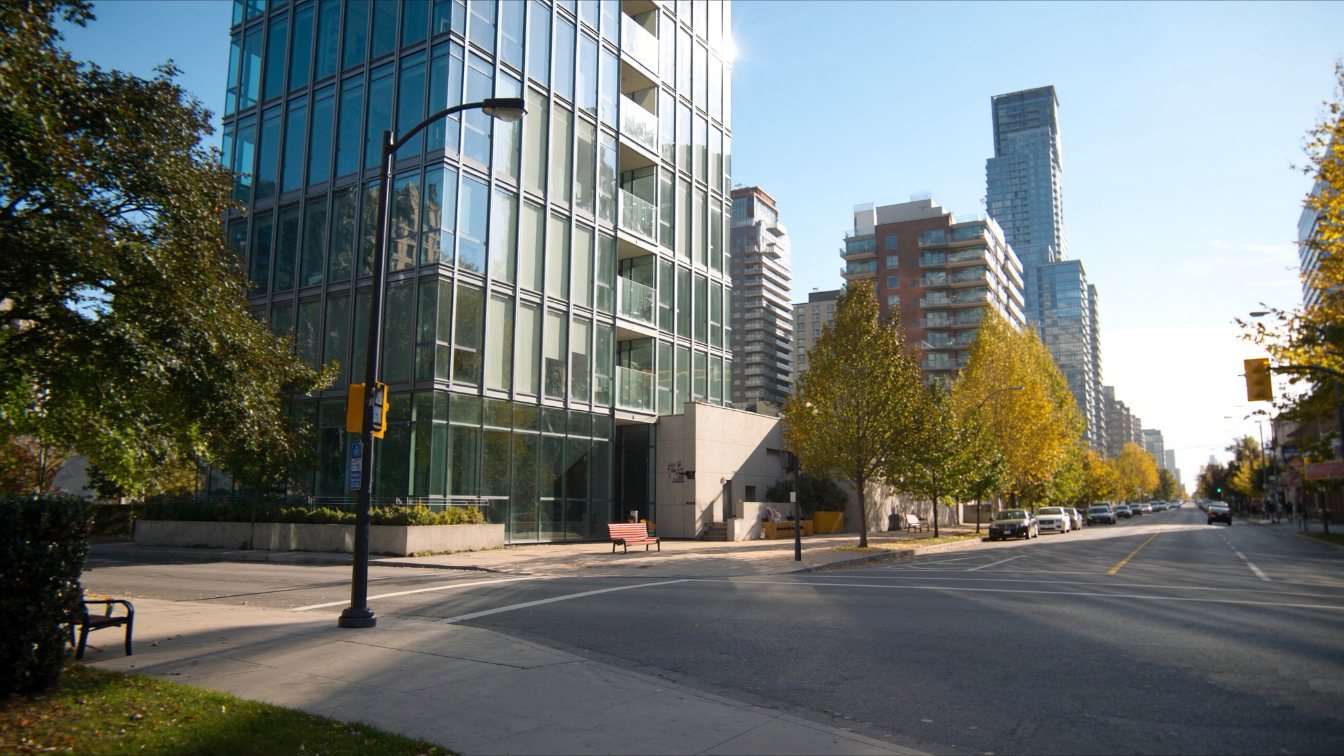
Casa is a 46-storey condominium at 33 Charles Street East, between Yonge and Church south of Bloor, developed by Cresford Developments and designed by architectsAlliance. Wikipedia gives 407 units and UrbanToronto 420, and it was completed in 2010, making it the oldest of the three Casa towers on the street. TRREB does not publish building-level prices. The nearest official figure is district C08, where condo apartments sold at a median of $565,000 in August 2026, at 97 percent of list after 37 days. A suite here is priced from recent sales of its own layout and floor, and against the newer towers a few steps away that compete for the same buyers.
Casa at a glance
| Fact | What the public record says |
|---|---|
| Address | 33 Charles Street East, Toronto |
| Storeys | 46 |
| Height | 138 metres to the antenna spire (Wikipedia) |
| Suites | Sources differ: 407 (Wikipedia), 420 (UrbanToronto database) |
| Developer | Cresford Developments |
| Architect | architectsAlliance |
| Completed | 2010 (Wikipedia); UrbanToronto published photos taken from inside the building in February 2010 |
| City neighbourhood | Church-Wellesley (historical Church-Yonge Corridor, no. 75) |
| TRREB district | C08, which TRREB describes as covering the Church–Yonge Corridor, St. Lawrence, Moss Park, Cabbagetown, Regent Park and North St. James Town |
| Condominium corporation number | Not quoted here; I could not confirm it from a primary public source. It is printed on the status certificate. |
Sources: UrbanToronto’s project database and news archive, Wikipedia and the City of Toronto’s neighbourhood boundary files, all linked below.
Where it sits and what is nearby
Charles Street East runs east from Yonge a block south of Bloor. Casa was the first of a run of towers that turned it into what UrbanToronto calls a condo canyon: Chaz Yorkville at 45 Charles Street East rose immediately to the east, and Cresford followed with Casa II at 42 Charles Street East and Casa III at 50 Charles Street East.
Bloor-Yonge station, where TTC Lines 1 and 2 meet, is a few minutes’ walk, as is One Bloor on the corner. The Bloor Street shops and Yorkville are just north, which is why these towers often carry Yorkville branding, but the City’s map places Casa in Church-Wellesley and TRREB reports it in C08. See the Church–Yonge condo buildings guide for all six buildings in this series.
What TRREB’s August 2026 numbers say for C08 (not this building)
| Condo apartments, August 2026 | TRREB C08 | City of Toronto |
|---|---|---|
| Sales | 128 | 885 |
| Median price | $565,000 | $550,000 |
| Average price | $673,397 | $651,648 |
| Active listings | 756 | 4,938 |
| Months of inventory (calculated) | 5.9 | 5.6 |
| Sale to list price | 97% | 96% |
| Avg. days on market | 37 | 39 |
Source: TRREB Market Watch, August 2026, condominium apartments, district and city level. Months of inventory is my arithmetic (active listings divided by sales). This is not data for this building. TRREB does not publish building-level figures, and I do not quote a price for any suite here.
The district figures matter more for Casa than for a brand-new tower in one way: buyers here are choosing between Casa and newer towers on the same block. If C08 suites are selling at 97 percent of list in 37 days, a well-priced Casa suite should too; if yours has sat for twice that, the problem is usually price relative to the newer building next door, not the market.
Why age matters on Charles Street East
Casa was completed in 2010. Chaz opened in 2015, Casa II around 2016, and Casa III after that. On the same block, a buyer can compare a mid-teens building with near-new ones, and that comparison drives pricing in both directions:
- Size. Older towers often have somewhat larger suites for the same bedroom count. That is worth pointing out in marketing and in the price per square foot comparison.
- Condition. A 2010 suite with original kitchen and flooring competes against newer finishes a few doors away. Targeted updates can pay back; see should I renovate my condo before selling.
- Building systems. By its mid-teens, a high-rise is into the years when a reserve fund study starts to schedule bigger items. How well funded the reserve is becomes a real pricing factor.
What moves a suite’s value in a building like this
- Floor and view. On a street lined with towers, a high suite with an open view past its neighbours is worth far more than a low suite looking straight at Chaz or Casa II. See how floor, view and parking change a condo’s value.
- Exposure. South views over the city are the usual premium here; north and east views depend on what has been built since.
- Parking and locker. Near Bloor-Yonge, some buyers will skip parking, but an owned space still widens your pool.
- Fees. Lenders count half the condo fee in the buyer’s debt-service ratios, per CMHC.
What to check in the status certificate and reserve fund study
The status certificate is the corporation’s own snapshot of its finances and legal position. Under section 76 of the Condominium Act, the corporation must deliver it within 10 days of a request and can charge up to $100, according to the Condominium Authority of Ontario. On a resale, the buyer’s lawyer should review it before the offer goes firm. On a sale, I prefer to order it before we list, so there are no surprises mid-deal.
Read these parts first:
- Reserve fund balance and the latest reserve fund study. The CAO notes corporations must have their reserve fund studied at least every three years. Compare the balance with what the study says should be there, and read the planned contributions for the next few years.
- Common expense increases. The certificate must disclose any known increase. A rising fee is not bad on its own; it matters when it is sharp and unexplained.
- Special assessments. Any assessment levied or planned is disclosed. If one is outstanding at closing, who pays it is a negotiation point; see does a special assessment lower my condo value.
- Legal actions and insurance. Litigation involving the corporation and the insurance deductible both belong on your checklist.
- Rules on leasing and short stays. Downtown, many buyers are investors, so read the declaration and rules before you promise a tenant anything.
Specific to Casa: ask for the latest reserve fund study and look at the next ten years of planned work. In a tower of this age, items like the building envelope, balcony glass, mechanical equipment and elevators start to appear in the schedule. What matters is whether the plan is funded by contributions already in the budget or needs a fee increase or special assessment.
Selling or buying there: how to price a suite
Price a suite in Casa from its own stack first: the most recent sales of the same layout and exposure, a few floors up or down, adjusted for parking, locker, condition and date. TRREB’s district median is a check on the market’s mood, not a price.
Two things make this harder downtown. Large towers have many similar suites for sale at once, so your real competition is the active listings with your layout, often in your own building. And sometimes your layout simply has not sold in months. For that case I follow the method in how to price a condo when nothing in your building has sold: widen to the nearest comparable towers, match age and size, and adjust.
On Charles Street East your comparables include the newer towers next door. If a similar suite in Chaz or Casa II sold recently, it is evidence too, adjusted for age, size and finishes.
Two tools help here: the AI condo value estimator below gives you a range in about a minute, and the net proceeds calculator turns any price into what actually lands in your account.
Where I fit
I sell condos across Toronto and the wider GTA, and I price each suite from the sales and listings it actually competes with, not the district average. If you own or are eyeing a suite in Casa, run the estimator below, then book a call or phone 833-330-1925 and I will walk you through your comparables.
Free tool — AI condo value estimator
Condo Valuation
What’s your condo
worth today?
Three quick steps. Condos don’t price like houses — your floor, your view, and whether you own parking move the number more than anything else. This weighs all of them.
Reading recent condo sales…
Estimated market value
—
$0–$0
Most likely $0 · about $0 per square foot
What moved the number
Starting from what comparable units in your area sell for, here’s what your specifics added or subtracted.
Market context
—
—
Two units, same floor plan,
$90,000 apart.
That happens constantly in condos — one has the parking, the right exposure, or a board that keeps the reserve fund healthy. A model can’t see your status certificate. I can.
Frequently asked questions
How many floors is Casa condos on Charles Street?
Casa at 33 Charles Street East has 46 storeys, according to UrbanToronto and Wikipedia. It was developed by Cresford Developments and designed by architectsAlliance. Its sister towers are Casa II at 42 Charles Street East, with 56 storeys, and Casa III at 50 Charles Street East, with 55.
When was Casa condos at 33 Charles built?
Wikipedia records that Casa was completed in 2010, and UrbanToronto published photos taken from inside the building in February 2010. That makes it the oldest of the three Casa towers and older than Chaz Yorkville next door, which opened in 2015. Your lawyer can confirm the registration date from title.
How many units are in Casa condos?
Published counts differ. Wikipedia lists 407 units and UrbanToronto’s project database lists 420. The corporation’s declaration is the authoritative source, and your lawyer can confirm it when reviewing the status certificate.
Is Casa condos in Yorkville?
Casa is marketed near Yorkville, but 33 Charles Street East is south of Bloor, and the City of Toronto’s current map places it in Church-Wellesley, part of the old Church-Yonge Corridor. TRREB reports it in district C08. For pricing, use Charles Street and nearby Church–Yonge sales, not Yorkville sales.
What is a Casa condo worth in 2026?
TRREB does not publish building prices, and I do not quote one. District C08 had a median condo apartment price of $565,000 in August 2026. A Casa suite depends on floor, view, size, parking, condition and the corporation’s finances, and recent sales of your layout are the best evidence.
Sources
- UrbanToronto — Casa project database — 46 storeys, 33 Charles Street East, Cresford, architectsAlliance
- Wikipedia — Casa Condominio Residenza — unit count, 2010 completion, Casa II and III
- UrbanToronto — The view from Cresford Developments’ Casa Condos (February 2010) — occupied by early 2010
- UrbanToronto — CHAZ Yorkville condos nearing final height on Charles Street (October 2014) — 526 units, next to Casa
- UrbanToronto — Casa III Condos project database — 50 Charles Street East, 55 storeys
- City of Toronto Open Data — Neighbourhoods — 158-neighbourhood boundaries and the historical 140-neighbourhood set
- TRREB — Market Watch, August 2026 — condominium apartment tables by region and municipality
- Condominium Authority of Ontario — Status certificates — 10 days, up to $100, Condominium Act s. 76
- Condominium Authority of Ontario — Reserve funds and reserve fund studies — studies at least every three years
- Condominium Authority of Ontario — Special assessments
- CMHC — Calculating GDS / TDS — 50% of condominium fees counted; 39% / 44% limits
Related reading
- Church-Yonge corridor condo buildings guide
- Casa II, 42 Charles Street East
- Chaz Yorkville, 45 Charles Street East
- One Bloor, 1 Bloor Street East
- How much is my condo worth in downtown Toronto?
- How floor, view and parking change a condo's value
- How to price a condo when nothing in your building has sold
About the author — Jatin Dua, Toronto and GTA real estate broker
I am Jatin Dua, Broker of Record and co-founder of RE/MAX Quantum Realty Inc., Brokerage, Unit 101, 799 The Queensway, Toronto. I work with buyers and sellers across Toronto and the GTA and have helped more than 100 families sell. Four-plus years of active GTA transactions and over $100 million in sales volume. Every figure here comes from a published table, regulator or statute linked in the sources, so you can check all of it without asking me.
Reach me at connect@jatindua.com or 833-330-1925, or book a call.