

Published 29 September 2026 · By Jatin Dua, Broker of Record, RE/MAX Quantum Realty
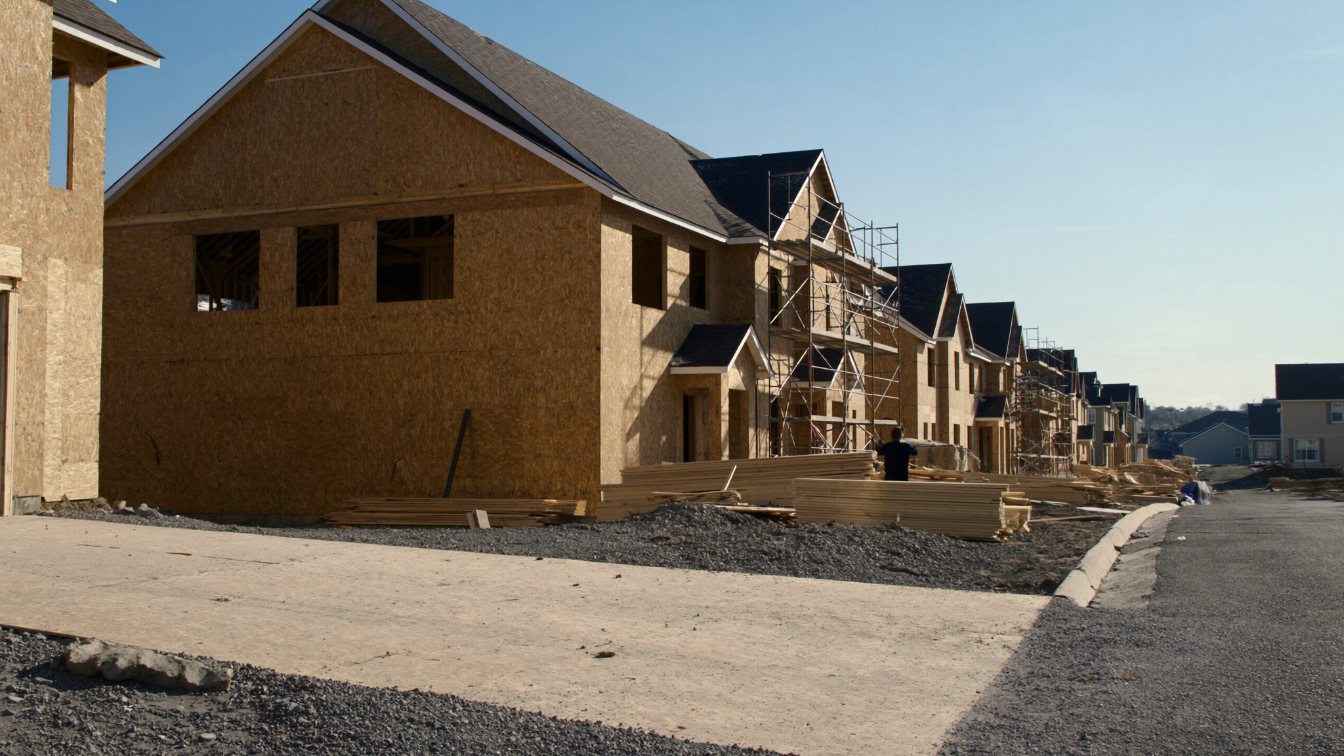
Development charges are one-time fees municipalities levy on new units to pay for growth infrastructure. For a new single or semi-detached house, Toronto’s current schedule (effective 26 June 2025) lists $137,846; Mississauga’s total for permits from 1 August 2026 to 31 January 2027 is $139,019.54, including the Region of Peel and school boards; Brampton’s for the same period is $155,650.32. Townhouses and apartments pay less per unit, and purpose-built rentals get reductions. Additional residential units, enlargements of an existing home and most Toronto multiplexes of up to four units are exempt. Toronto now collects non-rental residential charges at occupancy. For a land buyer, these charges come straight off what the land is worth, so price them before you offer.
What development charges are and who pays them
Development charges are one-time fees under Ontario’s Development Charges Act that municipalities, and in Peel the Region, levy on new development to fund growth-related infrastructure such as roads, water, sewers, transit and community facilities. School boards levy separate education development charges in some areas.
Legally the charge is paid by whoever builds. Economically, it is paid by the land. A builder deciding what to pay for a lot subtracts every cost from the finished value, and development charges are often the largest single cost after construction. When charges rise, land values fall or projects wait; when charges fall, land can carry more. That is why this matters to anyone buying or selling land, not just builders.
Current rates: Toronto, Mississauga and Brampton
| New unit type | Toronto (non-rental, effective 26 June 2025) | Mississauga total (1 Aug 2026 to 31 Jan 2027) | Brampton total (1 Aug 2026 to 31 Jan 2027) |
|---|---|---|---|
| Single or semi-detached | $137,846 | $139,019.54 | $155,650.32 |
| Townhouse or other multiple | $113,938 (2+ bed); $57,153 (1 bed or bachelor) | $110,536.99 | $124,237.76 |
| Apartment, larger | $80,690 (2+ bed) | $100,062.43 | $103,276.14 (over 750 sq ft) |
| Apartment, smaller | $52,676 (1 bed or bachelor) | $56,174.75 (small units) | $60,719.15 |
Mississauga and Brampton totals include the City, the Region of Peel ($79,980.54 for a single or semi in both), the Peel District School Board ($4,376) and the Dufferin-Peel Catholic District School Board ($1,300). The Toronto figures are the City’s own schedule; I have not added any school board charge. Mississauga and Brampton index their rates every 1 February and 1 August, so re-check before you rely on these after January 2027. Toronto Council removed the usual annual indexing for 2025 and 2026.
Rental, non-residential and stormwater rates
Toronto publishes a separate, lower schedule for purpose-built rental units. From the same 26 June 2025 schedule: $63,937 for a rental multiple with three or more bedrooms, $68,199 with two bedrooms and $36,351 with one bedroom or a bachelor; rental apartments are $45,280 (three or more bedrooms), $48,299 (two bedrooms) and $33,497 (one bedroom or bachelor). Those reductions trace to Bill 23, which cut charges on rental units by 25 percent for three or more bedrooms, 20 percent for two and 15 percent for one or a bachelor.
Non-residential rates are charged by floor area. Toronto’s is $805.64 per square metre of ground-floor gross floor area. Mississauga’s for the current period is $395.79 per square metre for industrial and $495.69 for non-industrial, plus a stormwater charge of $5,960 per hectare of land.
What Bills 23, 185 and 17 changed
- Bill 23, More Homes Built Faster Act, 2022 (in effect 28 November 2022, per the City of Toronto): removed housing services from development charges, introduced the rental reductions above, added exemptions for affordable and non-profit housing, and imposed a mandatory phase-in of new rates.
- Bill 185 (6 June 2024): repealed the mandatory phase-in, and shortened how long charges stay frozen at the rate in effect when a planning application was made to 18 months, from two years.
- Bill 17, Protect Ontario by Building Faster and Smarter Act, 2025: moved payment timing; in Toronto, non-rental residential charges are now payable at occupancy for permits since 3 November 2025, and added a long-term care exemption.
Rental and institutional development in Toronto can pay in six equal annual instalments starting at occupancy. Non-residential charges are paid at the first building permit. Brampton’s rate sheet states that payment of the current indexed rate is required before a building permit is issued, so check timing for your municipality and project type.
What is exempt
The exemptions are where land buyers find value:
- Enlarging an existing home. Additions to an existing dwelling unit are exempt.
- Additional residential units. Creating additional units in existing and new residential buildings, as prescribed, is exempt. That covers the second and third units the Province permits on urban residential lots.
- Toronto multiplexes. The City’s multiplex guide says most multiplexes of up to four units are exempt from development charges and from cash-in-lieu of parkland, and the City’s development charges page lists an exemption for the second to sixth units in developments of up to six units, effective 24 July 2025.
- Affordable, non-profit and inclusionary zoning units, as defined in the legislation and by-laws.
- Redevelopment credits. Toronto gives credits for redevelopment, so replacing an existing house with a new one generally does not pay twice.
Toronto has also adopted an amended by-law for a development charge reduction program, subject to an agreement with the Province; the City had not published final details when I checked. See buying land to build a multiplex and buying a teardown in Toronto.
Parkland: the second charge land buyers forget
Separate from development charges, the Planning Act lets municipalities require parkland or cash in lieu. Toronto’s base rate is 5 percent of the land for residential development and 2 percent for non-residential. In Parkland Acquisition Priority Areas an alternative rate applies, 1 hectare per 600 net new units as land or 1 hectare per 1,000 units as cash, capped after Bill 23 at 10 percent of the land for sites of 5 hectares or less and 15 percent for larger sites. Toronto’s real estate staff appraise the land for cash in lieu, typically in four to eight weeks, and payment is due before the first above-grade permit. Mississauga notes that cash in lieu of parkland may also apply on top of its development charges.
Worked examples for land buyers
| Plan (illustrative) | Development charges (my arithmetic from the published rates) |
|---|---|
| One new detached house on a vacant Brampton lot | $155,650.32 |
| Three freehold townhouses on a severed Mississauga lot | 3 × $110,536.99 = $331,610.97, plus parkland |
| Three freehold townhouses in Brampton | 3 × $124,237.76 = $372,713.28, plus parkland |
| Replacing one Toronto house with one new house | Generally nil after the redevelopment credit; confirm in writing |
| Replacing one Toronto house with a fourplex | Generally exempt under the multiplex rules; confirm in writing |
The same land can be worth very different amounts depending on which row it falls into. This is also why severing a lot to create new ones is rarely as profitable as it first looks; see lot severance in Ontario.
Put the charges into your offer
Before you offer on land, get the current rate sheet for the municipality, check the effective date and the next indexing date, and ask the development charges office whether any exemption or credit applies to your plan. Build the charge, parkland and fees into your budget. Then the price you offer reflects what the land can really carry. Our guide to buying a vacant lot covers the rest of the steps, and how much is my land worth explains the residual method.
The AI land value estimator below gives you a range for a lot or acreage in about a minute, from the same inputs a buyer’s appraiser starts with.
If you want help pricing a lot with the charges in, book a call or phone 833-330-1925.
Free tool — AI land value estimator
Land Valuation
What’s your land
worth today?
Three quick steps. Land doesn’t price like a house — what you’re allowed to build on it, how far along the approvals are, and whether services reach the lot line move the number more than anything else. This weighs all of them.
Reading recent land sales…
Estimated land value
—
$0–$0
Most likely $0 · about $0 per acre · $0 per buildable sq ft
What moved the number
Starting from what comparable land in your municipality trades for, here’s what your specifics added or subtracted.
What would raise it
Approvals are the biggest lever on land. Here is what each next step is worth on this parcel.
—
Development sites are listed at $1
for a reason.
Sellers let the market price them — and the market only pays for what it can see: the planning file, the servicing letter, the environmental reports. A model can’t read your file. I can, and I know which developers are buying right now.
Frequently asked questions
How much are development charges in Toronto in 2026?
Toronto’s current schedule, effective 26 June 2025 and not indexed in 2025 or 2026, lists $137,846 for a new non-rental single or semi-detached house, $113,938 for a multiple with two or more bedrooms and $80,690 for an apartment with two or more bedrooms. Purpose-built rentals pay less. Additional units and most multiplexes of up to four units are exempt.
How much are development charges in Mississauga?
For permits from 1 August 2026 to 31 January 2027, the combined City, Region of Peel and school board charge is $139,019.54 for a single or semi-detached house, $110,536.99 for a townhouse or other multiple, $100,062.43 for an apartment and $56,174.75 for a small unit. Rates are indexed every 1 February and 1 August.
How much are development charges in Brampton?
Brampton’s sheet for 1 August 2026 to 31 January 2027 shows a total of $155,650.32 for a single or semi-detached house, $124,237.76 for a townhouse, $103,276.14 for an apartment over 750 square feet and $60,719.15 for a smaller apartment, including the Region of Peel and both school boards.
Do you pay development charges on a basement apartment or garden suite?
Generally no. The Development Charges Act exempts the creation of additional residential units in existing and new residential buildings, as prescribed, which covers the second and third units Ontario permits on urban residential lots. Enlarging an existing home is also exempt. Confirm with your municipality for your specific plan.
When are development charges paid in Ontario?
It depends on the municipality and project type. In Toronto, non-rental residential charges are now due at occupancy, rental and institutional development can pay in six annual instalments from occupancy, and non-residential charges are due at the first building permit. Brampton’s sheet says the current indexed rate is required before a building permit is issued.
Did Bill 23 reduce development charges?
Partly. It removed housing services from charges, cut charges on purpose-built rentals by 15 to 25 percent depending on bedrooms, and added exemptions for affordable and non-profit housing. Its mandatory phase-in of new rates was later repealed by Bill 185 in June 2024. Market-rate houses still pay full charges.
Sources
- City of Toronto — Development charge rates effective June 26, 2025 — the schedule the City lists as current
- City of Toronto — Development charges by-laws and rates — lists the 26 June 2025 schedule as current
- City of Toronto — Development charges overview — exemptions, indexing freeze, payment timing
- City of Toronto — Non-rental residential development charges — payable at occupancy from 3 November 2025
- City of Mississauga — Development charge rates, 1 August 2026 to 31 January 2027 — City, Region of Peel and school boards
- City of Mississauga — Development charges by-laws and rates — indexed 1 February and 1 August
- City of Brampton — Development charges as of 1 August 2026 — effective until 31 January 2027
- City of Toronto — Considerations when building multiplexes — zones, height, FSI, parking, DC and parkland exemptions
- City of Toronto — Parkland dedication — 5% / 2%, alternative rate and caps
Related reading
- How to buy a vacant lot in the GTA
- Buying land to build a multiplex in Toronto
- Buying a teardown to build in Toronto
- Selling land to a developer
- How much is my land worth?
- Lot severance in Ontario
- Severance and subdivision clauses
About the author — Jatin Dua, Toronto and GTA real estate broker
I am Jatin Dua, Broker of Record and co-founder of RE/MAX Quantum Realty Inc., Brokerage, Unit 101, 799 The Queensway, Toronto. I work with buyers and sellers across Toronto and the GTA and have helped more than 100 families sell. Four-plus years of active GTA transactions and over $100 million in sales volume. Every figure here comes from a published table, regulator or statute linked in the sources, so you can check all of it without asking me.
Reach me at connect@jatindua.com or 833-330-1925, or book a call.