
Published 7 September 2026 · Updated 29 September 2026 · By Jatin Dua, Broker of Record, RE/MAX Quantum Realty
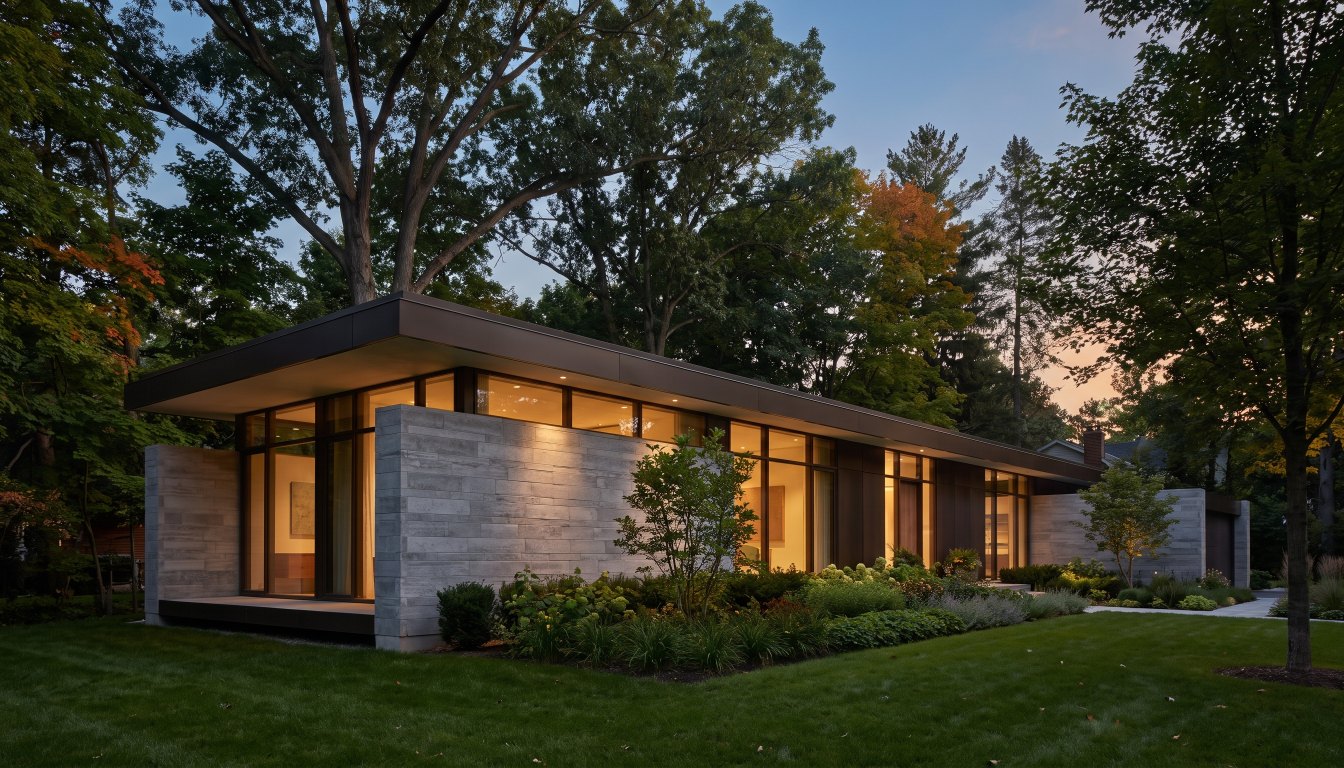
It depends on whether the architecture is specific or eccentric. A well-resolved custom house with high ceilings, good light, a sensible plan and durable materials generally sells strongly, because those qualities are expensive to add later and every buyer values them. A house organised around one owner’s unusual requirements — a two-storey aquarium, a plan with no obvious primary suite, a facade at war with the street — narrows the buyer pool in a market that is already tiny.
The Forest Hill South residence that sold in August 2026 for $23,500,000 against a $22 million asking price, with three competing offers, was a 9,856 square foot house completed in 2025. Recent, well-executed, custom, and it produced competition. That is the upside case. The downside case is a distinctive house that has been on and off the market for four years.
The two outcomes
Custom architecture in Toronto produces one of two results at resale, and the gap between them is enormous.
Outcome one. A Forest Hill South residence, 9,856 square feet, completed in 2025, listed at $22 million. It attracted three competing offers and sold on 26 August 2026 for $23,500,000 — $1.5 million over asking.
Outcome two. A distinctive, expensive, personal house that appears on the market, sits, reduces, expires, relists and eventually trades at a number well below what it cost to build.
The difference is not talent or budget. It is whether the design solved general problems or personal ones.
What good architecture actually adds
Strip away the vocabulary and the value of design at resale comes down to things that are expensive or impossible to add later:
- Ceiling height. Structural. Cannot be retrofitted without rebuilding.
- Natural light. A function of orientation, glazing and plan. Very hard to fix afterwards.
- Proportion. Rooms that feel right, doors and windows that align, a stair that lands where it should.
- A plan that works. Bedrooms on the same floor. A kitchen that connects to how families actually live. A garage that is not an afterthought.
- Durable materials. Stone, brick, real wood, quality glazing and metal. These age. Composite and fashion-driven finishes date.
- A facade that belongs on its street. Not identical to its neighbours — belonging is not the same as matching.
Every one of those is a general good. Every buyer values them. That is why they hold.
What narrows the buyer pool
The recurring pattern is design that trades function for statement:
- Bedrooms removed to make a gallery or a double-height void
- A primary suite on a floor separated from the children’s rooms
- No informal eating space anywhere near the kitchen
- Enormous, highly specific single-purpose rooms — a formal theatre, a two-storey aquarium, a car showroom in the basement
- Uncompromising minimalism with no storage anywhere
- A street elevation that reads as a rebuke to the neighbourhood
In a deep market, a narrow buyer pool is survivable. Above $3 million, where roughly 75 GTA sales a month occur, a design decision that eliminates half the possible buyers can add a year to the sale.
The heritage question
In a Part V Heritage Conservation District — South Rosedale, North Rosedale, Wychwood Park, Yorkville–Hazelton, East Annex, West Annex Phase 1, Teiaiagon–Baby Point — the district plan governs exterior alterations, additions and demolition. New construction and additions must be compatible in scale, massing, materials and fenestration, and rear additions are generally preferred to street-facing change.
Buyers frequently read this as a limitation on their architect. In value terms it operates the other way. The constraint is what preserves the streetscape you are paying for, and interiors are typically exempt from heritage permit requirements — so a completely contemporary interior behind a respected elevation is both permitted and, at resale, the strongest combination available in those neighbourhoods.
Recent, resolved and documented
The three attributes that showed up in the August 2026 Forest Hill result are worth naming, because they are reproducible:
- Recent. Completed 2025. Current mechanicals, current building standards, no deferred maintenance, full warranty documentation.
- Resolved. A large house that reads as one coherent idea rather than a sequence of compromises.
- Priced correctly. Listed at $22 million and sold at $23.5 million with three offers. Competition is a pricing outcome, not an architectural one.
The practical takeaway
Architecture holds value in Toronto when it delivers height, light, proportion, a workable plan and materials that age well. It costs you money when it delivers a personal statement that the next buyer has to pay to undo. If you are building, keep the ambition in the things nobody can add later and keep the eccentricity in what is easy to change.
Frequently asked questions
Do buyers pay more for a named architect?
Rarely for the name itself, and often for the result. What buyers pay for is what good design produces — ceiling height, natural light, proportion, a plan that works, and materials that will still look correct in twenty years. A name on the drawings helps a listing tell that story; it does not substitute for it.
Is a very modern house harder to sell in Toronto?
In some streets, yes. In a Heritage Conservation District the question does not arise, because the district plan requires new construction to be compatible in scale, massing and materials. Elsewhere it depends on the neighbourhood: a restrained contemporary house on a ravine lot is straightforward, while an aggressively modern facade in a street of 1920s Tudors is a smaller market.
What custom features hurt resale most?
Anything that removes function. Eliminating bedrooms to create a gallery, a primary suite on a different floor from every other bedroom, a kitchen with no informal eating area, a garage converted to a gym, and highly specific installations that a new owner must pay to remove.
Does a heritage designation restrict a modern renovation?
A Part V Heritage Conservation District plan governs exterior alterations, additions and demolition; interior work, in-kind repairs, painting and landscaping are typically exempt from a heritage permit. In practice this means the interior can be entirely contemporary while the street elevation must respect the district.
How much of a new custom build’s cost comes back at resale?
There is no reliable published figure, and anyone offering one for Toronto luxury homes is estimating. What can be said is that construction cost and market value are different things: cost is what you spent, value is what the small pool of buyers for your neighbourhood and price band will pay.
Should I build custom or buy an existing luxury house?
Building gives you exactly what you want and takes years, with permits, possible Committee of Adjustment applications, and ravine, TRCA or heritage approvals depending on the lot. Buying gives you a known quantity today. The question is whether the version of the house you want exists in a market with 300 sales above $3 million in a four-month period.
Thinking about buying or selling at the top end?
Send me the address, or the shortlist you are considering. I will tell you what the property is actually worth today, what the land is worth without the house, what the transfer tax and carrying costs will be, and whether the deal makes sense. Confidential, always.
[email protected] · 833-330-1925 · Book a free consultation
Confidential. Read personally and answered within 24 hours. I never share, sell or distribute your information.
Related reading
- Building a custom home in Toronto: the real timeline and the real costs
- Ceiling height and natural light: the two features money cannot retrofit
- Buying a heritage home in Toronto: Part IV vs Part V
- 7 things luxury buyers in Toronto pay extra for (and 5 they do not)
Sources
Everything above that is a rule, a rate or a published number comes from these. Verify anything that matters to your own deal.
- Sotheby’s International Realty Canada — Forest Hill sale release, 26 August 2026
- City of Toronto — Heritage Conservation Districts
- RE/MAX Canada — 2026 Spotlight on Luxury Real Estate, Greater Toronto
About the author — Jatin Dua, Broker of Record
I’m the Broker of Record at RE/MAX Quantum Realty, 799 The Queensway in Etobicoke, and I work with buyers, sellers and investors across Toronto and the west GTA. A large part of my work sits in the upper end of the market, where the comparables are thin, the rules are heavier and the cost of a wrong number is measured in hundreds of thousands of dollars.
The free estimators on this site are mine. I built them because the first question every owner asks is “what is it worth?” and the honest answer starts with a number you can check yourself. [email protected] or 833-330-1925.