

Published 29 September 2026 · By Jatin Dua, Broker of Record, RE/MAX Quantum Realty
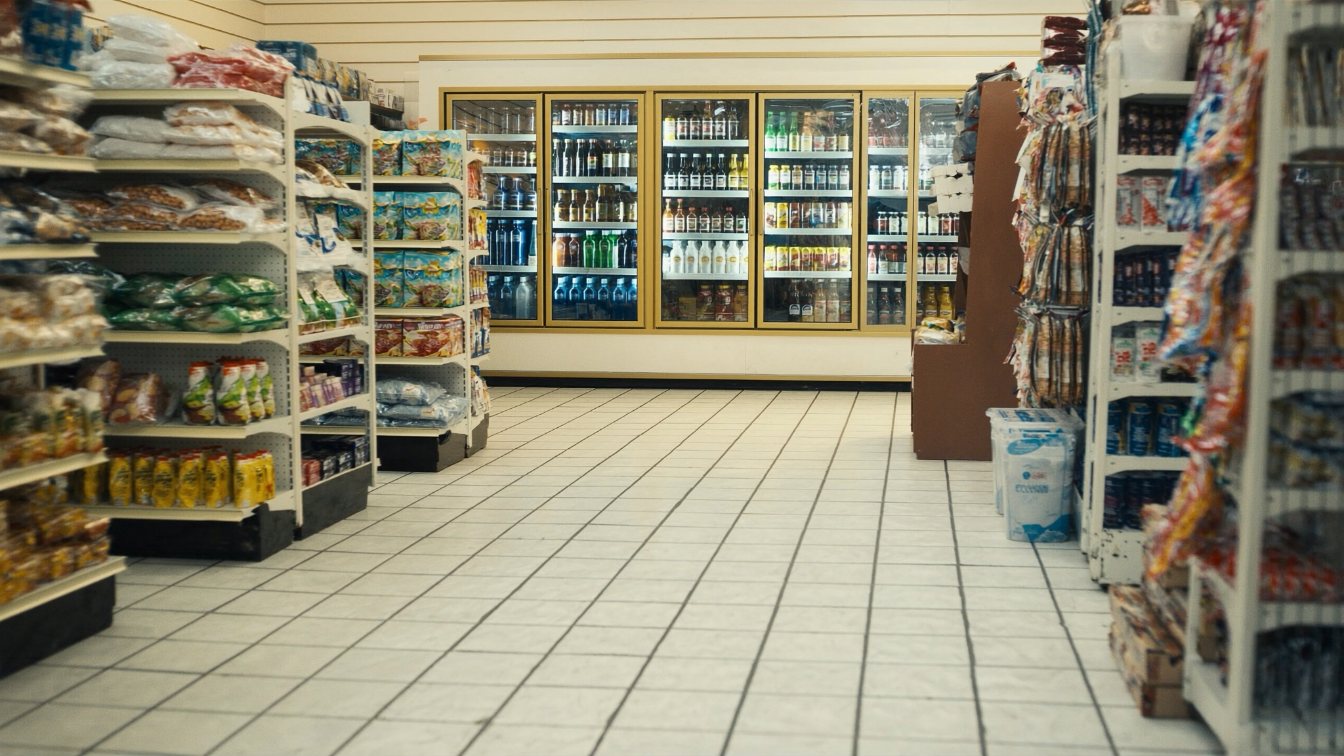
To hold an AGCO convenience store alcohol licence in Ontario, the store must have no more than 4,000 square feet of retail floor space, use at least half of that floor space for food (not counting prepared food eaten on site, and not counting the alcohol itself), offer at least five of ten listed food types, and not present itself mainly as a pharmacy (O. Reg. 746/21). The licensee must keep meeting that test for as long as it holds the licence. Tobacco and vapour products must be kept out of customers’ view and reach before purchase. In Toronto, taking over an existing licensed store avoids a new zoning approval if the licence is valid or expired less than three years ago. The licence belongs to one address, so the lease term is part of the value.
The AGCO floor-space test
O. Reg. 746/21 defines a convenience store for alcohol licensing. It is a store:
- with no more than 4,000 square feet of retail floor space;
- in which food products offered for retail sale, excluding prepared food that may be eaten on site, occupy at least half of the retail floor space;
- that offers at least five of: canned food, dry food, frozen food, fresh fruits, fresh vegetables, meat or alternatives, dairy or alternatives, non-alcoholic beverages, baked goods and snack foods; and
- that is not primarily identified to the public as a pharmacy.
Two follow-on rules catch owners who renovate. Section 85 requires the licensee to keep the store a convenience store within that definition, and says liquor sold in the store is not a food product. So a new beer cave that takes floor space from grocery shelving can push the store below the half-food line. Measure before you build, and keep a dated floor plan showing how the retail area splits.
Tobacco, vapour and alcohol in the layout
The Smoke-Free Ontario Act, 2017 shapes the counter:
- No display. Tobacco products, and branded accessories, may not be displayed in any way that lets a customer see or handle them before buying (section 4). Vapour products follow the same rule, and promotion cannot be visible from outside (section 4.1). That means closed cabinets behind the counter.
- Age checks at the till. No sale to anyone under 19, and identification for anyone who appears under 25 (section 3). Staff need a clear view of the customer and a place to check ID.
For alcohol, the licensee must make liquor available only between 7 a.m. and 11 p.m. (section 82), so coolers need to be lockable or otherwise closed off outside those hours. Liquor is bought from the LCBO, and a store needs space to receive and store it securely. These are operating rules, but they drive shelving, cooler and counter design.
Zoning and licensing a takeover
Toronto’s Zoning By-law 569-2013 defines a retail store as “premises in which goods or commodities are sold, rented or leased.” Most main-street and plaza zones permit retail, but check the specific zone and any site-specific exception before you commit.
Toronto’s licensing office adds a practical shortcut. If you take over an existing business that has a valid licence, or one that expired less than three years before your application, in the same licence category, zoning approval is not required; you file an occupancy declaration instead. A vacant unit that was a dry cleaner, a café or an office is a different story: you start with zoning. For the business-side licences, see buying a convenience store in Ontario.
Building Code, change of use and fit-out
Section 10 of the Building Code Act requires a permit for a change of use that increases hazard, even with no construction, and Toronto’s guidance is that a change of use needs a permit. Stores and shops sit in the commercial group in the Ontario Association of Architects’ guide to occupancies, so moving from one store to another is usually the simple case; converting a unit that held a restaurant or an industrial use is not.
Fit-out work usually needs permits of its own: new walk-in coolers, electrical capacity for extra refrigeration, and any change to exits. When I walk a store with a buyer, I look at the electrical panel, the age of the rooftop or refrigeration equipment, the condition of the floor under the coolers and whether the back room can hold alcohol deliveries securely. Those are costs the asking price rarely mentions.
Accessibility (AODA)
Every Ontario business with at least one employee must provide accessible customer service and train staff on it. With 20 to 49 employees you also file an accessibility compliance report every three years, next due 31 December 2026. The Design of Public Spaces standards apply only to new construction and renovated public spaces, so a full store renovation may bring the service counter and paths of travel into scope. A step at the entrance and narrow aisles do not stop a sale, but they are worth fixing if you are rebuilding anyway.
The lease: one address, one licence
The AGCO licence is issued for a specific location and cannot be moved (O. Reg. 746/21, section 156). That makes the lease part of the licence’s value. Check:
- Remaining term and renewals. A two-year remainder with no renewal option leaves you exposed.
- Permitted use. It should cover convenience retail, beer and wine sales, lottery and tobacco. Some landlords restrict alcohol or tobacco.
- Exclusive use. Protection against the landlord leasing another unit in the plaza to a competing store.
- Assignment and change of control. Whether your purchase, especially a share purchase, needs landlord consent.
- Signage, hours and deliveries. Early and late hours and a loading door that works.
- Landlord paperwork. Toronto’s vapour product licensing asks for an occupancy declaration signed by the property owner.
If the landlord will sell you the building, the question changes to value and return. The AI retail store value estimator and the cap rate calculator help there.
Where I fit
I work with convenience store buyers and sellers across the GTA on leases, sites and buildings. Before you commit, measure the retail floor, sketch the food share, and read the lease against the licence. The AI convenience store value estimator below gives a range from the store’s numbers in about a minute. Then book a call or phone 833-330-1925. For a comparison with another food retail premises, see bakery premises requirements, and for the regulated-retail parallel, cannabis retail store premises.
Free tool — AI convenience store value estimator
Frequently asked questions
What is the maximum size of a convenience store for an Ontario alcohol licence?
4,000 square feet of retail floor space. Above that, the store cannot hold a convenience store licence under O. Reg. 746/21; a larger store would need to meet the separate grocery store licence rules instead. Measure the retail floor carefully and keep a dated plan.
How much of a convenience store must be food to sell beer and wine in Ontario?
At least half of the retail floor space must be used for food products offered for sale, excluding prepared food eaten on site. Liquor does not count as food. The store must also offer at least five of ten listed food types, such as canned, frozen or dairy.
Can I move my convenience store alcohol licence to a new location?
No. The AGCO issues the licence for a specific store location, and convenience store licences are not on the list of licences that can be transferred to a different location under O. Reg. 746/21. A new location needs a new licence.
Can a convenience store display cigarettes and vapes in Ontario?
No. The Smoke-Free Ontario Act, 2017 bans displaying tobacco and vapour products in a way that lets customers see or handle them before purchase, and bans vapour product promotion visible from outside. Only registered specialty vape stores have display exceptions.
What hours can a convenience store sell alcohol in Ontario?
Liquor may only be available to customers between 7 a.m. and 11 p.m. on any day, under section 82 of O. Reg. 746/21. The store can open longer hours for other products, but alcohol must be unavailable outside those times.
Do I need zoning approval to take over a convenience store in Toronto?
Not if the existing business has a valid Toronto licence, or one that expired less than three years before your application, in the same licence category. You file an occupancy declaration instead. A unit that held a different use starts with a zoning review.
Sources
- O. Reg. 746/21, Licensing (Liquor Licence and Control Act, 2019) — e-Laws — convenience store definition, ss. 82–87, 154–157
- AGCO — Apply for a convenience store or grocery store licence — eligibility, timing, staff training
- AGCO — Manage a convenience store or grocery store licence — transfers, ownership changes, $500 fee
- Smoke-Free Ontario Act, 2017 — e-Laws — ss. 3, 4, 4.1 and 22 automatic prohibition
- O. Reg. 268/18 under the Smoke-Free Ontario Act, 2017 — e-Laws — flavoured and high-nicotine vapour products
- City of Toronto — Zoning By-law 569-2013, Chapter 800 definitions — use definitions
- City of Toronto — Take-out or Retail Food Establishment licence — fees; zoning approval on a takeover
- City of Toronto — Vapour product retailers — vapour product endorsement $70.39
- Building Code Act, 1992 — e-Laws — s. 10 permit for a change of use that increases hazard
- City of Toronto — When do I need a building permit? — change of use needs a permit even with no construction
- Government of Ontario — Accessibility rules for businesses and non-profits — rules by employee count; compliance report due 31 December 2026
Related reading
- Buying a convenience store in Ontario
- Cannabis retail store premises in Ontario
- Gas station environmental due diligence
- Bakery premises requirements in Ontario
- AI convenience store value estimator
- AI retail store value estimator
- Cap rate calculator
About the author — Jatin Dua, Toronto and GTA real estate broker
I am Jatin Dua, Broker of Record and co-founder of RE/MAX Quantum Realty Inc., Brokerage, Unit 101, 799 The Queensway, Toronto. I work with buyers and sellers across Toronto and the GTA and have helped more than 100 families sell. Four-plus years of active GTA transactions and over $100 million in sales volume. Every figure here comes from a published table, regulator or statute linked in the sources, so you can check all of it without asking me.
Reach me at connect@jatindua.com or 833-330-1925, or book a call.