
Published 2 November 2026 · By Jatin Dua, Broker of Record, RE/MAX Quantum Realty
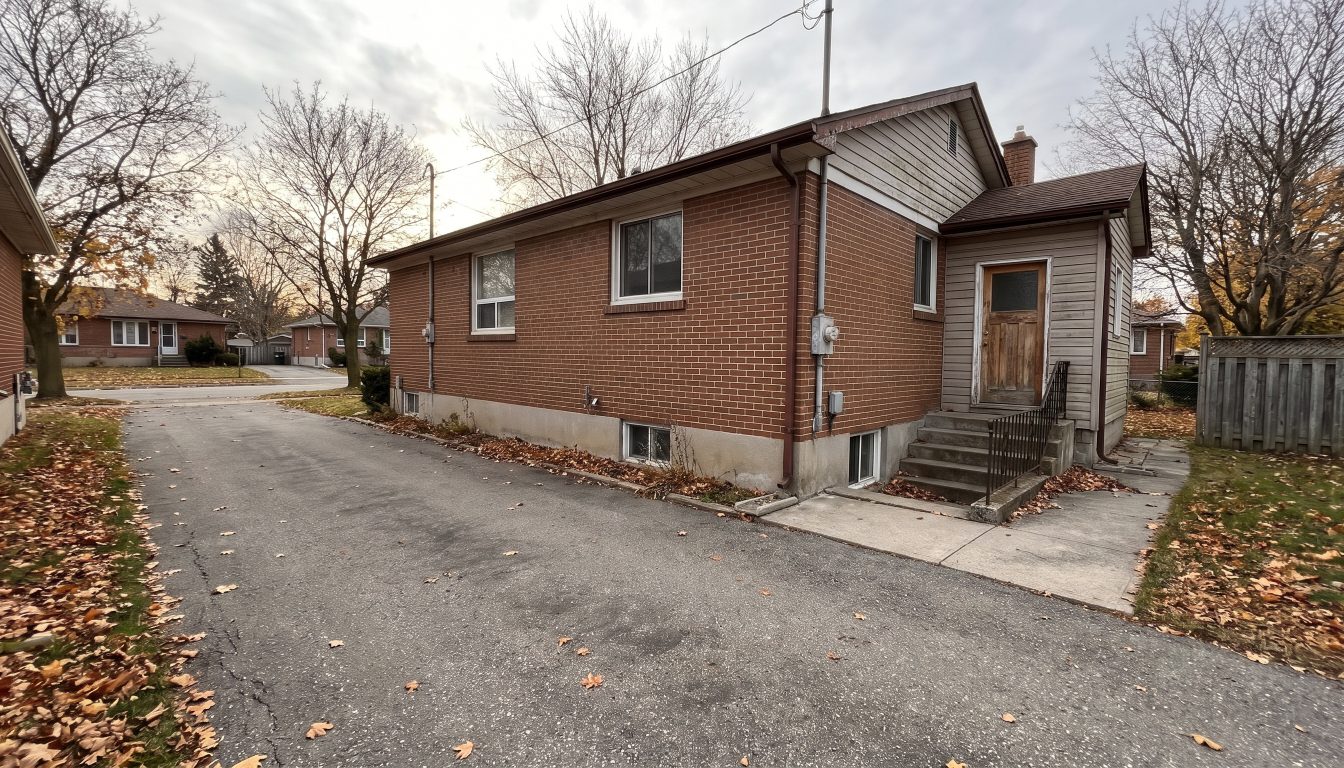
Yes. Oshawa allows up to three units per lot, and a basement apartment is legal once it meets the zoning and parking rules, is built under a building permit and the house is registered as a two-unit house. A house with one basement unit needs three parking spaces. Skipping registration can bring fines from $500 up to $100,000.
This guide is for Oshawa homeowners who want to add a basement apartment, owners with an older second unit that was never legalized, and buyers or investors looking at a two-unit house. You will get Oshawa’s zoning and parking rules, the permit and registration steps, the fines for skipping them, the City’s published fees and current price and rent numbers.
Is a basement apartment legal in Oshawa in 2027?
Yes. Oshawa calls them accessory apartments: a self-contained unit, secondary to the main home, with its own kitchen and bathroom. A house that contains one is called a two-unit house under the City’s registration by-law.
A basement apartment in Oshawa is legal when:
- it meets the accessory apartment rules in section 5.12 of Zoning By-law 60-94;
- it was built under a building permit and passed inspection;
- the house is registered as a two-unit house with the City.
The date your unit was created decides which route you take. The City says a second unit created before July 1994 may be registered through Municipal Licensing. A unit created after July 1994 needs a building permit to be legalized.
Where are accessory apartments allowed in Oshawa?
The City’s accessory apartments page sets these conditions:
- House types: single detached, semi-detached, duplex or street townhouse, or a residential accessory building on the same lot.
- Zones: R1, R2, R3, R5, OSR-A, OS-ORM, AG-A, AG-B and AG-ORM.
- Units: a maximum of three dwelling units on the lot, with no more than one in an accessory building.
- Hazard lands: not allowed in hazard lands or areas without safe access identified by the Central Lake Ontario Conservation Authority (CLOCA).
- Holding zones: not allowed where the main house is only an interim use under an “h” holding symbol.
- Walkway: a hard-surfaced, unobstructed path at least 0.81 metres wide from the apartment entrance to the street line.
- Landscaping: at least 50% of the front yard and of a corner lot’s exterior side yard must stay landscaped open space.
If your property does not meet a rule, the City points to a minor variance through the Committee of Adjustment. Lots near a Metrolinx corridor, a provincial highway or CLOCA-regulated land may need those agencies’ permits too.
How many parking spaces does an Oshawa basement apartment need?
Parking is where many Oshawa plans fail, so check it first. The City requires one extra space for each accessory unit, on top of two spaces for the main house.
| Units on the lot | Spaces required | Space size | Layout rules |
|---|---|---|---|
| 2 (house plus basement) | 3 | 2.75 m x 5.75 m | At least one in a side yard, rear yard or garage; two with unobstructed street access, not tandem |
| 3 | 4 | 2.75 m x 5.75 m | At least one in a side yard, rear yard or garage; three with direct street access, not tandem |
Source: City of Oshawa, Accessory Apartments page, read November 2026. Landscaped open space rules still apply to the front yard.
Spaces that need direct street access often mean a wider curb cut. That needs approval from the City on a city street, or from the Regional Municipality of Durham on a regional road.
What Building Code rules apply to an Oshawa basement unit?
Ontario’s guide for second units in houses more than five years old covers most Oshawa basements:
- Ceiling height: at least 1.95 metres over the required floor area and the route to the exit.
- Windows: 5% of floor area in living and dining rooms and 2.5% in bedrooms; an escape window needs 0.38 m² of clear opening.
- Fire separation: 30 minutes between units, or 15 minutes with interconnected smoke alarms throughout.
- Heating: one furnace is allowed with a duct smoke detector that cuts its fuel and power.
- Plumbing: separate water shut-off valves for each unit, plus a full kitchen and bathroom.
Oshawa adds a recent change: since January 1, 2026, a carbon monoxide alarm is required on every storey of a home, in addition to the alarms outside sleeping areas.
Instant Home Valuation
What’s your home
worth today?
Answer six quick questions and get an instant value range built from current Toronto & GTA sale data — property type, size, condition, lot and location all weighted the way a real pricing conversation weighs them. Takes about ninety seconds.
Reading recent GTA sale data…
Building your estimate
Estimated market value
—
$0–$0
Most likely value $0 · roughly $0 per square foot
What moved the number
Starting from the area baseline for your property type, here’s what each answer added or subtracted.
Market context
Recent local averages for comparison.
—
A range is a starting point.
A strategy is what sells.
This model doesn’t know that your neighbour’s identical semi went $80,000 over asking last month, or which two upgrades actually pay back in your area. That conversation is free and takes twenty minutes.
How do you get a building permit for an accessory apartment in Oshawa?
The City recommends hiring an architect, engineer or BCIN designer, because plans examiners cannot design the unit for you. You apply online. On the portal, choose “add dwelling unit” as the application type and “conversion from single to multiple dwelling” as the nature of work.
The City’s list of what to submit includes:
- the application to construct or demolish, with Schedule 1;
- an owner’s authorization, if you are not the owner;
- a plumbing form for sizing the water distribution system;
- a site plan showing parking spaces with dimensions, both entrances, the 0.81-metre walkway and the air conditioner location;
- existing and proposed floor plans showing room sizes, smoke and CO alarms, fire separations and the duct smoke detector;
- window, door and exterior stair details, including limiting distance calculations for new openings.
Electrical work needs a separate permit and inspection through the Electrical Safety Authority, as Ontario’s guide explains.
How do you register a two-unit house in Oshawa?
By-law 41-2001 makes it an offence not to register a two-unit house. How you register depends on the unit’s age.
- Built with a permit now: the City says you receive a two-unit house registration, with the certificate issued within 60 days of the building inspector’s final inspection.
- Created before July 1994: apply to Municipal Licensing and Standards with the $500 fee and a Two Unit Declaration form proving the unit’s age. The house must meet the Property Standards By-law, Building Code and Fire Code standards that apply to it.
- Created after July 1994 without a permit: a building permit is required to legalize it.
The City lists registered two-unit houses publicly. It says registration helps Fire Services respond, lets tenants check a unit, may help in a future sale, and brings enhanced waste pick-up.
Oshawa’s fines are steep. Under By-law 41-2001, a conviction carries a minimum fine of $500 and a maximum of $100,000, and a continuing offence can add up to $10,000 for each day it continues. The City can also issue a $250 administrative penalty, and it can revoke a registration if the house stops meeting the standards. A tenant in an unregistered unit keeps full rights under the Residential Tenancies Act.
How much does a legal basement apartment cost in Oshawa?
Construction is the main cost, and it depends on the basement. Oshawa’s Building By-law publishes permit rates. It does not show a separate line for a new accessory apartment, so the example below uses the basement finishing rate as a guide only. The City confirms the actual fee when it accepts the application.
| City fee | Rate | Example, 75 m² suite |
|---|---|---|
| House, finishing basement | $7.79 per m² | $584.25 |
| Plumbing, house | $27 per fixture | $135.00 (5 fixtures) |
| Minimum permit fee | $160 | Applies to small jobs |
| Two-unit house registration (pre-1994 route) | $500 one time | Permit route: certificate follows final inspection |
| Estimated permit fees | $719.25 |
Source: City of Oshawa Building By-law 33-2009 as amended by By-law 118-2025, Schedule B; Fees and Charges By-law 109-2024, consolidated April 2026. Design, electrical permit and construction are extra.
The by-law also adds a 50% surcharge when construction starts before any permit application is received. Development charges are not collected for a second unit in an existing house, according to Ontario’s guide.
Is a basement apartment worth it in Oshawa?
Oshawa is one of the lower-priced GTA markets, which is why two-unit houses appeal to first-time buyers and investors. Prices fell in 2026.
| Oshawa | Median, Jan–Oct 2026 | Same period 2025 | Change |
|---|---|---|---|
| Detached | $730,000 | $800,000 | −8.8% |
| Semi-detached | $610,000 | $660,000 | −7.6% |
| Freehold townhouse | $657,500 | $735,000 | −10.5% |
Source: TRREB MLS data via REALM, January–October 2026 vs the same period of 2025, City of Oshawa. Median sold prices, not forecasts.
For rent, TRREB’s Q2 2026 rental report shows Oshawa condo apartments leasing at an average of $1,918 for a one-bedroom and $2,277 for a two-bedroom. TRREB does not publish basement rents, so treat those as an upper reference. My Durham Region rent guide and Durham market outlook go deeper.
A basement unit created after November 15, 2018 in unfinished space, or while the owner lived in the house, is generally exempt from Ontario’s rent increase guideline. Ninety days’ notice and the 12-month rule still apply.
In Oshawa, the parking rule decides more deals than the Building Code does. Before you buy a house to add a suite, or pay more for one that has a suite, count the legal spaces and check whether two can be reached from the street without tandem parking. Then ask for the City’s two-unit registration certificate. A registered unit is a selling point; an unregistered one is a fine waiting to happen.
What to do next
Take these steps before you spend on construction.
- Confirm your zone and measure your driveway against the parking table above.
- Find out when any existing second unit was created, before or after July 1994, and gather proof.
- Hire a qualified designer and apply on the City’s portal as “add dwelling unit”.
- Book every inspection and keep the two-unit registration certificate with your records.
- Check your home’s value with my Whitby and Oshawa house value guide, and read what makes a basement apartment safe.
Need help with this? Talk to me.
I’m Jatin Dua, Broker of Record at RE/MAX Quantum Realty, and I’m the best agent to do this kind of work for you in Toronto and across the GTA. Over $100 million in GTA sales and 100+ families helped sell. Feel free to contact me any time: call or text 833-330-1925 or email [email protected].
Frequently asked questions
Is a basement apartment legal in Oshawa?
Yes, if it meets section 5.12 of Oshawa’s Zoning By-law 60-94, is built under a building permit and the house is registered as a two-unit house. Oshawa allows up to three dwelling units on a lot in permitted residential and some agricultural zones. A unit created after July 1994 without a permit is not legal until it is permitted.
How many parking spaces do I need for a basement apartment in Oshawa?
Three spaces in total for a house with one basement apartment, each 2.75 by 5.75 metres. At least one must be in a side yard, rear yard or garage, and two need unobstructed street access without tandem parking, according to the City of Oshawa. A lot with three units needs four spaces.
How do I register a two-unit house in Oshawa?
If you build the unit under a building permit, the City of Oshawa issues the two-unit house registration, with the certificate sent within 60 days of the final inspection. For a unit created before July 1994, apply to Municipal Licensing and Standards with the $500 fee and a Two Unit Declaration form proving the unit’s age.
What is the fine for an unregistered basement apartment in Oshawa?
A minimum of $500 and up to $100,000 on conviction under Oshawa’s Two Unit House Registration By-law 41-2001. A continuing offence can add up to $10,000 for each day it continues. The City can also issue a $250 administrative penalty and can revoke a registration if the house stops meeting the required standards.
How much does a basement apartment permit cost in Oshawa?
Oshawa’s 2026 Building By-law lists $7.79 per square metre for finishing a basement in a house and $27 per plumbing fixture, with a $160 minimum. On those rates, a 75 square metre suite with five fixtures is about $719 in permit fees. The City confirms the exact fee for a new accessory apartment when it accepts the application.
Can I legalize an old basement apartment in Oshawa?
Yes. If the second unit existed before July 1994, Oshawa lets you register it through Municipal Licensing and Standards for a $500 fee, with a declaration and proof of age, as long as it meets the property standards, Building Code and Fire Code rules that apply. A unit created after July 1994 needs a building permit instead.
Do I need a carbon monoxide alarm on every floor in Oshawa?
Yes. The City of Oshawa says that since January 1, 2026, a carbon monoxide alarm is required on every storey of a residential dwelling, in addition to the alarms required outside sleeping areas. Inspectors check alarms when a two-unit house is registered, so update them before you apply in 2027.
Can I have a garden suite and a basement apartment in Oshawa?
Yes, up to three units on one lot, with only one in an accessory building. Oshawa’s rules for a unit in an accessory building include 0.6 metre side and rear setbacks, a 4.5 metre height limit on most lots, 3 metres from the house, and a cap on combined accessory building coverage. A lot with three units needs four parking spaces.
What rent can a basement apartment get in Oshawa?
No official source publishes Oshawa basement rents. As an upper reference, TRREB’s Q2 2026 rental report shows Oshawa condo apartments leasing at an average of $1,918 for a one-bedroom and $2,277 for a two-bedroom. A basement unit usually needs pricing against local listings, size, light and whether utilities are included.
Sources
- City of Oshawa: Accessory Apartments
- City of Oshawa: Two-Unit Houses
- City of Oshawa: Two Unit House Registration By-law 41-2001 (consolidated)
- City of Oshawa: Building By-law 33-2009 as amended by By-law 118-2025
- City of Oshawa: Fees and Charges By-law 109-2024, consolidated April 2026
- Government of Ontario: Add a second unit in your house
- Ontario e-Laws: Residential Tenancies Act, 2006, s. 6.1
- TRREB Rental Market Report, Q2 2026
Related reading
- How Much Does a Fourplex Cost to Build or Buy in Toronto?
- Converting a House to a Triplex in Toronto: Cost, Permits and Payback
- Multiplex Benefits for Toronto Homeowners: Rent, Value and Family Living
- Legal Basement Apartment in Brampton (2027): Rules, Permits and Costs
About the author — Jatin Dua, Toronto and GTA real estate broker
I am Jatin Dua, Broker of Record and co-founder of RE/MAX Quantum Realty Inc., Brokerage, Unit 101, 799 The Queensway, Toronto. I work with buyers and sellers across Toronto and the GTA and have helped more than 100 families sell. Four-plus years of active GTA transactions and over $100 million in sales volume.
Reach me at [email protected] or 833-330-1925, or book a call.