
Published 7 September 2026 · Updated 29 September 2026 · By Jatin Dua, Broker of Record, RE/MAX Quantum Realty
Building at a glance · North Etobicoke
What's Your Unit Worth Right Now?
Get a free AI-powered price range for your condo in under 90 seconds — floor, exposure, view, parking and locker included. No name or address required.
Get My Free Estimate →Maurice Coulter Housing Co-op in one look.
174 John Garland Blvd, Etobicoke, Toronto
Free · about 45 seconds · no obligation
What is your unit at Maurice Coulter Housing Co-op worth today?
Floor, exposure, parking and this building’s own recent sales move the number. Your estimate appears instantly, and a written CMA from me is one tap after.
- Uses this building’s own recent sales
- Adjusts for floor, view and parking
- Your number appears instantly
How you get around
Scores from Walk Score®
Walk Score
Very Walkable
Transit Score
Excellent Transit
Bike Score
Bikeable
Transit, nearest first
- 9696 WilsonTTC busSteps away
- 4646 Martin GroveTTC bus0.2 km
- 6Martin Grove stopLine 6 Finch West0.5 km
- GOEtobicoke North GOKitchener line3.6 km
Distances are straight-line from the building.
How far is everything?
From the front door, in kilometres.
Schools for this address
Public schools from the TDSB school locator, checked 18 October 2026. Boundaries change: confirm with the board before you buy.
Elementary & middleJK–8
Greenholme Junior Middle School
10 Jamestown Cres
0.4 km · ~6 min walk
Zoned for this address
High schoolGr 9–12
West Humber Collegiate Institute
1675 Martin Grove Rd
0.3 km · ~5 min walk
Zoned for this address
Catholic elementary
St. Dorothy Catholic School
0.4 km · ~6 min walk
Nearest, confirm zoning
Catholic elementary
St. Andrew Catholic School
1.4 km · ~22 min walk
Nearest, confirm zoning
Catholic secondary
Father Henry Carr Catholic Secondary School
0.5 km · ~8 min walk
Nearest, confirm zoning
French-language · MonAvenir (Catholic)
École élémentaire catholique Saint-Noël-Chabanel-Toronto
2.2 km
Nearest, confirm zoning
Catholic (TCDSB) and French-language schools shown are the nearest to the building, not confirmed zoning. Check the TCDSB school locator, Viamonde or MonAvenir.
Living here
Renters, Airbnb and elevators at Maurice Coulter Housing Co-op
Do mostly owners or renters live here?
Too few deals in the last 24 months to read the owner and renter mix reliably. Ask me and I will pull the building’s history.
Can you Airbnb a unit at Maurice Coulter Housing Co-op?
No active City registrations here right now. In Toronto you can only host in your principal residence, a whole unit for at most 180 nights a year, with a $390 yearly registration and 6% accommodation tax. You cannot buy here to run it as a full-time Airbnb. Check the condo’s rules in the status certificate before you count on it.
How reliable are the elevators?
Ontario requires residential buildings to report any elevator outage lasting 48 hours or more, and this address has none on record. Elevators still need modernizing every 25 to 30 years, so check the reserve fund study for the date.
Sources: TRREB MLS® System lease and sale counts; City of Toronto short-term rental registrations (Open Data, 18 Oct 2026); TSSA Residential Elevator Availability portal.
Before you buy here
Five things the listing will not tell you about Maurice Coulter Housing Co-op
- Reserve fund health. Ask for the latest reserve fund study and its date. A thin fund in an older building usually means fee jumps or a special assessment.
- Special assessments and big repairs. Check the status certificate for planned levies and for balcony, garage, window or elevator work.
- Insurance deductible. Find the corporation’s deductible for water damage. If it is higher than your own policy covers, raise your coverage before closing.
- Fee trend. Compare this year’s budget with last year’s. Rises of 2–5% a year are typical; bigger jumps need an explanation.
- Lawsuits and rules. Look for legal claims against the corporation, and for rules on pets, short-term rentals and leasing.
Send me the status certificate and I will flag anything that matters before your conditional period runs out.
Get my status certificate reviewedWatch this building
Know the moment a unit at Maurice Coulter Housing Co-op lists or sells.
Portals tell you a listing exists. I tell you whether it is priced right for this building, which stack it is in, and what the last comparable unit actually went for.
- New listings for sale or rent here
- What units sold for, with my read on it
- No account, no spam, stop with one reply
Building alerts
Takes about twenty seconds.
Parks nearby
- Masseygrove Park
- Garland Park
- Esther Lorrie Park
Schools: TDSB school locator; Catholic and French schools: nearest by distance. Transit and scores: Walk Score® and TTC/GO station locations. Nearby places: OpenStreetMap. Distances are straight-line estimates.
Maurice Coulter Housing Co-operative at 174 John Garland Boulevard is a 110-unit non-profit housing co-operative that opened in September 1989. You cannot buy a unit in it, and no real estate agent — including me — can sell you one.
It shows up in condominium directories because it is housing on a street full of condominium corporations. It is not a condominium. This post explains the legal difference plainly, because it comes up constantly and almost nobody explains it properly.
The co-op itself
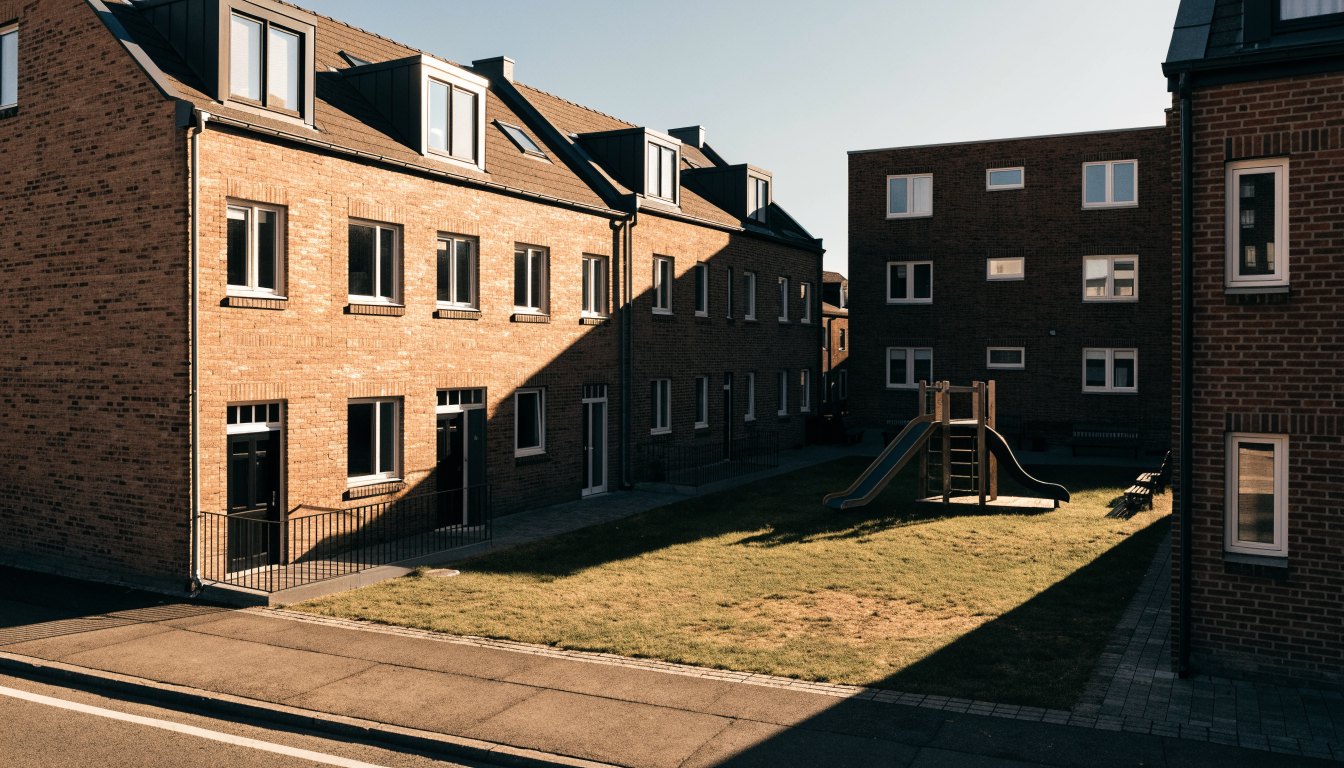
It opened in September 1989 with 110 units ranging from one to four bedrooms — a mix of townhouses and apartments, including a few accessible apartments. It sits on John Garland Boulevard in Rexdale, about a ten-minute walk from the Finch West LRT.
Its origin is unusual and documented. It was sponsored by unions at the McDonnell Douglas aircraft plant — Locals 1967 and 673 — in partnership with the de Havilland union, with organising led by engineer and union activist Glyn Wood. It is named after Maurice Coulter, a long-time de Havilland employee.
Aircraft workers in north Etobicoke built themselves permanent affordable housing, and it is still doing that job nearly forty years later. That is a genuinely good piece of local history.
Why you cannot buy a unit
| Condominium | Non-profit housing co-operative | |
| Governing statute | Condominium Act, 1998 | Co-operative Corporations Act |
| Who owns the land | Unit owners own their units; common elements owned collectively | The co-operative corporation owns all the land. Members own nothing in the land |
| What the resident holds | Title to real property | Membership rights in a non-profit corporation |
| Can it be listed and sold | Yes | No |
A law firm writing in The Lawyer’s Daily states it plainly: in a co-op the land is owned by the co-operative corporation, and members receive only membership rights in the non-profit entity. Members do not own real property, and they may not accept compensation when leaving their housing units.
That last clause is the whole answer. There is no property interest to convey, and a departing member cannot be paid out. There is nothing to list, no title to transfer, and no commission — which is exactly why co-ops stay affordable, and exactly why the real estate industry has no role in them.
Some other things that follow from this
The City of Toronto states that co-op residents are members, not tenants, that co-ops are not considered landlords, and that the Residential Tenancies Act does not apply — with the single exception that Landlord and Tenant Board rules about evictions do apply.
CHF Canada states that co-op housing stays affordable because it is run on a non-profit basis and is never resold, and that members can live there as long as they like, subject to the members’ by-laws. CHF Toronto adds that there is no landlord, that members vote on budgets and elect the board, that housing charges rise with operating costs, and that co-ops include both market-rate and subsidised units.
How you actually get in
You apply directly to the co-op. CHF Toronto explicitly states that it does not accept applications and has no role in administering co-op applications or waiting lists. Each co-op runs its own process, and Maurice Coulter is currently showing no vacancies.
The co-op is self-administered with its own office, reachable at 416-748-6470 or [email protected].
A 2024 article reported one- to four-bedroom units at Maurice Coulter at roughly $900 to $1,400 per month, against surrounding Rexdale one-bedroom market rents approaching $3,000.
That figure is from 2024 and is likely out of date. I include it because the gap it illustrates is the entire point of non-profit co-op housing, not because you should rely on the number.
Why I am writing about housing I cannot sell
Because a real estate agent’s job includes telling you what things are. When you search condominiums on John Garland Boulevard, this comes up. If nobody explains it, people waste weeks trying to buy into something that cannot be bought, or worse, assume a co-op share works like a condominium unit and make a financial decision on that basis.
There is no commission here and there never will be. It is still worth understanding.
The takeaway
Maurice Coulter is a 110-unit non-profit housing co-operative built by aircraft workers’ unions in 1989, and it is not for sale — not now, not ever. Members hold membership rights in a corporation that owns the land, not title to property, and they cannot be compensated when they leave. If you want to live there you apply directly to the co-op, not through an agent and not through the Co-operative Housing Federation.
Thinking about this building?
Send me the unit number or the listing link. I’ll tell you what I actually know about the building, what I’d want to see in the status certificate, and whether the price makes sense against what has sold. No pitch, no obligation.
[email protected] · 833-330-1925 · Book a free consultation
Confidential. Reviewed personally and answered within 24 hours. I never share, sell or distribute your information.
Frequently asked questions
Can I buy a unit at Maurice Coulter Housing Co-op?
No. It is a non-profit housing co-operative under Ontario’s Co-operative Corporations Act. The corporation owns all the land, members hold only membership rights rather than title, and departing members may not accept compensation for leaving. There is nothing to list, transfer or sell.
What is the difference between a co-op and a condominium in Ontario?
A condominium is governed by the Condominium Act, 1998 and owners hold title to real property. A non-profit housing co-operative is governed by the Co-operative Corporations Act, the corporation owns the land, and residents are members holding membership rights. Condominium units can be listed and sold; co-op units cannot.
How do I apply to live at Maurice Coulter?
Directly to the co-op. It is self-administered, reachable at 416-748-6470 or [email protected], and currently shows no vacancies. The Co-operative Housing Federation of Toronto explicitly states that it does not accept applications and has no role in administering co-op waiting lists.
Does the Residential Tenancies Act apply to co-op members?
No. The City of Toronto states that co-op residents are members rather than tenants, that co-ops are not considered landlords, and that the Residential Tenancies Act does not apply — with the single exception that Landlord and Tenant Board rules about evictions do apply.
Who built Maurice Coulter Housing Co-op?
It was sponsored by unions at the McDonnell Douglas aircraft plant, Locals 1967 and 673, in partnership with the de Havilland union, with organising led by engineer and union activist Glyn Wood. It opened in September 1989 and is named after Maurice Coulter, a long-time de Havilland employee.
Why does co-op housing stay affordable?
Because it is run on a non-profit basis and is never resold or flipped for profit. Members vote on budgets and elect the board, and housing charges rise with operating costs rather than with the market. Co-ops include both market-rate and subsidised units.
Can you Airbnb a unit at Maurice Coulter Housing Co-op?
Only in limited cases. Toronto allows short-term rentals only in your principal residence, a whole unit for at most 180 nights a year, with a $390 yearly City registration and 6% accommodation tax. The City’s register shows no active short-term rental registrations at this address. The condo’s declaration and rules can ban short stays outright, so check them in the status certificate.
Has Maurice Coulter Housing Co-op had elevator outages?
None on record. Ontario requires residential buildings to report elevator outages of 48 hours or more to TSSA, and this address has no reported outage since July 2022.
What schools is Maurice Coulter Housing Co-op zoned for?
For TDSB public schools, the address is zoned for Greenholme Junior Middle School (Elementary & middle, JK–8), West Humber Collegiate Institute (High school, Gr 9–12). Catholic and French-language schools are listed on this page by distance. Boundaries change, so confirm with the board before you buy.
What is the closest subway or GO station to Maurice Coulter Housing Co-op?
The nearest subway is Martin Grove stop (Line 6 Finch West), 0.5 km away; the nearest GO station is Etobicoke North GO on the Kitchener line, 3.6 km; the closest bus is the 96 Wilson (TTC bus). Distances are straight-line from the building.
What is the Walk Score of Maurice Coulter Housing Co-op?
Walk Score 73, Transit Score 76 and Bike Score 59. Most daily errands can be done on foot.
Which parks are near Maurice Coulter Housing Co-op?
Masseygrove Park, Garland Park, Esther Lorrie Park are the closest green spaces.
What is my unit at Maurice Coulter Housing Co-op worth?
Use the free AI estimator at the top of this page. It uses this building’s own recent sales and adjusts for floor, view and parking, and your number appears instantly. For a written CMA, I will price your exact unit against the latest comparable sales.
How do I find out when a unit at Maurice Coulter Housing Co-op lists or sells?
Join the building alerts on this page. I watch this building by hand and will tell you when a unit lists, sells or drops in price, with my read on whether it is priced right.
Thinking about buying or selling here?
I work this area every week and I will give you a straight answer, including when the answer is to wait. No pressure, and no drip campaign you cannot get out of.
Call or text 833-330-1925 Send me a message
Jatin Dua, Broker of Record — RE/MAX Quantum Realty Inc., Brokerage. Not intended to solicit buyers or sellers currently under contract with another brokerage.
Sources
Everything above that is a number or a name comes from one of these. Anything I could not source, I have marked as unverified in the text.
- The Local — housing co-ops in Rexdale, Maurice Coulter. The September 1989 opening, unit mix, the McDonnell Douglas and de Havilland union sponsorship, Glyn Wood, the naming after Maurice Coulter, the Finch West LRT walk and the 2024 housing charge range. Accessed 7 September 2026.
- Maurice Coulter Housing Co-operative — official site. The mix of townhouses and apartments including accessible units, and the co-op’s own contact details. Accessed 7 September 2026.
- Pallett Valo LLP in The Lawyer’s Daily — co-ops, co-ownerships and condos: crucial differences (PDF). That the co-operative corporation owns the land, that members hold membership rights rather than real property, and that members may not accept compensation when leaving their units. Accessed 7 September 2026.
- City of Toronto — co-operative housing information. That residents are members not tenants, that co-ops are not landlords, and that the Residential Tenancies Act does not apply except for Landlord and Tenant Board eviction rules. Accessed 7 September 2026.
- Co-operative Housing Federation of Toronto — what is a co-op. Non-profit operation, no landlord, member voting on budgets and board elections, the mix of market and subsidised units, and that co-op housing is never sold or flipped for profit. Accessed 7 September 2026.
- CHF Toronto — find a co-op. That CHF Toronto does not accept applications and has no role in administering co-op applications or waiting lists. Accessed 7 September 2026.
- CHF Canada — about co-op housing. That co-op housing stays affordable because it is non-profit and never resold, and that members may live there as long as they like subject to the by-laws. Accessed 7 September 2026.
Related reading
- The Etobicoke condo directory — every condominium corporation I could find, by neighbourhood
- Boutique low-rise condos between Islington and Kipling
- The condos within walking distance of Islington station
- All of my Etobicoke real estate writing
About the author — Jatin Dua, Etobicoke real estate agent
I’m the Broker of Record at RE/MAX Quantum Realty, 799 The Queensway in Etobicoke, a few minutes from every building on this page. I work with buyers, sellers and investors across Mimico, Humber Bay Shores, New Toronto, Long Branch, Alderwood and the Stonegate–Queensway corridor. I write these building guides the way I’d brief a client at my own kitchen table: what is documented, what isn’t, and where the published numbers disagree with each other.
Questions about a specific suite? [email protected] or 833-330-1925.
© 2026 Jatin Dua, Broker of Record, RE/MAX Quantum Realty Inc., Brokerage. The building data on this page was compiled and verified by Jatin Dua. Reproduction or republication, in whole or in part, requires written permission. To request permission, call 833-330-1925.