
Published 7 September 2026 · Updated 29 September 2026 · By Jatin Dua, Broker of Record, RE/MAX Quantum Realty
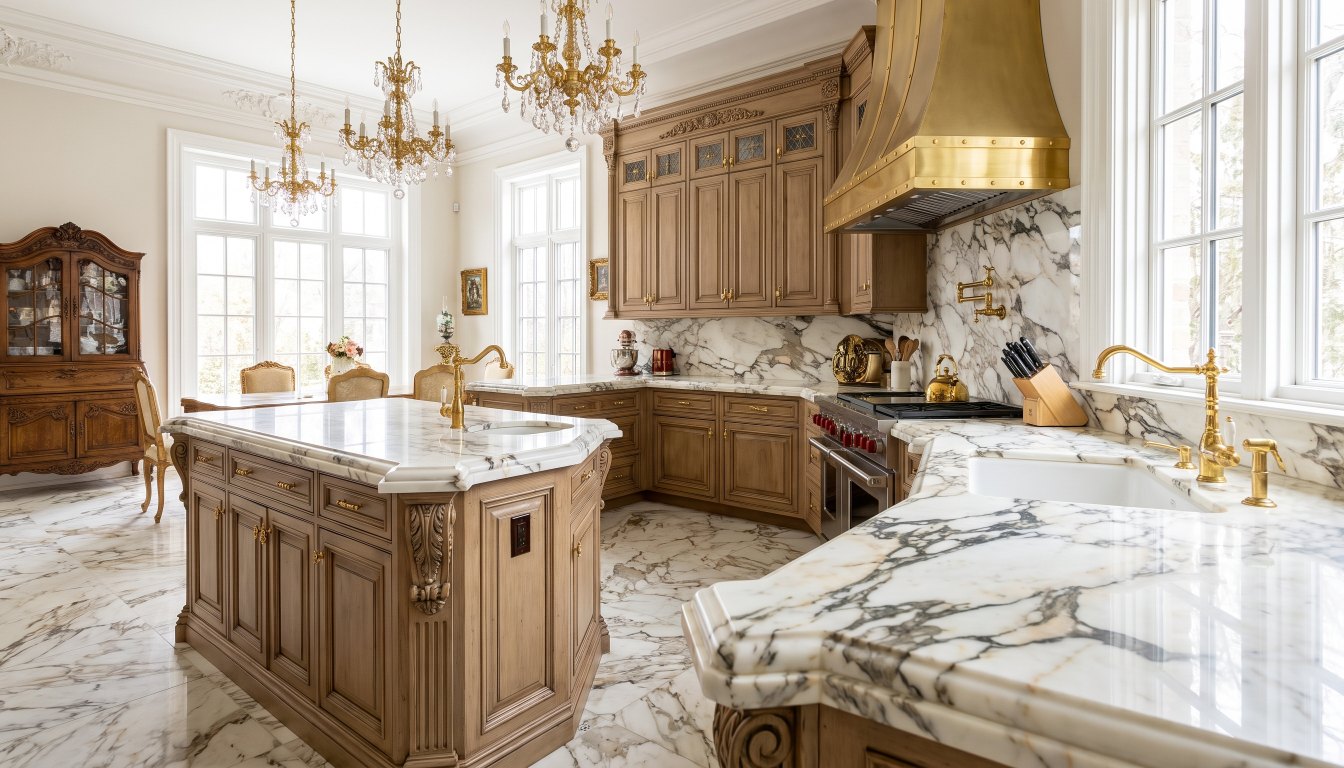
Because the two halves of a property behave in opposite directions over time. Land appreciates or holds because its supply is fixed. Buildings depreciate, exactly like every other constructed thing, and eventually get renovated or replaced. When you pay a premium for a brand-new interior on an ordinary lot, you are buying the half that is on a clock.
The test is simple and unforgiving: what would this lot sell for with nothing on it? If land value is close to the asking price, the market has already written off the house and you are buying a site. If land value is a small fraction of the price, you are buying a building — and you should be very confident about how long its finishes will stay current.
Two clocks, running in opposite directions
| The land | The building | |
|---|---|---|
| Supply | Fixed | Reproducible |
| Over 20 years | Holds or appreciates | Depreciates and is renovated or replaced |
| Can it be improved? | No — only used better | Yes, continuously |
| What protects it | Ravine bylaw, TRCA regulation, heritage district plans, geography | Nothing |
| Effect of fashion | None | Substantial |
Run the test before you fall in love
Ask what the lot would sell for with nothing on it, then compare.
- Land value close to the asking price. You are buying a site. That can be an excellent purchase, as long as you know it and have verified what you can build.
- Land value around two thirds to three quarters. A genuine mix. The building is contributing, and its condition and plan matter.
- Land value well under half. You are paying mostly for a building. Be confident about its age, its systems and how long its interior will read as current.
What makes land scarce, specifically
- Ravine and valley frontage. Protected by Municipal Code Chapter 658 and frequently by TRCA regulation under O. Reg. 41/24. The constraint on you is the guarantee for the view.
- Heritage Conservation Districts. A Part V district plan governs exterior alterations, additions and demolition. South Rosedale, North Rosedale, Wychwood Park, Yorkville–Hazelton, East Annex, West Annex Phase 1 and Teiaiagon–Baby Point are designated.
- Large minimum lot sizes. Bridle Path–Sunnybrook–York Mills has a two-acre minimum and typical parcels of two to four acres, subdivided into roughly fifty lots in the 1950s.
- Water frontage. Finite, by definition.
The honest counter-argument
Land-first reasoning can be taken too far. A well-built recent house on a good lot is a genuinely better purchase than a failing house on a slightly better lot, because construction is expensive, disruptive and slow — and because ravine, heritage and tree constraints may prevent you from building what you imagine anyway.
The point is not that buildings are worthless. It is that a premium paid for finishes is a premium on a depreciating asset, and it should be a conscious decision rather than an accident of a good showing.
How to apply this when you are choosing
- Get both surveys and compare table land, not registered depth.
- Get a zoning review for both addresses.
- Check ravine and TRCA mapping, and heritage status, for both.
- Count the trees over 30 centimetres trunk diameter on both.
- Ask what each lot alone is worth.
- Then, and only then, compare the kitchens.
The practical takeaway
Buy the lot you cannot replicate and accept the house you can change. The most expensive Toronto mistake is not overpaying by a hundred thousand dollars on price; it is paying a premium for a beautiful interior on an ordinary lot, then discovering in ten years that the interior is dated and the lot never was the point.
Frequently asked questions
How do I work out the land value of a Toronto property?
Look at bare-lot and teardown sales of similar frontage, depth and zoning in the same pocket, then adjust for what constrains development: the zoning envelope, ravine protection under Chapter 658, TRCA regulation, heritage designation, and trees of 30 cm trunk diameter or more under Chapter 813.
Do new finishes lose value quickly?
They date rather than fail. A kitchen installed today will look current for perhaps a decade and dated after that, and a buyer at that point prices its replacement. The land underneath is unaffected by any of it.
Is a brand new house a bad buy?
Not at all — recent construction brings current systems, current standards and warranty coverage, and it sells well. The question is what proportion of the price is the building and whether the lot underneath justifies the rest.
What makes land genuinely scarce in Toronto?
Fixed supply enforced by geography or regulation: ravine and valley frontage protected by Chapter 658 and TRCA regulation, streets inside a Heritage Conservation District where a district plan controls scale and demolition, water frontage, and neighbourhoods platted with large minimum lot sizes such as the two-acre minimum in Bridle Path–Sunnybrook–York Mills.
Does this mean I should buy the worst house on the best street?
It is a defensible strategy where the land value supports the price and you have the appetite for a renovation or rebuild. It is a bad strategy if you underestimate the constraints — ravine, heritage, trees and zoning all decide what you can actually do.
How do record sales illustrate this?
The largest publicly reported GTA transaction of 2025 was $27,325,000 for 20 and 22 Park Lane Circle — two adjoining properties bought together. That is a land assembly, not a house purchase. At the very top of the market, price is almost entirely a land story.
Thinking about buying or selling at the top end?
Send me the address, or the shortlist you are considering. I will tell you what the property is actually worth today, what the land is worth without the house, what the transfer tax and carrying costs will be, and whether the deal makes sense. Confidential, always.
[email protected] · 833-330-1925 · Book a free consultation
Confidential. Read personally and answered within 24 hours. I never share, sell or distribute your information.
Related reading
- Lot frontage, depth and shape: the quiet driver of luxury home value
- How luxury homes are actually valued in Toronto
- Teardown or renovate? How to judge a $3M Toronto lot
- 7 things luxury buyers in Toronto pay extra for (and 5 they do not)
Sources
Everything above that is a rule, a rate or a published number comes from these. Verify anything that matters to your own deal.
- Canadian Mortgage Professional — 2025 most expensive GTA home sales, ranked
- City of Toronto — Municipal Code Chapter 658, Ravine and Natural Feature Protection
- City of Toronto — Municipal Code Chapter 813, Trees
- City of Toronto — Heritage Conservation Districts
About the author — Jatin Dua, Broker of Record
I’m the Broker of Record at RE/MAX Quantum Realty, 799 The Queensway in Etobicoke, and I work with buyers, sellers and investors across Toronto and the west GTA. A large part of my work sits in the upper end of the market, where the comparables are thin, the rules are heavier and the cost of a wrong number is measured in hundreds of thousands of dollars.
The free estimators on this site are mine. I built them because the first question every owner asks is “what is it worth?” and the honest answer starts with a number you can check yourself. [email protected] or 833-330-1925.