Published 2 November 2026 · By Jatin Dua, Broker of Record, RE/MAX Quantum Realty
What's Your Home Worth Right Now?
Get a free AI-powered price range for your property in under 90 seconds, based on recent GTA comparable sales. No name or address required.
Get My Free Estimate →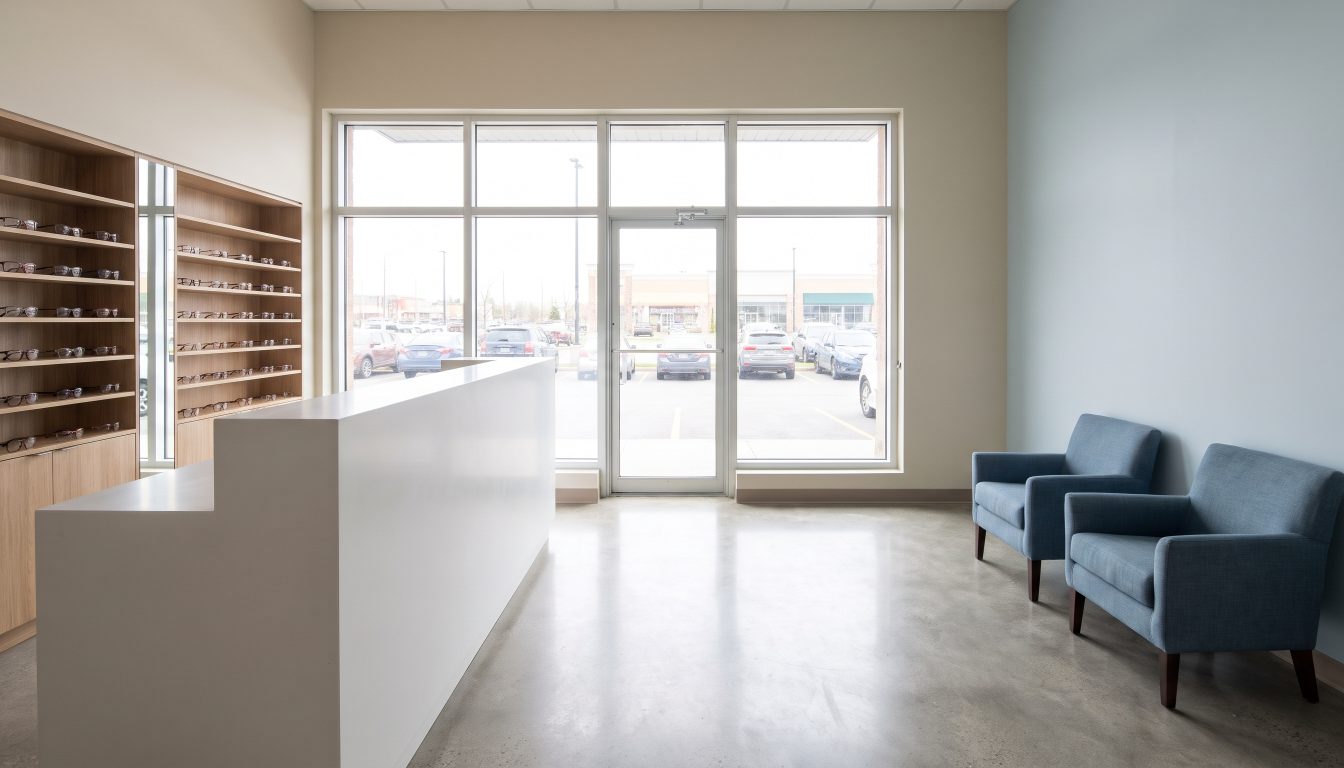
Buy if a sound practice is for sale where you want to work, at a price its own cash flow can finance: you get patients and income from day one. Start from scratch if nothing fits and you can carry a slow first year, since US cold starts average about $200,000 in first-year revenue. Either way, Ontario allows only optometrists to own optometry corporation shares.
This guide is for Ontario optometrists, especially associates and recent graduates, who are deciding whether to open a new practice from scratch (a cold start) or buy an existing one in 2027. You will get a side-by-side comparison of cost, financing, cash flow and risk, plus the Ontario rules that apply either way.
I am a commercial broker. I help optometrists find and lease or buy clinic space, and I handle the business and real estate side of practice purchases, working with your lawyer, accountant and lender. I am not a lawyer, accountant or appraiser, so confirm legal, tax and valuation points with them.
Is it better to start or buy an optometry practice in Ontario?
There is no single right answer. Buying usually costs more up front but gives you patients and cash flow from the first day. Starting usually costs less in total but means months or years of building a patient base while you pay rent and wages. Which one fits depends on your savings, your appetite for risk, and whether a good practice is for sale where you want to work.
| Item | Start a new practice | Buy an existing practice |
|---|---|---|
| Main up-front cost | Build-out and equipment. GTA office fit-out runs $110 to $265 per sq ft in hard costs (Altus, 2026); one US clinic spent about $390,000 on an 1,800 sq ft build-out before equipment (2025) | Purchase price. US sources say most practices sell for 40% to 80% of one year’s revenue (2024) |
| Revenue on day one | None. US cold starts average about $200,000 in gross revenue in year one (2025) | Existing patients, recall list, OHIP and private exam income, and optical sales |
| Advertised Canadian financing | Up to 100% of start-up costs, with a capital repayment holiday of up to one year (National Bank) | Up to 100% with up to 12-year amortization (TD) |
| Biggest risks | Slow patient growth, construction overruns, running out of working capital | Patients or staff leaving, a weak lease, old equipment, paying too much |
| Ownership rules | Only Ontario-registered optometrists may hold shares of an optometry professional corporation | Same rule, so a share purchase needs an optometrist buyer |
Source: Altus Group 2026 Canadian Cost Guide (GTA); Review of Optometric Business (August 2025 and July 2024, US); National Bank and TD healthcare professional banking pages; College of Optometrists of Ontario. Financing is subject to credit approval. US figures are in US dollars.
What does it cost to start an optometry practice from scratch in the GTA?
The two big costs are construction and equipment. Altus Group’s 2026 Canadian Cost Guide puts GTA office interior fit-out at $110 to $150 per square foot for Class B finishes and $160 to $265 for Class A, before soft costs such as design fees and contingencies. A clinic needs more plumbing, lighting control and power than a plain office, so I treat those rates as a floor.
A real example helps. Review of Optometric Business described a US two-doctor cold start that opened in January 2025 in 1,800 square feet. The build-out came to about $390,000, roughly $216 per square foot, not counting equipment or inventory. The owners equipped one general exam lane fully and kept a room for future growth.
Then add equipment, frames, software, furniture and enough working capital to cover rent and wages until the practice breaks even. My guide to optometry clinic space in Ontario covers the zoning and Building Code steps that come before any of that spending.
What does it cost to buy an existing optometry practice?
No Canadian body publishes optometry practice sale prices. US industry sources give wide ranges. Review of Optometric Business said in 2024 that most practices sell for 40% to 80% of one year’s revenue and that multiples of EBITDA for most practices run 3 to 6 times. The same article made a practical point: most practices sell for what a bank will lend the buyer.
So the real question is not the seller’s asking price but whether the practice’s proven cash flow can repay the loan and still pay you a fair salary. My guide to buying an optometry practice in Ontario lists the documents to request before you make an offer, from the revenue split to the lease and any independent contractor agreements.
Whichever route you lean toward, the premises are a big part of the cost. If you are comparing clinic units or thinking about owning your space, try the estimator below for a quick range.
How do banks finance a cold start compared with a purchase?
Canadian banks advertise strong terms for health professionals, for both routes, subject to credit approval:
- Start-up. National Bank advertises financing of up to 100% of the costs of starting, acquiring or expanding a practice, with a capital repayment holiday of up to one year.
- Purchase. TD lists term loans of up to 100% financing with up to 12-year amortization for buying an existing practice.
The lender looks at different things in each case. For a purchase, the bank studies the seller’s financial statements, because that cash flow repays the loan. A 2022 US article in Review of Optometric Business said banks base acquisition lending heavily on the practice’s own financials, and that the ideal candidate has at least two years of experience after graduation, limited personal debt and three to four months of savings. For a cold start, there is no history to lean on, so your business plan, your experience and your own savings carry more weight.
How fast does a new optometry practice grow?
Slower than most new owners hope. Review of Optometric Business noted in 2025 that a typical US cold start grosses about $200,000 in its first year. The clinic it profiled projected about $450,000, closer to what cold starts usually reach in year two or three.
In Ontario, OHIP-insured patients can help fill the early schedule. OHIP covers routine eye exams for people 19 and under and 65 and over, and for adults with eligible conditions. But insured exam fees are fixed, so profit grows mainly as you add private-pay exams and optical sales. A practice you buy skips this ramp-up. That is the main thing the purchase price pays for.
Which is riskier, a cold start or an acquisition?
Both carry real risk. They are just different risks.
Cold start risks
- Patient growth slower than your plan, while rent and wages are fixed.
- Construction delays and overruns, especially plumbing, electrical and HVAC.
- Picking a site with more nearby competition than you realized.
Acquisition risks
- Patients and staff leaving when the seller does.
- A short lease, or one with a percentage rent clause, which O. Reg. 119/94 treats as a conflict of interest when the amount payable is related to the optometrist’s fees or volume of business.
- Old equipment that needs replacing soon after closing.
- Paying for goodwill that does not survive the handover.
Whichever route you take, read the lease before you commit. For a purchase, check the remaining term, renewal options and the landlord’s consent to assign. For a start-up, check that clinic use is allowed and that rent is not tied to your revenue. My notes on commercial lease clauses in Ontario list the clauses that cause the most trouble.
What Ontario rules apply whether you start or buy?
- Ownership. The College of Optometrists of Ontario says only optometrists registered in Ontario may be shareholders in an optometry professional corporation. Holding companies and non-optometrist family members cannot hold shares.
- Working arrangements. Under O. Reg. 119/94, an optometrist practising in a working arrangement with anyone other than another optometrist, a physician or certain public bodies is in a conflict of interest, unless they work as an independent contractor under a written agreement that leaves them in control of patients, fees, records and advertising.
- Records. Patient records must be kept at least 10 years after the last visit, or 10 years after a young patient turns 18. When you buy, you take on that duty for the files you receive.
Is there a middle path for new grads and associates?
Yes. The College welcomed 117 new registrants in 2025. A new optometrist has no patient base yet, and lenders like to see experience and savings, as noted above. These options sit between associate work and full ownership:
- Associate first, then buy. Work in a practice for a few years, then buy all or part of it from the owner. The patients already know you, which lowers the risk for you and your lender.
- Independent contractor. Practise inside an optical store or clinic under a compliant written agreement, build your skills and savings, then open or buy your own.
- Buy and expand. Purchase a small practice with an older owner and grow it, rather than starting from zero.
If a sound practice is for sale in an area you like, at a price the bank will fund from its own cash flow, buying is usually the faster path to a good income. If nothing fits, a cold start in a growing area with little nearby competition can work well, provided you keep the build-out lean and have at least a year of working capital. For a neighbouring profession’s view of the same choice, see my piece on starting vs buying a dental practice.
What to do next
- Write down your budget, your target area and how long you can go without a full income.
- Talk to two banks about both routes, and ask what they would need to see for each.
- If buying, request three years of financial statements, the revenue split, the active-patient count and the lease before you make an offer.
- If starting, shortlist units where clinic use is allowed and get a contractor’s estimate before you sign a lease.
- Ask me to search the market for clinic units or practices that fit, including off-market owners, and to review the lease or purchase terms with your lawyer.
Need help with this? Talk to me.
I’m Jatin Dua, Broker of Record at RE/MAX Quantum Realty, and I’m the best agent to do this kind of work for you in Toronto and across the GTA. Over $100 million in GTA sales and 100+ families helped sell. Feel free to contact me any time: call or text 833-330-1925 or email [email protected].
Frequently asked questions
Should I start or buy an optometry practice in Ontario?
Buy if a sound practice is for sale where you want to work at a price its own cash flow can finance, because you get patients and income from day one. Start a new practice if nothing suitable is for sale and you have working capital for a slow first year. In Ontario in 2027 the same College ownership rules apply either way.
What is a cold start optometry practice?
A cold start is a new optometry practice opened from scratch, with no existing patients. You lease or buy space, build it out, equip it and build a patient base yourself. In Ontario in 2027 it usually costs less in total than buying, but income starts slowly while rent and wages are due.
How much does a new optometry practice make in its first year?
About $200,000 in gross revenue is typical for a US cold start in year one, according to Review of Optometric Business in 2025. Ontario figures are not published. OHIP-insured exams for children, seniors and eligible adults can help fill the early schedule, but profit grows mainly through private exams and optical sales.
Can a new graduate optometrist buy a practice in Ontario?
Yes. Any Ontario-registered optometrist can own a practice or hold shares in an optometry professional corporation. Lenders look for experience and savings, though: a 2022 US article said the ideal buyer has at least two years of practice after graduation, limited personal debt and three to four months of savings. Ontario banks set their own criteria.
Can I get 100% financing to buy or start an optometry practice in Canada?
Some Canadian banks advertise it, subject to credit approval. TD lists up to 100% financing with up to 12-year amortization for buying a practice, and National Bank advertises up to 100% of the costs of starting or acquiring a practice, with up to one year of capital repayment holiday. The practice’s cash flow still decides the loan.
Is it cheaper to start or buy an optometry practice?
Starting is often cheaper up front, but not always cheaper overall. A GTA build-out at $110 to $265 per square foot plus equipment can still cost several hundred thousand dollars, and you carry costs while the patient base grows. Buying costs more at closing in Ontario but brings income from day one.
Can a non-optometrist own an optometry practice in Ontario?
Not as a shareholder of an optometry professional corporation, which only Ontario-registered optometrists may own. Under O. Reg. 119/94 an optometrist can practise with a non-optometrist business only as an independent contractor under a written agreement that keeps the optometrist in control of patients, fees, records and advertising.
What is the safest way to become an optometry practice owner?
For many Ontario optometrists, the lowest-risk path is to work as an associate first and then buy all or part of that practice. Patients already know you, the lender can see the practice’s history, and the seller can help with the handover. Have your lawyer and accountant review the buy-in terms.
Sources
- College of Optometrists of Ontario: Professional Corporations (who may be shareholders)
- O. Reg. 119/94 under the Optometry Act, 1991: conflict of interest, independent contractors, records (e-Laws)
- College of Optometrists of Ontario: 2025 Annual Report (new registrants)
- Altus Group: 2026 Canadian Cost Guide (GTA office interior fit-out)
- Review of Optometric Business: From blank shell to patient magnet, building an office (August 2025)
- Review of Optometric Business: What’s My Practice Worth? (July 2024)
- Review of Optometric Business: How to buy a practice with 100% bank financing (October 2022)
- TD: Banking for healthcare professionals, including optometrists
- National Bank: Banking solutions for healthcare professionals
Related reading
- Where Can You Open a Dental Clinic in the GTA? Zoning by City (2027)
- Buying a Commercial Condo Unit for a Dental Clinic in the GTA (2027)
- Selling Your Dental Practice, Your Building, or Both: Options for Ontario Dentists in 2027
- The Canadian Dental Care Plan in 2027: What It Means for Buying, Selling or Opening a GTA Dental Practice
About the author — Jatin Dua, Toronto and GTA real estate broker
I am Jatin Dua, Broker of Record and co-founder of RE/MAX Quantum Realty Inc., Brokerage, Unit 101, 799 The Queensway, Toronto. I work with buyers and sellers across Toronto and the GTA and have helped more than 100 families sell. Four-plus years of active GTA transactions and over $100 million in sales volume.
Reach me at [email protected] or 833-330-1925, or book a call.
More from the library
- Bubble Tea and Dessert Shop Premises in Ontario: Sinks, Dairy, Licences, Zoning and the Lease
- Yoga and Pilates Studio Premises in Ontario: Hot Rooms, HVAC, Showers, Zoning and the Lease
- What $5 Million Buys in GTA Real Estate in 2027: Houses, Buildings, Plazas and Land
- Selling the House in a Separation: How Ontario Rules Shape the Sale
- How Much Is My House Worth in the West End (High Park, Junction, York)? August 2026 Prices
- Lighthouse West Tower, 15 Lower Jarvis: Big Balconies by Sugar Beach
How this estimate is produced
The estimate blends recent selling prices for comparable units in the area with the details you entered: size, bedrooms, floor, exposure, parking, locker and condition. It is a statistical estimate, not an appraisal and not a formal opinion of value.
What it cannot see
- Interior condition and upgrades beyond what you told it
- Unit-specific issues: noise, an obstructed view, a pending special assessment
- Your reserve fund and where the maintenance fee is heading
- What is competing with you in your own building right now
What moves the number most
- Floor and exposure, which can separate otherwise identical units
- Parking and locker, each priced separately by buyers
- Kitchen and bathroom condition
- Maintenance fee per square foot against the rest of the building
Treat it as a range, not a price
A single figure to the dollar would be false precision. Use the estimate to decide whether a move is worth exploring. Before you price anything for the market, the number needs checking against what is actually selling and sitting in your building this month, and that takes a person. I will do that for you at no cost and with no obligation.
Market data is sourced from the Toronto Regional Real Estate Board. Information is deemed reliable but is not guaranteed. This tool does not provide an appraisal or a formal opinion of value, and it is not a substitute for advice on your specific property. Jatin Dua, Broker of Record, RE/MAX Quantum Realty.