

Published 10 September 2026 · By Jatin Dua, Broker of Record, RE/MAX Quantum Realty
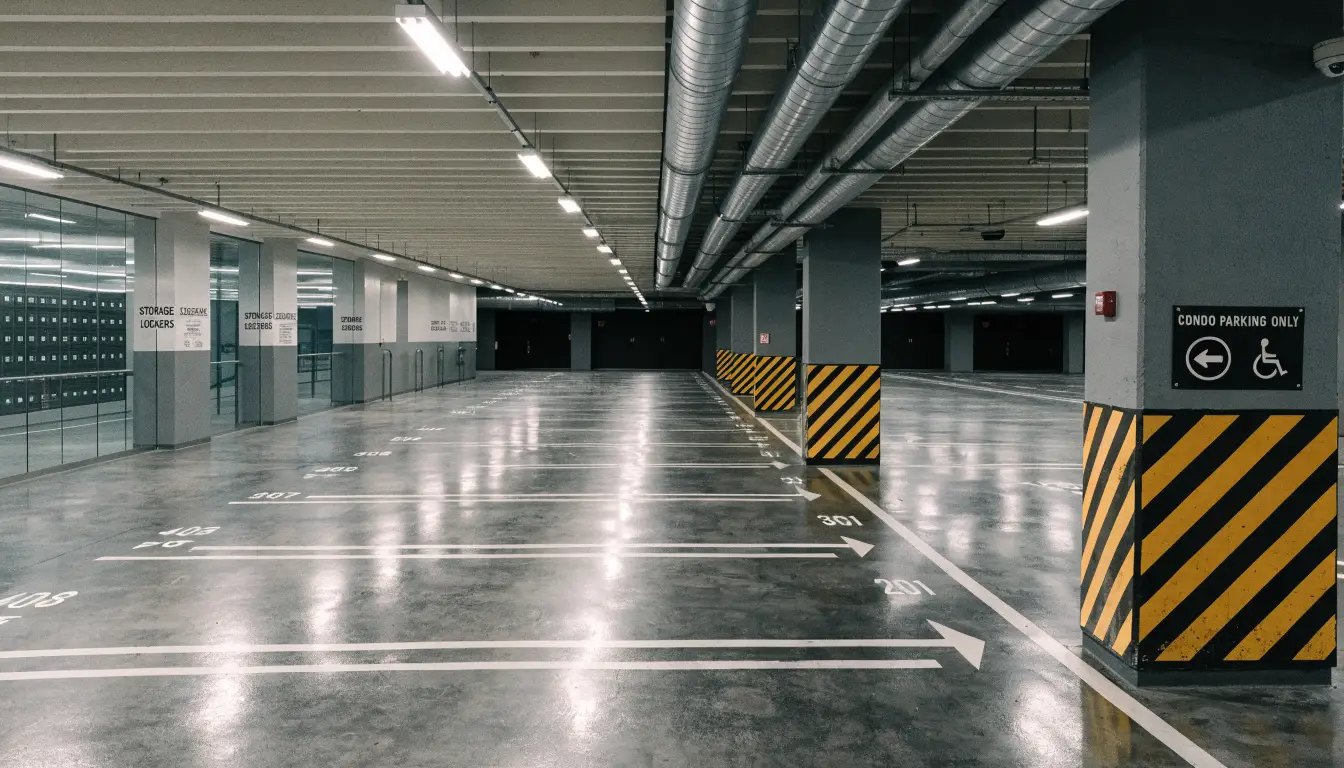
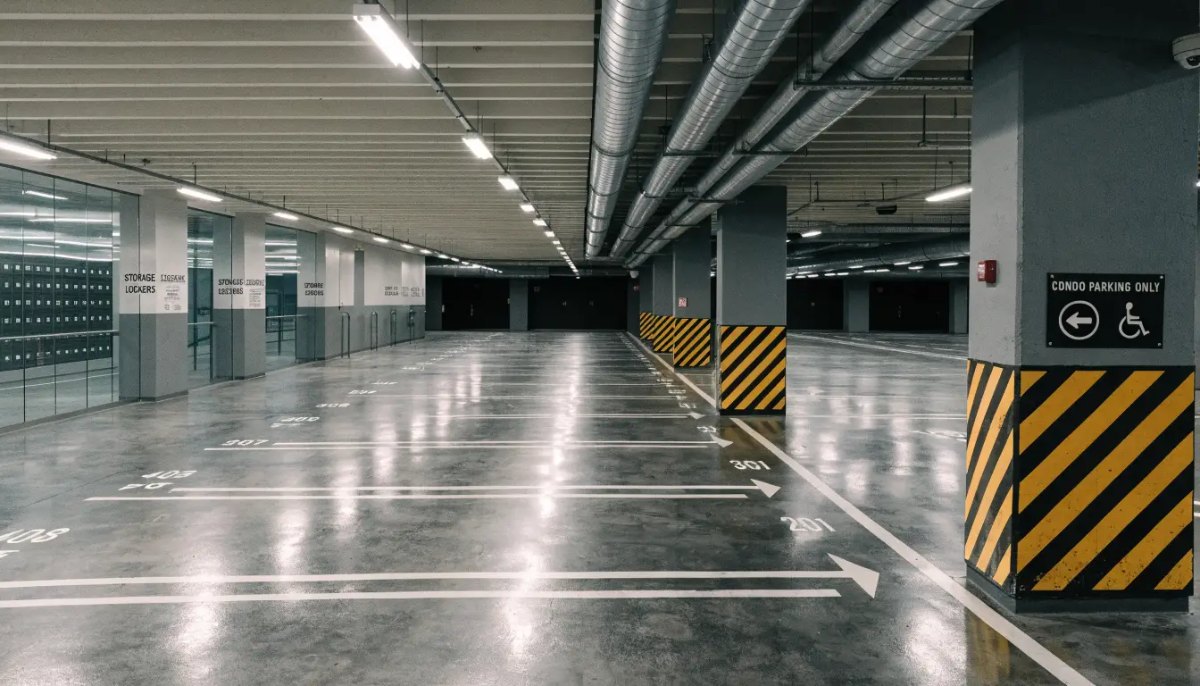
Parking and lockers come in three forms and the difference is worth real money. Owned means it is a separate unit on title with its own legal description — it conveys with the sale and can in some corporations be sold separately. Exclusive-use common element means the corporation owns it and the declaration gives your unit the exclusive right to use it — it conveys with your unit but is not a separate asset. Rented means you have a licence from the corporation or another owner, and it can be taken away. Confirm which one applies, in writing, before you offer.
The three forms, explained
| Owned unit | Exclusive-use common element | Rented | |
|---|---|---|---|
| Who owns it | You, as a separate unit on title | The corporation | The corporation or another owner |
| Does it convey on sale | Yes, as part of the transfer | Yes, attached to your unit | No — the arrangement ends or must be renegotiated |
| Can it be sold separately | Sometimes, subject to the declaration and by-laws — often only to another owner in the corporation | No | No |
| Can it be rented out | Usually, subject to the rules | Usually, subject to the rules | Not yours to sublet |
| Does it carry its own common expenses | Often yes, a small monthly amount | No, it is within your unit’s fee | You pay rent instead |
| Does it appear on the status certificate | Yes | Yes, via the declaration | Usually only as an arrangement, if at all |
| Security | Highest | High | Lowest — can be withdrawn |
Why the difference matters in money
A parking space in a Toronto condominium is a substantial component of value, and in some Etobicoke buildings a second space or a large locker is genuinely scarce. Three practical consequences follow from the ownership form.
- On resale. A unit with an owned space is a different product from an identical unit with a rented one. If your listing says “parking included” and the space turns out to be rented, that is discovered during conditions and renegotiated from your weakest position.
- On financing and value. An owned parking unit is part of what the lender is advancing against and what an appraiser is valuing. A rented space is not.
- On living there. A rented space depends on the goodwill and circumstances of whoever is renting it to you. Owners sell, and the new owner may want the space back.
Thinking about buying or selling here?
I work this area every week and I will give you a straight answer, including when the answer is to wait. No pressure, and no drip campaign you cannot get out of.
Call or text 833-330-1925 Send me a message
Jatin Dua, Broker of Record — RE/MAX Quantum Realty Inc., Brokerage. Not intended to solicit buyers or sellers currently under contract with another brokerage.
How to verify the status — properly
- Ask the listing brokerage in writing. Not “is parking included” but “is the parking space an owned unit, an exclusive-use common element, or rented, and from whom?”
- Have your lawyer check title. An owned space appears as a separate unit with its own legal description; this is definitive and everything else is hearsay.
- Read the declaration. Exclusive-use common elements are allocated in the declaration, which the status certificate package includes.
- Confirm the physical location. Level, space number, and where it is relative to the elevator. Then go and stand in it.
- Ask about restrictions. Some corporations restrict who a space may be sold or rented to — commonly only to another owner in the same corporation.
- Ask whether the space carries its own common expenses, and whether there are arrears on it.
- Check the size against your vehicle. Older Etobicoke garages were laid out for smaller cars, and a compact space beside a column is a daily irritation with a large SUV.
Lockers
Lockers follow the same three forms and attract less attention, which is exactly why they cause trouble. In a condominium, storage is the thing buyers trade away for location, and they are acutely aware of it — a unit with no locker is a materially different product from one with a large locker on the same level as the parking space.
Points worth checking:
- Is there one at all? Some newer, more efficient buildings have far fewer lockers than units.
- Which form is it held in? Owned, exclusive use, or rented.
- Where is it, and how big? A locker three levels below your parking space in a cage you cannot stand up in is not the same as a walk-in room off the garage.
- Is it dry? Underground storage in older buildings can be damp, and the corporation is not insuring your belongings.
- Is it secure? Ask about cameras and access control, and ask a resident whether theft has been an issue.
Buying, selling or renting a space within a building
Where a space is an owned unit, some corporations permit sale to another owner within the same corporation. This is how somebody with two cars and one space solves the problem, and how an owner with no car turns a space into income.
Three cautions:
- Check the declaration and by-laws first. Restrictions on transfer are common and they are enforceable.
- Use a lawyer for a transfer. It is a transfer of a unit on title, not a handshake, and it has its own land transfer tax consequences.
- Put a rental arrangement in writing, with a term and a notice period, so that both sides know where they stand when circumstances change.
Etobicoke patterns
Older corporations across Rexdale, Markland Wood, Kipling, Royal York and the Mill Road cluster generally have generous parking, frequently with surface visitor parking as well, and often larger lockers. Spaces were laid out when cars were smaller, so check the width against your vehicle. These are also the buildings most likely to be doing underground garage membrane and structural work, which is a reserve fund question and, during the work, a real disruption to parking.
Newer buildings in the Queensway, Humber Bay Shores, Mimico and Islington corridors have tighter parking ratios, and a growing number of units are sold without parking at all. Where a space exists it is more likely to be an owned unit, and second spaces are scarce and priced accordingly.
Everywhere, ask about electric vehicle charging: whether the corporation has a policy, whether infrastructure exists, and what the process is for installing at a space. Ontario condominium corporations have a statutory framework for owner applications to install charging systems, and boards vary widely in how ready they are for it.
The wording to use before you offer
Ask the listing brokerage, in writing, for: the ownership form of the parking space and of the locker; the level and identifying number of each; the legal description if either is an owned unit; whether either carries its own common expenses and whether there are arrears; any restriction in the declaration or by-laws on selling or renting them; and the corporation’s policy on electric vehicle charging. Then have the agreement describe both precisely, and have your lawyer verify against title and the declaration.
Frequently asked questions
What is the difference between owned and exclusive-use parking?
An owned space is a separate unit on title with its own legal description; it conveys with the sale and, subject to the declaration and by-laws, can sometimes be sold separately to another owner. An exclusive-use common element is owned by the corporation, with the declaration granting your unit the exclusive right to use it — it travels with your unit but is not a separate asset you can sell.
Can a rented parking space be taken away?
Yes. A rented space is a licence from the corporation or from another owner, and it can end — most commonly when the owner renting it to you sells and the new owner wants it. It does not convey with your unit on resale either, which means a listing describing it as “parking included” creates a problem that surfaces during the buyer’s conditions.
How do I confirm the parking status before buying?
Ask the listing brokerage in writing whether the space is an owned unit, an exclusive-use common element, or rented, and have your lawyer verify it against title and the declaration. Get the level and space number, confirm whether it carries its own common expenses or arrears, and go and stand in the space to check size and distance from the elevator.
Can I sell my parking space separately?
Only where it is an owned unit and only if the declaration and by-laws permit it, which frequently means selling to another owner within the same corporation. It is a transfer of a unit on title, so it requires a lawyer and has its own land transfer tax consequences. Exclusive-use and rented spaces cannot be sold separately at all.
How much is a parking space worth in an Etobicoke condo?
Enough that the ownership form materially affects the price of the unit, and more in buildings where spaces are scarce. Newer buildings in the Queensway, Humber Bay Shores, Mimico and Islington corridors have tighter parking ratios and second spaces are genuinely rare, while the older Rexdale, Markland Wood and Kipling corporations generally have more. Price it from what comparable units with and without spaces sold for in the same building.
What should I check about a locker?
Whether there is one at all, which of the three forms it is held in, where it is relative to your parking space, its actual size, whether it is dry, and how secure the area is. Underground storage in older buildings can be damp, and the corporation is not insuring your belongings — that is your own unit policy’s job.
Can I install an EV charger at my space?
Ontario condominium law provides a framework for owners to apply to install electric vehicle charging systems, but the practicalities depend heavily on the building’s electrical capacity, the location of your space and how prepared the board is. Ask the corporation what its policy is, whether infrastructure exists and what the application process involves — before you buy, if charging matters to you.
Will garage repairs affect my parking?
Yes, and it is worth asking about. Underground garage membrane and structural repair is one of the largest reserve fund items in a mid- or high-rise building, and while it is underway sections of the garage are typically closed and owners are relocated or displaced. Ask what the reserve fund study schedules for the garage and when.
Sources
- Condominium Act, 1998 — units and common elements, exclusive-use common elements, declarations and status certificates. Accessed 10 September 2026.
- O. Reg. 48/01: General — the framework for owner applications to install electric vehicle charging systems and the prescribed contents of a status certificate. Accessed 10 September 2026.
- TRREB Market Watch, August 2026 — Etobicoke condominium apartment sales and price data. Accessed 10 September 2026.
Related reading
- Where to rent a parking spot in Etobicoke
- Condo layouts that hold value
- The Etobicoke condo buying guide
- Condo special assessments and how to see them coming
- What to look for in a condominium status certificate
About the author — Jatin Dua, Etobicoke real estate agent
I am Jatin Dua, Broker of Record at RE/MAX Quantum Realty Inc., Brokerage, Unit 101, 799 The Queensway in Etobicoke, with more than four years of active GTA transactions and over $100M in sales volume. “Parking included” has caused more late-stage renegotiations in my experience than almost anything else in a condominium deal.
Reach me at connect@jatindua.com or 833-330-1925.