

Published 7 August 2026 · Updated 11 September 2026 · By Jatin Dua, Broker of Record, RE/MAX Quantum Realty
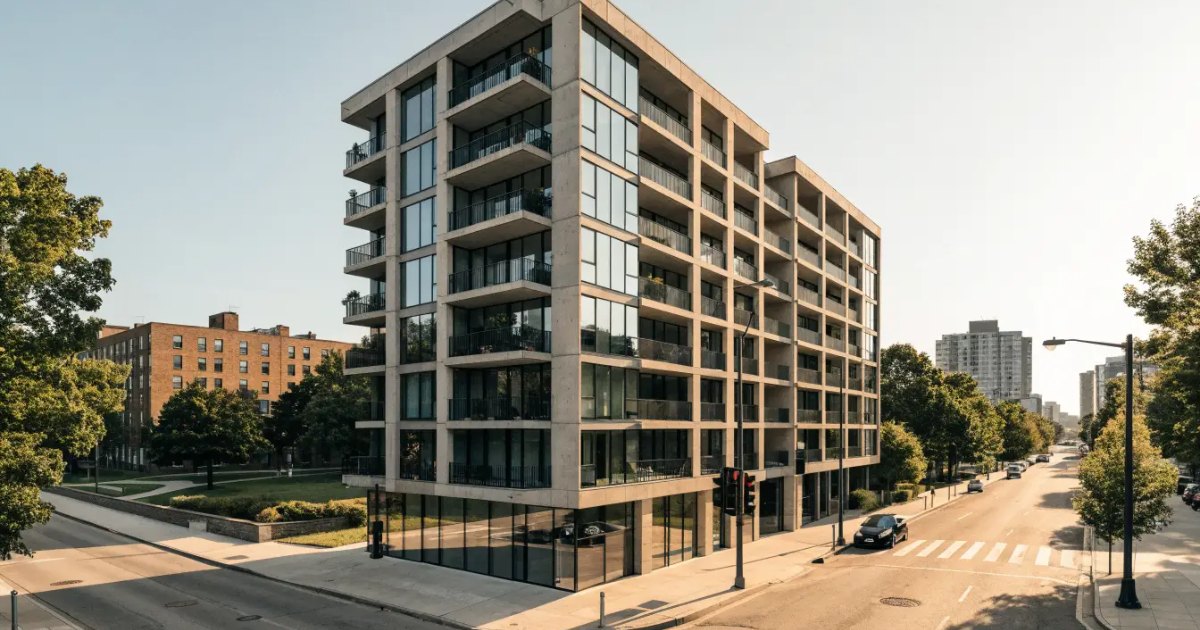
The five ways to rent parking in Etobicoke, best first: 1) rent a space from another owner in your own condo building — cheapest and most convenient, but check your corporation’s rules first; 2) a City of Toronto on-street permit, which is address-specific and often unavailable if your building has parking; 3) a Green P monthly permit — Toronto Parking Authority runs monthly permits in off-street lots and garages including a location at 128 Eighth Street in Etobicoke; 4) parking marketplace apps that list private driveways and unused condo spaces; 5) a private driveway rented directly from a homeowner. Do not park in a GO commuter lot as a non-rider — those lots are for transit users and are enforced.
This comes up constantly — someone buys a condo without parking, someone gets a second car, someone’s building has a waitlist, someone lives in a Mimico semi with no drive.
The options are more varied than people think, and they differ enormously in cost, security and reliability. What follows is ranked by what I would actually try first.
One rule before we start: verify everything against your specific address and your specific building. Parking rules in Toronto are hyper-local. What works for a neighbour two streets over may not be available to you, and finding that out after you have committed is the expensive version.
1Rent from another owner in your own condo building
This is the best option available and the one people skip because they assume it is not possible.
Why it is best
It is in your own building. You do not walk anywhere. It is secure and typically indoor. And it is normally the cheapest option, because owners renting out an unused space are pricing against nothing rather than running a business.
Supply exists more often than people expect. Investors who rent their units to tenants without cars, downsizers who gave up a second vehicle, and owners who work from home all end up with spaces sitting empty.
The catch you must check first
Whether you can do this at all is governed by your condominium corporation’s declaration and rules. Some allow owner-to-owner and owner-to-tenant parking leases freely. Some require the arrangement to be registered with property management. Some prohibit leasing to non-owners entirely.
It also depends on how parking is held in your building — deeded spaces are separately titled and generally more flexible; exclusive use common element spaces typically cannot be transferred independently of the unit.
Ask property management, in writing, before you count on this.
How to find one
The building’s notice board, the resident group chat or Facebook group, and property management — who often know informally who has a spare. A polite note in the elevator lobby works better than people expect.
Why it makes the list: Cheapest, closest, most secure. The only barrier is your corporation’s rules — check them, because a surprising number of buildings allow it.
2City of Toronto on-street permit parking
The City of Toronto operates a permit parking programme allowing residents to park overnight on designated streets. Where it is available it is generally the least expensive legal option.
The limitations that catch people
It is street-specific. Not every street participates. Some areas are not eligible at all, and others have waiting lists that can be long.
Building-based exclusions. Eligibility rules commonly exclude residents of buildings that have parking available on site — the reasoning being that the on-site supply should be used first. This catches condo residents who assumed a permit was a fallback.
Seeing permit signage nearby proves nothing. Permit areas are drawn street by street and eligibility is assessed against your specific address and building.
What to do
Check your specific address through the City of Toronto permit parking system before you buy or rent a place without parking. This takes minutes and it is the check people most often skip.
The honest trade-off
Street parking means snow clearing, winter parking restrictions, street cleaning schedules, and a higher risk of dings and break-ins than a garage. It is cheap for a reason.
Why it makes the list: The cheapest legal option where it exists — but availability is address-specific, waiting lists are common, and having parking in your building may disqualify you.
Renting or leasing in the GTA?
Whether you are looking for a place or filling a vacancy, I can help you move faster and avoid the paperwork mistakes that cost people money.
Call or text 833-330-1925 Send me a message
Jatin Dua, Broker of Record — RE/MAX Quantum Realty Inc., Brokerage. Not intended to solicit buyers or sellers currently under contract with another brokerage.
3Green P monthly permit — Toronto Parking Authority
Green P is the Toronto Parking Authority’s public parking network, and it offers monthly permits in off-street surface lots and garages across the city — the most reliable formal option if you cannot get a space in your building.
How the permits work
Monthly permits include in-and-out privileges throughout the day and are valid 24 hours a day, seven days a week, with exceptions at a limited number of facilities.
The important caveat: parking is first come, first served and spaces are not reserved. The number of permits at each car park is limited to manage capacity, but holding a permit gets you access to the lot, not a guaranteed specific space. In a busy lot at a busy hour that is a meaningful distinction.
Vehicle restrictions
Permits are for vehicles up to 5.6 m long, 1.9 m high and 3,000 kg. Larger vans, trucks and roof-boxed vehicles may not qualify, particularly in underground garages. Check your vehicle height before applying.
Etobicoke availability
There is a Green P facility at 128 Eighth Street in Etobicoke — in New Toronto — offering short-term parking, monthly passes and EV charging. Green P coverage is thinner in Etobicoke than in the old City of Toronto, so check the Green P find-parking map for what exists near your specific address rather than assuming there is a lot nearby.
For bulk, fleet or custom arrangements, Green P directs enquiries to permits@greenpmobility.com.
Why it makes the list: The most reliable formal option outside your own building — real infrastructure, real in-and-out access. Just remember the space is not reserved and coverage in Etobicoke is patchy.
4Parking marketplace apps
A number of apps and marketplaces list private parking — unused condo spaces, residential driveways, and commercial lot overflow — for monthly or daily rental. These have become the practical middle ground between a public lot and an informal arrangement.
Why they work
Inventory that is otherwise invisible. A homeowner three streets from Mimico GO with an empty driveway is not going to advertise, but they will list. That means you can often find something closer to home than the nearest Green P lot.
Payment is handled through the platform, and listings usually specify access hours and vehicle size limits.
What to check before committing
That the person listing has the right to rent it. Condo owners listing a space may be violating their corporation’s rules, and if the corporation intervenes you lose the space with little notice. Ask directly whether the building permits it.
Access hours. A residential driveway may not be available overnight or on weekends.
Cancellation terms. Private listings can be withdrawn far more easily than a Green P permit. Do not rely on one as your only long-term plan if you have no fallback.
Security. An unlit driveway is not a monitored garage. Consider what you are parking and whether your insurance treats street or driveway parking differently.
Why it makes the list: The best way to find inventory that does not exist anywhere else — particularly near GO stations. Just verify the lister actually has the right to rent it.
5Rent a driveway directly from a homeowner
The informal option: a private arrangement with a homeowner for their driveway or a spot on their property. Common near Mimico and Long Branch GO, and around Humber College Lakeshore.
Why it appeals
Frequently the cheapest option and often the closest to where you actually need to be. Etobicoke’s housing stock — post-war homes on wider lots — means many properties have a driveway with room for a car nobody is using.
The risks, plainly
No formal protection. If the homeowner sells, changes their mind or has a family member move in, you can lose the space with essentially no notice. Get the arrangement in writing including notice period, monthly amount, access hours and what happens if the property sells. That will not make it bulletproof, but it prevents most disputes.
Legality of the space itself. Toronto restricts front yard and front pad parking, and unlicensed pads exist across the city. An existing pad is not proof of a legal pad. If the pad is subject to enforcement, your arrangement disappears with it.
Insurance and liability. Check how your auto policy treats the arrangement.
Never do this
Do not park in GO commuter lots if you are not riding the train, and do not park in retail or grocery lots overnight. Both are enforced and both end in tickets or towing. GO lots in particular are monitored and are intended for transit customers.
Why it makes the list: Cheapest and often closest — but it is an informal arrangement with no security of tenure. Get terms in writing and verify the pad is legal.
Side-by-side comparison
| Option | Relative cost | Security | Reliability | Main catch |
|---|---|---|---|---|
| Another owner in your building | Lowest | Best — indoor, secure | High | Corporation rules may prohibit it |
| City on-street permit | Low | Lowest — street | Medium | Address-specific; waiting lists; building exclusions |
| Green P monthly permit | Mid–high | Good | Highest | Not a reserved space; thin Etobicoke coverage |
| Parking apps | Varies | Varies | Medium | Lister may not have the right to rent it |
| Private driveway | Low | Low–medium | Low | No security of tenure; pad may not be legal |
Buying a place without parking? Check this first.
Before you commit to a unit without a space, I will confirm the building’s parking rules and whether a City permit is available at that address — the two checks that decide whether living without parking is workable or a permanent headache.
Free tool — AI condo value estimator
Condo Valuation
What’s your condo
worth today?
Three quick steps. Condos don’t price like houses — your floor, your view, and whether you own parking move the number more than anything else. This weighs all of them.
Reading recent condo sales…
Estimated market value
—
$0–$0
Most likely $0 · about $0 per square foot
What moved the number
Starting from what comparable units in your area sell for, here’s what your specifics added or subtracted.
Market context
—
—
Two units, same floor plan,
$90,000 apart.
That happens constantly in condos — one has the parking, the right exposure, or a board that keeps the reserve fund healthy. A model can’t see your status certificate. I can.
Frequently asked questions
Where can I rent a monthly parking spot in Etobicoke?
The best option is renting from another owner in your own condo building — cheapest, closest and most secure — provided your corporation permits it. Beyond that, Green P (Toronto Parking Authority) offers monthly permits at off-street lots and garages, including a facility at 128 Eighth Street in Etobicoke. City of Toronto on-street permit parking is the cheapest legal street option where available. Parking marketplace apps list private driveways and unused condo spaces, and direct arrangements with homeowners are common near Mimico and Long Branch GO stations.
Can I rent a parking space from another owner in my condo building?
Often, but it depends entirely on your condominium corporation’s declaration and rules. Some buildings allow owner-to-owner and owner-to-tenant parking leases freely, some require the arrangement to be registered with property management, and some prohibit leasing to non-owners outright. It also depends on whether parking is deeded — separately titled and generally more flexible — or exclusive use common element, which typically cannot be transferred independently of the unit. Confirm with property management in writing before relying on it.
How do Green P monthly parking permits work?
Green P monthly permits are offered in Toronto Parking Authority off-street surface lots and garages, and include in-and-out privileges 24 hours a day, seven days a week, with exceptions at a limited number of facilities. Importantly, parking is first come, first served and spaces are not reserved — the permit grants access to the lot rather than a specific space, though permit numbers are capped to manage capacity. Vehicles must be within 5.6 m long, 1.9 m high and 3,000 kg. Green P coverage is thinner in Etobicoke than in the old City of Toronto, so check the find-parking map for your specific area.
Can I get a City of Toronto parking permit in Etobicoke?
It depends on your specific street and address. The City’s permit parking programme does not cover every street, some areas are ineligible, and others have waiting lists. Eligibility rules also commonly exclude residents of buildings that have parking available on site. Seeing permit parking signage nearby does not mean you will qualify — check your exact address through the City of Toronto permit parking system before relying on it, ideally before buying or renting a home without parking.
Can I park at a GO station lot if I am not taking the train?
No. GO commuter lots are intended for transit customers and are monitored and enforced. Using one as general parking risks ticketing or towing. The same applies to retail and grocery store lots overnight. If you need parking near a GO station, look at parking marketplace apps or a direct arrangement with a nearby homeowner instead — both are common around Mimico and Long Branch GO.
Is it safe to rent a driveway from a homeowner?
It can work well and is often the cheapest and closest option, but it carries no security of tenure — if the owner sells, changes their mind or needs the space, you can lose it with essentially no notice. Get the arrangement in writing covering the monthly amount, notice period, access hours and what happens if the property sells. Also verify the space is legal: Toronto restricts front yard and front pad parking, unlicensed pads exist across the city, and an existing pad is not proof of a permitted one. Check how your auto insurance treats the arrangement.
To rent a parking spot in Etobicoke, the best options in order are: renting from another owner in your own condominium building, which is cheapest and most secure but depends on the corporation’s declaration and rules and on whether parking is deeded or exclusive use common element; City of Toronto on-street permit parking, which is address and street specific, often has waiting lists, and commonly excludes residents of buildings with on-site parking; Green P monthly permits from the Toronto Parking Authority, available in off-street lots and garages including a facility at 128 Eighth Street in Etobicoke, which include in-and-out privileges 24 hours a day but are first come, first served with spaces not reserved and vehicle limits of 5.6 m length, 1.9 m height and 3,000 kg; parking marketplace apps listing private driveways and unused condo spaces; and direct arrangements with homeowners, which are common near Mimico and Long Branch GO stations but carry no security of tenure. GO commuter lots are for transit customers and are enforced against non-riders. Toronto restricts front yard and front pad parking, and an existing parking pad is not proof that it is licensed.
Renting or leasing in the GTA?
Whether you are looking for a place or filling a vacancy, I can help you move faster and avoid the paperwork mistakes that cost people money.
Call or text 833-330-1925 Send me a message
Jatin Dua, Broker of Record — RE/MAX Quantum Realty Inc., Brokerage. Not intended to solicit buyers or sellers currently under contract with another brokerage.
Sources and further reading
Green P Parking (Toronto Parking Authority) monthly permit terms, vehicle restrictions and facility listings including 128 Eighth Street, Etobicoke · City of Toronto permit parking programme and front yard parking regulations · Ontario Condominium Act provisions on deeded parking units and exclusive use common elements · Metrolinx GO Transit parking policies. Rates, availability and rules change — confirm directly with Green P, the City of Toronto or your condominium corporation.
Looking at Etobicoke more broadly? Start with my Etobicoke community guide — the neighbourhoods, what each pocket is like, and where they sit relative to one another.
General information prepared August 2026, not legal advice. Parking availability, pricing, eligibility and rules change and are specific to each address, street, building and facility — confirm directly with Green P (parking.greenp.com), the City of Toronto permit parking system, or your condominium property management before relying on anything here. Condominium parking leasing rights are governed by each corporation’s declaration and rules. Informal parking arrangements carry no security of tenure and may involve spaces that are not legally permitted; verify with the City. Jatin Dua is a Realtor with RE/MAX Quantum Realty and has no affiliation with Green P, the Toronto Parking Authority or any parking platform.