
Published 2 November 2026 · By Jatin Dua, Broker of Record, RE/MAX Quantum Realty
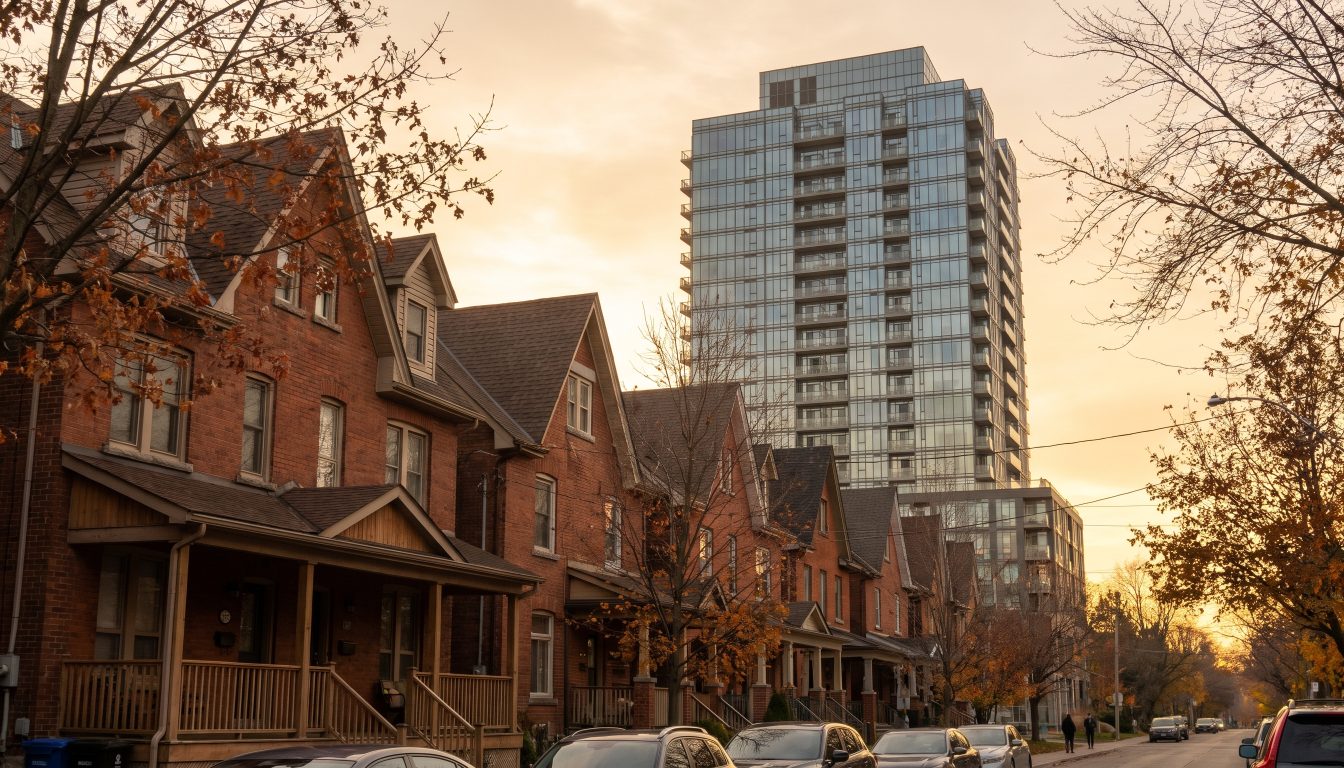
A condo apartment is cheaper to buy: the GTA median was $528,000 in October 2026, against $648,000 for a condo townhouse and $830,000 for a freehold townhouse, according to TRREB. Townhouses have held value better since 2024 and sell faster. Choose a condo for the lowest entry cost; choose a townhouse for space and long-term value.
This guide is for GTA buyers choosing between a condo apartment and a townhouse in 2027, whether it is your first home or a step down from a house. You will get 2026 prices city by city, how each type held its value, what condo fees really cost, how lenders count them, and a clear answer on who should buy which.
Which is cheaper, a condo or a townhouse in the GTA?
A condo apartment is cheaper to buy. In October 2026, TRREB reported a GTA median price of $528,000 for condo apartments, $648,000 for condo townhouses and $830,000 for freehold townhouses. A condo townhouse is part of a condo corporation and pays a monthly fee. A freehold townhouse is owned outright with its land, usually with no fee.
| GTA, 2026 | Condo apartment | Condo townhouse | Freehold townhouse |
|---|---|---|---|
| Median price, October | $528,000 | $648,000 | $830,000 |
| Average price, January–October | $624,957 | $715,776 | $914,959 |
| Sales, January–October | 13,704 | 3,872 | 4,963 |
| Days on market, October | 38 | 38 | 28 |
| Sale price vs asking, October | 97% | 97% | 99% |
| Listed for sale, October | 8,100 | 1,951 | 1,734 |
Source: TRREB Market Watch, October 2026, all TRREB areas. “Freehold townhouse” is TRREB’s Att/Row/Townhouse category.
The table shows something more useful than price. Freehold townhouses sold faster and closer to asking, while condo apartments had more than four times as many listings competing for buyers. That gives condo buyers room to negotiate today, but it also means a condo may take longer to sell later.
What do condos and townhouses cost in each GTA city?
The gap between a condo apartment and a townhouse ranges from about $100,000 to about $500,000, depending on the city and the type of townhouse.
| City | Condo apt median | Condo town median | Freehold town median |
|---|---|---|---|
| Mississauga | $485,000 | $689,300 | $880,000 |
| Brampton | $415,000 | $570,000 | $755,000 |
| Markham | $558,000 | $750,000 | $999,990 |
| Vaughan | $530,000 | $768,000 | $1,014,500 |
| Richmond Hill | $529,250 | $690,000 | $1,040,000 |
| Oakville | $528,000 | $712,500 | $1,005,000 |
| Burlington | $529,950 | $691,000 | $860,000 |
| Milton | $515,000 | $620,000 | $810,000 |
| Pickering | $470,000 | $608,000 | $789,000 |
Source: TRREB MLS data via REALM, January–October 2026. City-wide medians.
Two patterns stand out. Condo apartment medians were remarkably similar, around $515,000 to $560,000, in Markham, Vaughan, Richmond Hill, Oakville, Burlington and Milton. Townhouse prices varied much more. So if you have about $700,000, a condo townhouse is within reach in most of these cities, while a freehold townhouse under $800,000 mostly means Brampton or Durham. My GTA townhouse prices for 2027 lists every city.
In Toronto, the averages across all districts were about $658,000 for condo apartments, $783,000 for condo townhouses and $1,154,000 for freehold townhouses from January to October 2026.
Which holds its value better, a condo or a townhouse?
Townhouses, over the last two years. In every city in the table above, condo apartment medians fell more since 2024 than freehold townhouse medians. Brampton condo apartments fell about 23.1% from January to October 2024 to the same months of 2026, while its freehold townhouses fell about 13.4%. In Mississauga it was 16.8% against 11.1%.
Toronto shows the same order. From 2024 to 2026, the average condo apartment fell about 10.4%, the average condo townhouse about 9.8%, and the average freehold townhouse about 6.6%. Condo apartments also took the longest to sell in Toronto, about 38 days, against about 24 days for freehold townhouses.
Supply is one likely factor. In October 2026 there were 8,100 condo apartments listed for sale across TRREB’s area, more than the 1,951 condo townhouses and 1,734 freehold townhouses combined. More choice for buyers tends to hold prices back. TRREB’s October 2026 benchmark prices fell 7.3% for apartments and 6.6% for townhouses over the year. Past results do not promise future ones, but land-based homes have held up better in this cycle. For the condo side in detail, read are condo prices going down in Toronto in 2027.
Condo Valuation
What’s your condo
worth today?
Three quick steps. Condos don’t price like houses — your floor, your view, and whether you own parking move the number more than anything else. This weighs all of them.
Reading recent condo sales…
Estimated market value
—
$0–$0
Most likely $0 · about $0 per square foot
What moved the number
Starting from what comparable units in your area sell for, here’s what your specifics added or subtracted.
Market context
—
—
Two units, same floor plan,
$90,000 apart.
That happens constantly in condos — one has the parking, the right exposure, or a board that keeps the reserve fund healthy. A model can’t see your status certificate. I can.
How much are condo fees, and do townhouses have them?
Condo apartments and condo townhouses both pay monthly condo fees. Freehold townhouses usually do not. The Condominium Authority of Ontario explains that condo fees pay to run and maintain shared areas, such as hallways, lobbies, garages, elevators and amenities, and that part of each payment goes into the reserve fund for big future repairs.
There is no official GTA average fee. A June 2026 Canadian Press report quoted an industry rule of thumb of about 75 to 85 cents per square foot per month. On a 750-square-foot condo, that is roughly $560 to $640 a month. The same report noted that Ontario has no legal cap on yearly fee increases. Condo townhouse fees vary widely from complex to complex, so always check the actual budget and fee history.
Some townhouses are freehold but tied to a “common elements” condo, called a POTL (parcel of tied land). You own your house and land, but pay a smaller fee for shared roads or landscaping. My freehold vs condo townhouse guide covers that choice in depth.
Which costs less per month, a condo or a townhouse?
Usually the condo, but not always. A cheaper price can be offset by a high fee. Lenders also count fees: CMHC rules include 50% of your condo fee when they work out how much of your income goes to housing costs, with limits of 39% for housing costs and 44% for all debts.
| GTA median, Oct 2026 | Price | Minimum down payment | Monthly fee |
|---|---|---|---|
| Condo apartment | $528,000 | $27,800 | Yes, often the highest per sq ft |
| Condo townhouse | $648,000 | $39,800 | Yes |
| Freehold townhouse | $830,000 | $58,000 | Usually none |
Source: TRREB Market Watch, October 2026; down payment from federal minimum rules (5% of the first $500,000, 10% of the rest).
Freehold owners pay for their own roof, windows, driveway and snow removal instead of a fee. Set aside money for those, because a new roof or furnace is a large one-time cost. The fair way to compare is one monthly number: mortgage, property tax, fee or repair savings, insurance and utilities.
What else is different about living in a condo vs a townhouse?
Space and stairs
Townhouses usually give you more space on several floors, often with a small yard or terrace. Condo apartments are on one level, which suits people who want no stairs.
Rules and shared decisions
Every condo, including a condo townhouse, has a declaration, by-laws and rules set by an elected board. These can cover pets, renovations, rentals and noise. A freehold townhouse follows only city by-laws.
Amenities and maintenance
Condo apartments often come with a gym, concierge or party room, and someone else shovels the snow. Freehold townhouse owners do their own upkeep but control when and how it gets done.
What should you check before buying a condo or townhouse?
- Status certificate (any condo): the condo corporation must provide it within 10 days for up to $100, including tax. Have your lawyer review it before your offer is firm.
- Reserve fund study: after the first study, Ontario condos must update it at least every three years. Ask for the latest one and the planned fee increases.
- Special assessments: these are one-time charges when the reserve falls short. CAO notes some owners have faced thousands or even tens of thousands of dollars.
- Freehold townhouse: a full home inspection, the age of the roof and furnace, and any shared driveway or access agreements on title.
Low condo fees are not always good news. Fees that look cheap for an older building can mean the reserve fund is thin, which raises the risk of a large special assessment or a sharp fee jump after you buy. Unpaid fees can also lead to a lien on the unit. Read the status certificate and reserve fund study before you firm up, not after.
Condo or townhouse: who should buy which?
Buy a condo apartment if you:
- Want the lowest entry price and down payment, often under $30,000 at the GTA median.
- Want one-level living, amenities and no snow or roof work.
- Plan to stay close to transit, work or downtown, where townhouses are scarce.
Buy a townhouse if you:
- Need more space for a family or a home office, and want some outdoor room.
- Can stretch the budget and want a home that has held value better in this cycle.
- Prefer to control your own maintenance, especially with a freehold town.
I work with buyers across Toronto and the GTA, and my view, which is only a view, is this: if a condo townhouse costs about $100,000 to $150,000 more than a condo in your city and the fee is reasonable, the townhouse is usually the better long-term home. If the gap is closer to $300,000, a well-run condo with a healthy reserve fund lets you buy now and build equity. For Toronto specifically, see my take on whether buying a condo in Toronto makes sense in 2027.
What to do next
- Write down your all-in monthly budget, including fees or repair savings, before you search.
- Compare condo and townhouse medians in your target city using the tables above.
- For any condo, ask for the fee history, the status certificate and the latest reserve fund study.
- Get pre-approved with the actual condo fee included, since lenders count half of it.
- If you own a condo now, use the estimator above to see what it could sell for.
Need help with this? Talk to me.
I’m Jatin Dua, Broker of Record at RE/MAX Quantum Realty, and I’m the best agent to do this kind of work for you in Toronto and across the GTA. Over $100 million in GTA sales and 100+ families helped sell. Feel free to contact me any time: call or text 833-330-1925 or email [email protected].
Frequently asked questions
Should I buy a condo or a townhouse in Toronto in 2027?
It depends on budget and space. From January to October 2026, Toronto condo apartments averaged about $658,000, condo townhouses about $783,000 and freehold townhouses about $1,154,000, in TRREB MLS data via REALM. Townhouses have held value better since 2024. Buy a condo for the lowest entry price and convenience, and a townhouse for space and long-term value.
Is a condo or a townhouse a better investment?
Townhouses have held value better recently. In Toronto, average prices fell about 10.4% for condo apartments and 6.6% for freehold townhouses between January to October 2024 and the same months of 2026, in TRREB MLS data via REALM. Condo apartments also took longer to sell. That pattern could change, so treat it as recent history, not a forecast.
How much are condo fees in the GTA?
There is no official GTA average. A Canadian Press report in June 2026 quoted an industry rule of thumb of about 75 to 85 cents per square foot per month, or roughly $560 to $640 for a 750-square-foot unit. Older buildings and those with many amenities can cost more. Ontario has no legal cap on yearly increases.
Do townhouses have condo fees in Ontario?
Some do. Condo townhouses belong to a condo corporation and pay monthly fees, like condo apartments. Freehold townhouses usually have no fee. Some freehold townhouses are tied to a common elements condo, called a POTL, and pay a smaller fee for shared roads or landscaping. Check the listing and title before you buy in 2027.
Are condo fees included in mortgage qualification?
Yes. CMHC rules include 50% of the monthly condo fee when lenders calculate your housing cost ratio and total debt ratio for an insured mortgage. CMHC caps those ratios at 39% and 44% of gross income. A high fee can reduce how much you qualify to borrow, so include it when you get pre-approved.
Is a condo townhouse cheaper than a freehold townhouse?
Yes. In October 2026, TRREB reported a GTA median of $648,000 for condo townhouses and $830,000 for freehold townhouses. The condo townhouse has a monthly fee, while the freehold usually does not. Over 25 years of ownership, that fee adds up, so compare the full monthly cost, not only the price.
Which sells faster in the GTA, a condo or a townhouse?
Freehold townhouses sell faster. In October 2026, TRREB reported that GTA freehold townhouses sold in 28 days on average at 99% of asking, while condo apartments and condo townhouses took 38 days at 97% of asking. Condo apartments also had 8,100 listings that month, far more than any townhouse type.
What is a status certificate and how much does it cost?
A status certificate is a document from the condo corporation with key financial and legal information about a resale unit and the building. In Ontario it costs up to $100, including tax, and the corporation must provide it within 10 days. Have a real estate lawyer review it before your offer becomes firm.
How much down payment do I need for a condo in the GTA?
At the GTA’s October 2026 median condo apartment price of $528,000, the minimum down payment is $27,800: 5% of the first $500,000 plus 10% of the remaining $28,000. A condo townhouse at the $648,000 median needs $39,800. With less than 20% down you also need mortgage default insurance.
Sources
- TRREB Market Watch, October 2026
- Condominium Authority of Ontario – Common expenses (condo fees)
- Condominium Authority of Ontario – What is a condo (types, POTLs)
- Condominium Authority of Ontario – What is a status certificate
- Condominium Authority of Ontario – What is a reserve fund
- CMHC – Calculating GDS and TDS
- BNN Bloomberg / The Canadian Press – Condo maintenance fees: how to know whether they’re too high (June 2026)
Related reading
- Mississauga vs Oakville in 2027: Prices, Commute and Which Fits You
- Brampton vs Mississauga in 2027: Prices, Commute and Which Fits You
- Markham vs Richmond Hill in 2027: Prices, Commute and Which Fits You
- Vaughan vs Markham in 2027: Prices, Commute and Which Fits You
About the author — Jatin Dua, Toronto and GTA real estate broker
I am Jatin Dua, Broker of Record and co-founder of RE/MAX Quantum Realty Inc., Brokerage, Unit 101, 799 The Queensway, Toronto. I work with buyers and sellers across Toronto and the GTA and have helped more than 100 families sell. Four-plus years of active GTA transactions and over $100 million in sales volume.
Reach me at [email protected] or 833-330-1925, or book a call.