Published 2 November 2026 · By Jatin Dua, Broker of Record, RE/MAX Quantum Realty
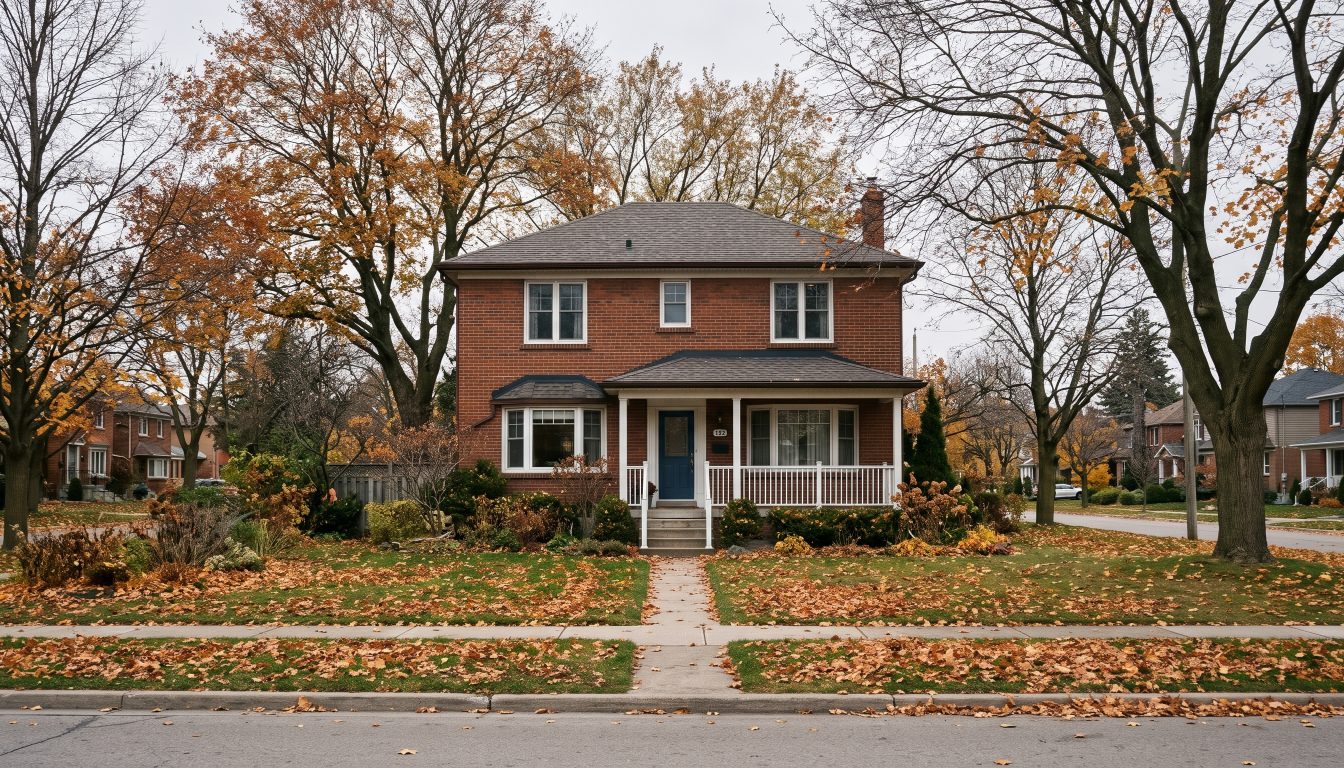
In 2027, selling your principal residence is usually tax-free, but you must report it. A rental, cottage or second home is taxed as a capital gain: half the profit is added to your income, so the effective Ontario rate ranges from about 9.5% to 26.8% of the gain. Homes owned under 365 days can be fully taxed.
This guide is for Canadians, and especially GTA owners, who plan to sell a house, condo, cottage or rental in 2027 and want to know whether they will owe tax and roughly how much. You will get the current rules, a worked example, the Ontario tax rates on a capital gain, and the filing dates, as of November 2026. I am a broker, not an accountant, so use this to prepare for the conversation with yours.
Do I pay tax when I sell my house in Canada in 2027?
It depends on what the property was to you. There are three main outcomes:
- Your principal residence for every year you owned it: usually no tax, because the principal residence exemption covers the gain. You must still report the sale on your tax return.
- A rental, cottage, second home or a home you did not designate for all years: the profit is a capital gain, and half of it is added to your income.
- A home you owned for less than 365 days (with some exceptions): the profit is treated as business income and is fully taxable under the residential flipping rule.
There is no separate “capital gains tax” bill. The taxable part of your gain is added to your income for the year of the sale and taxed at your normal rates.
What is the capital gains inclusion rate in 2027?
For individuals it is one-half. Only 50% of a capital gain is included in income.
You may remember talk of a two-thirds rate. The federal government had proposed raising the inclusion rate, then delayed it, and on 21 March 2025 the Prime Minister announced the increase was cancelled. Budget 2026, tabled on 5 November 2026, still describes capital property as subject to the one-half inclusion rate in its tax measures, and did not propose a general change to it.
Two things in Budget 2026 do touch sellers, but both are proposals, not law yet:
- A new filing and payment date of May 15 for individuals, starting with the 2027 tax year.
- Changes to the withholding rules for non-resident sellers, for sales on or after 1 January 2027.
How do you calculate capital gains on a property sale?
The formula is: selling price − adjusted cost base − selling costs = capital gain.
- Adjusted cost base (ACB): what you paid, plus the costs of buying it, such as land transfer tax and legal fees, plus capital improvements that lasted (a new roof or an addition, for example, not routine repairs).
- Selling costs: the Canada Revenue Agency (CRA) lists commissions, legal fees, surveyor fees and advertising as outlays and expenses you can subtract.
Here is an illustrative example for a condo that was always a rental, with no depreciation claimed:
| Line | Amount |
|---|---|
| Selling price (2027) | $620,000 |
| Purchase price (2018) | $500,000 |
| Purchase costs (land transfer tax, legal) | $25,000 |
| Adjusted cost base | $525,000 |
| Selling costs (commission, legal) | $30,000 |
| Capital gain | $65,000 |
| Taxable capital gain (one-half) | $32,500 |
Illustrative numbers only, not a real sale. Method from CRA Guide T4037, Capital Gains.
If you claimed depreciation (capital cost allowance) on a rental, there is a second piece called recapture, which is taxed in full. I explain it in my guide to rental income tax and Form T776.
How much tax will I pay on a capital gain in Ontario?
Because only half the gain is taxed, the effective rate on the whole gain is half your marginal rate. These are the 2026 combined federal and Ontario rates. The 2027 brackets will be indexed and published later, so use these as a guide.
| 2026 taxable income (Ontario) | Marginal rate on regular income | Effective rate on the whole capital gain |
|---|---|---|
| First $53,891 | 19.05% | 9.53% |
| $58,523 to $94,907 | 29.65% | 14.83% |
| $117,045 to $150,000 | 43.41% | 21.70% |
| $181,440 to $220,000 | 48.26% | 24.13% |
| Over $258,482 | 53.53% | 26.76% |
Source: TaxTips.ca, 2026 combined federal and Ontario marginal rates including surtaxes (revised 8 November 2026); federal and Ontario brackets match CRA’s 2026 rate tables. Selected brackets shown. Excludes the Ontario Health Premium.
In the example above, the $65,000 gain would cost about $14,100 for someone whose income sits in the $117,045 to $150,000 bracket, and about $17,400 at the top rate. A large gain can push part of it into a higher bracket, so your accountant should run the real numbers.
Instant Home Valuation
What’s your home
worth today?
Answer six quick questions and get an instant value range built from current Toronto & GTA sale data — property type, size, condition, lot and location all weighted the way a real pricing conversation weighs them. Takes about ninety seconds.
Reading recent GTA sale data…
Building your estimate
Estimated market value
—
$0–$0
Most likely value $0 · roughly $0 per square foot
What moved the number
Starting from the area baseline for your property type, here’s what each answer added or subtracted.
Market context
Recent local averages for comparison.
—
A range is a starting point.
A strategy is what sells.
This model doesn’t know that your neighbour’s identical semi went $80,000 over asking last month, or which two upgrades actually pay back in your area. That conversation is free and takes twenty minutes.
Is the sale of my home tax-free?
Usually, yes, if it was your principal residence for every year you owned it. The principal residence exemption can wipe out the gain for the years you designate the home. But there are conditions:
- You, your spouse or partner, or your child must have lived in it during the year.
- A family can designate only one home per year (since 1982).
- Land is generally limited to half a hectare unless you can show you need more.
- You must report the sale on Schedule 3 and Form T2091(IND), even when no tax is owed. The CRA can accept a late designation, but a penalty of $100 per complete month, up to $8,000, may apply.
If the home was a rental for some years, only part of the gain is covered. My earlier guide to capital gains when you sell a home in Ontario walks through when the gain on a home becomes taxable.
Do I pay capital gains on a cottage, second home or rental property?
Yes, unless you designate that property as your principal residence for some years. Many families with a city home and a cottage choose which one to shelter based on which has the bigger gain per year. You cannot shelter both for the same year.
For rental property, three extra rules apply:
- Recapture. Depreciation you claimed on the building is added back to income in full when you sell for more than its depreciated value.
- No capital loss on the building. The CRA says you cannot have a capital loss when you sell depreciable property. A terminal loss may apply instead, under separate rules.
- Change of use. Turning your home into a rental, or a rental into your home, is treated as a sale at market value unless an election applies. See my guide to the change-of-use election.
What is the anti-flipping rule for homes sold within a year?
Since 1 January 2023, if you sell a housing unit in Canada that you owned for less than 365 consecutive days, the profit is deemed to be business income, fully taxable, and the principal residence exemption is not available. A loss on a flipped property is deemed to be nil.
The rule does not apply if the sale happened because of, or in anticipation of, certain life events:
- death of the owner or a related person;
- a related person joining your household, or you joining theirs;
- a marriage or common-law breakdown, after at least 90 days apart;
- a threat to personal safety;
- serious illness or disability;
- involuntary job loss for you or your spouse;
- an eligible work relocation;
- insolvency;
- destruction or expropriation of the property.
Keep proof of the event. The CRA expects you to show it if asked.
When do I pay the tax on a property sold in 2027?
You report the sale on your return for the year it happens. Under current law, individuals file and pay by 30 April of the next year (self-employed people file by 15 June, but any balance is still due 30 April). Budget 2026 proposes moving both dates to 15 May for all individuals, starting with the 2027 tax year. If Parliament passes it, a 2027 sale would be due by 15 May 2028. Until then, plan on 30 April 2028.
A large gain can also trigger instalment payments for the following year, because instalments are generally required when your net tax owing is more than $3,000 in the current year and either of the two previous years. Budget 2026 proposes raising that threshold to $7,500 from 2028.
If the buyer pays you over time, for example through a vendor take-back mortgage, you may be able to claim a capital gains reserve and spread the gain over up to five years. See my guide to the vendor take-back mortgage in Ontario.
How did GTA prices change, and what does it mean for your gain?
Prices have come down since 2024, so many owners who bought in the last few years have a smaller gain than they expect, or none at all.
| Area | Detached median, Jan–Oct 2024 | Detached median, Jan–Oct 2026 | Condo apt median, Jan–Oct 2024 | Condo apt median, Jan–Oct 2026 |
|---|---|---|---|---|
| Mississauga | $1,371,085 | $1,225,000 | $583,000 | $485,000 |
| Brampton | $1,127,250 | $950,000 | $540,000 | $415,000 |
| Vaughan | $1,590,000 | $1,415,000 | $635,000 | $530,000 |
| Markham | $1,650,000 | $1,420,000 | $700,000 | $558,000 |
| Oakville | $1,763,000 | $1,625,000 | $620,000 | $528,000 |
| Pickering | $1,190,000 | $1,039,999 | $569,450 | $470,000 |
| Toronto C01 (downtown) | $1,890,000 | $1,500,000 | $680,000 | $600,000 |
Source: TRREB MLS data via REALM, January–October 2024 and January–October 2026. Medians by municipality or Toronto district, not neighbourhood figures.
A loss on your own home is not deductible: the CRA treats a home as personal-use property. A capital loss on other capital property can offset capital gains in the same year, be carried back three years, or be carried forward. If you are a non-resident selling in Canada, separate withholding rules apply; see my guide to section 116 for non-resident sellers.
The most common expensive mistake I see is not the tax itself. It is a seller who forgets to report a tax-free home sale on Schedule 3 and Form T2091(IND), or who sells a home bought less than a year ago without knowing about the flipping rule. Talk to your accountant before you sign, not after closing.
Before listing an investment property or second home in 2027, gather your purchase statement, your lawyer’s closing letter and receipts for major improvements. Those three documents set your adjusted cost base, and every dollar you can prove lowers the gain. Then ask your accountant two questions: what the tax is if it closes in December versus January, and whether any years can be sheltered as a principal residence. Tax should be part of the decision, but I would not let it override a sound reason to sell.
What to do next
- Decide which category your property falls in: principal residence, other capital property, or a sale within 365 days.
- Collect your purchase documents and improvement receipts to work out your adjusted cost base.
- Estimate the gain with the formula above and the 2026 rate table, then confirm it with your accountant.
- Choose your closing date with the tax year in mind.
- Get a current value for the property with the estimator above so your gain estimate starts from a realistic price.
Need help with this? Talk to me.
I’m Jatin Dua, Broker of Record at RE/MAX Quantum Realty, and I’m the best agent to do this kind of work for you in Toronto and across the GTA. Over $100 million in GTA sales and 100+ families helped sell. Feel free to contact me any time: call or text 833-330-1925 or email [email protected].
Frequently asked questions
Do I pay tax when I sell my house in Canada?
Not usually, if it was your principal residence for every year you owned it, because the principal residence exemption covers the gain. You must still report the sale on Schedule 3 and Form T2091(IND). A rental, cottage or second home is taxed as a capital gain, and a home owned under 365 days can be fully taxed under the flipping rule.
What is the capital gains inclusion rate in Canada for 2027?
The capital gains inclusion rate for individuals in Canada is one-half, so 50% of a gain is added to income. The proposed increase to two-thirds was cancelled on 21 March 2025, and Budget 2026 (5 November 2026) did not propose a general change. Confirm the rate with your accountant before a 2027 sale.
How much capital gains tax will I pay on a rental property in Ontario?
In Ontario, the effective tax on a capital gain in 2026 ranges from about 9.53% of the gain at the lowest bracket to 26.76% at the top bracket, because only half the gain is taxed. A $65,000 gain costs roughly $14,100 at the $117,045 to $150,000 bracket. Depreciation recapture on a rental is taxed separately, in full.
How do I calculate capital gains on a house sale in Canada?
Subtract the adjusted cost base and the selling costs from the selling price. The adjusted cost base is the purchase price plus buying costs such as land transfer tax and legal fees, plus lasting improvements. Selling costs include commission and legal fees. Half of the result is the taxable capital gain added to your income.
Can I avoid capital gains tax by buying another house?
No. Canada has no rule that lets you defer capital gains on a home by buying another one. A principal residence is usually tax-free under the exemption, and the CRA lets both homes count as eligible in the year you sell one and buy another. A rental or second home is taxed when sold, whatever you buy next.
What is the 365-day flipping rule in Canada?
Since 1 January 2023, profit on a housing unit in Canada owned for less than 365 consecutive days is treated as fully taxable business income, and the principal residence exemption does not apply. Exceptions cover life events such as death, separation, serious illness, job loss, an eligible work move, insolvency, or the home being destroyed or expropriated.
When is capital gains tax due on a 2027 house sale?
Under current law, tax on a 2027 sale is due by 30 April 2028, when you file your 2027 return. Budget 2026 proposes moving the filing and payment date to 15 May for individuals, starting with the 2027 tax year, but that needs legislation. A large gain can also mean instalment payments the following year.
Is a loss on selling my home tax deductible in Canada?
No. The CRA treats your home as personal-use property, and a loss on personal-use property is generally not deductible. A capital loss on other capital property can offset capital gains, be carried back three years, or carried forward. You cannot have a capital loss on a depreciable building, though a terminal loss may apply.
Do I have to report the sale of my principal residence?
Yes. Since the 2016 tax year, Canadians must report the sale of a principal residence on Schedule 3 and Form T2091(IND) to claim the exemption. If you forget, ask the CRA to amend your return. A late designation can carry a penalty of $100 per complete month, up to $8,000, though the CRA says it generally waives it except in serious cases.
Sources
- Canada Revenue Agency: Guide T4037, Capital Gains 2025
- Canada Revenue Agency: Principal residence and other real estate
- Canada Revenue Agency: Residential property flipping rule
- Prime Minister of Canada: Prime Minister Carney cancels proposed capital gains tax increase (21 March 2025)
- Budget 2026: Tax measures, supplementary information
- Canada Revenue Agency: Tax rates and income brackets for 2026
- TaxTips.ca: 2026 combined federal and Ontario tax rates
- Canada Revenue Agency: Reporting the sale of your principal residence (late designation penalty)
Related reading
- Average Property Tax in Toronto for 2027: Per Year, Per Month, by Home Value
- Toronto Property Tax Due Dates and Payment Options Explained
- GTA Property Tax Rates Compared: Toronto, Mississauga, Brampton, Vaughan and More
- Property Tax on Vacant Land in Ontario: How It Works
About the author — Jatin Dua, Toronto and GTA real estate broker
I am Jatin Dua, Broker of Record and co-founder of RE/MAX Quantum Realty Inc., Brokerage, Unit 101, 799 The Queensway, Toronto. I work with buyers and sellers across Toronto and the GTA and have helped more than 100 families sell. Four-plus years of active GTA transactions and over $100 million in sales volume.
Reach me at [email protected] or 833-330-1925, or book a call.
More from the library
- What Happens to a Mortgage When Someone Dies in Ontario?
- Markham Property Tax 2027: Rate, Average Bill and Due Dates
- Property Tax Assessment in 2027: Will MPAC Reassess Your Home?
- Designated representation in Ontario: what changed, and the consequence nobody explains
- Top 5 Condo Buildings to Rent in The Beaches, Toronto (2026)
- 195 St. Clair Ave W: A Seven-Suite 1978 Boutique Building at Poplar Plains
How this estimate is produced
The estimate blends recent selling prices for comparable units in the area with the details you entered: size, bedrooms, floor, exposure, parking, locker and condition. It is a statistical estimate, not an appraisal and not a formal opinion of value.
What it cannot see
- Interior condition and upgrades beyond what you told it
- Unit-specific issues: noise, an obstructed view, a pending special assessment
- Your reserve fund and where the maintenance fee is heading
- What is competing with you in your own building right now
What moves the number most
- Floor and exposure, which can separate otherwise identical units
- Parking and locker, each priced separately by buyers
- Kitchen and bathroom condition
- Maintenance fee per square foot against the rest of the building
Treat it as a range, not a price
A single figure to the dollar would be false precision. Use the estimate to decide whether a move is worth exploring. Before you price anything for the market, the number needs checking against what is actually selling and sitting in your building this month, and that takes a person. I will do that for you at no cost and with no obligation.
Market data is sourced from the Toronto Regional Real Estate Board. Information is deemed reliable but is not guaranteed. This tool does not provide an appraisal or a formal opinion of value, and it is not a substitute for advice on your specific property. Jatin Dua, Broker of Record, RE/MAX Quantum Realty.