
Published 2 November 2026 · By Jatin Dua, Broker of Record, RE/MAX Quantum Realty
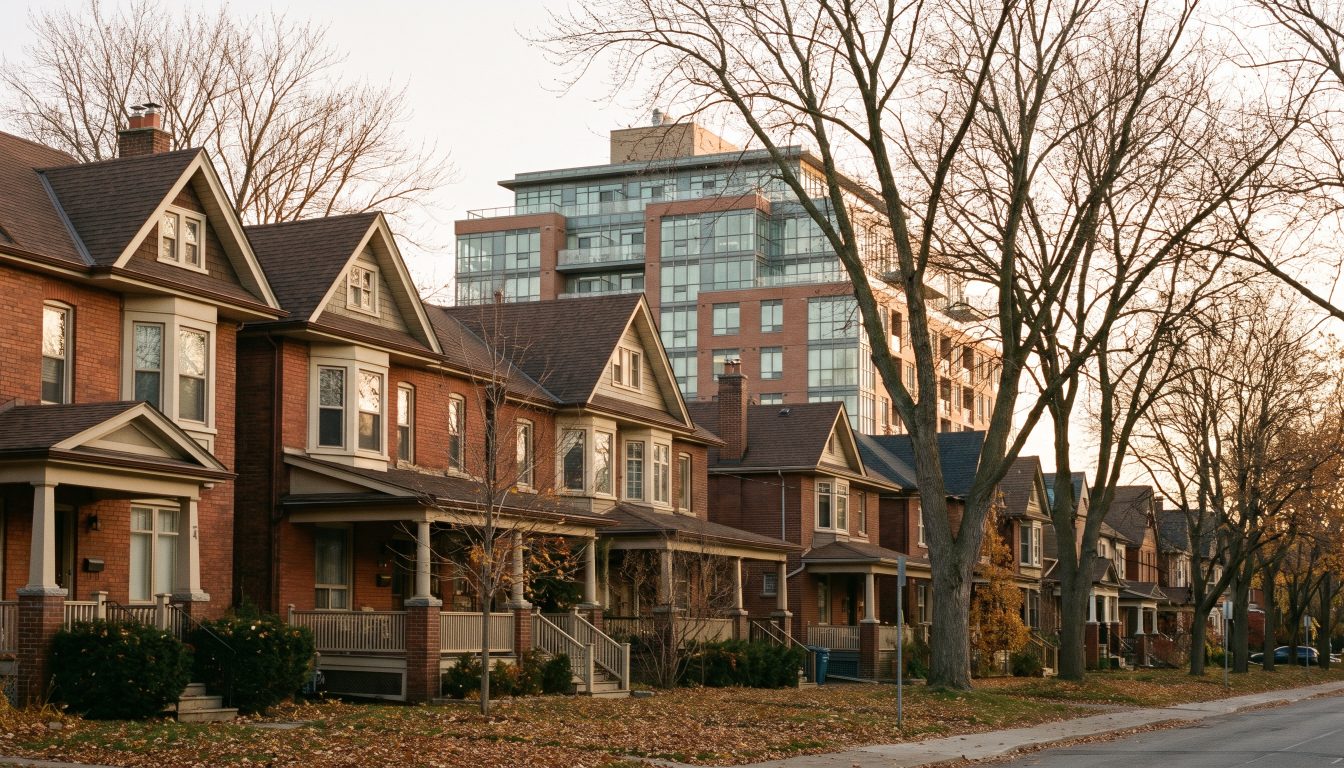
No province-wide MPAC reassessment is planned for 2027. On 29 October 2026, Ontario said the reassessment will continue to be deferred, so 2027 property taxes will still use values as of 1 January 2016. Your assessment can still change if you renovate, add a structure, change use or win a Request for Reconsideration.
This is for Ontario homeowners, buyers and landlords who want to know whether MPAC will reassess their property for the 2027 tax year, and what that means for the tax bill. Short version: the Province has said the province-wide reassessment stays deferred, so 2016 values carry on, but a few things about assessments do change in 2027.
Will MPAC reassess Ontario properties for 2027?
No province-wide reassessment is planned for 2027, based on what the Ontario government said on 29 October 2026. In its 2026 Ontario Economic Outlook and Fiscal Review, the Province wrote that the provincewide reassessment “will continue to be deferred to ensure stability for taxpayers.” It gave no new date.
That means your 2027 property tax will very likely still be calculated on your property’s assessed value as of 1 January 2016, unless something about your property itself has changed. MPAC’s own assessment cycle page confirms that the 2026 tax year used fully phased-in 2016 values. MPAC has not yet published 2027 wording as of 10 November 2026, so watch its site in the new year.
If you are hearing that “everyone’s assessment is going up in 2027,” that is not what the Province has said. Be careful with mailers or calls offering to “fight your 2027 reassessment” for a fee. The City of Toronto says it does not mail notices about how to reduce or challenge your assessment, and you do not need a tax consultant to appeal.
Why are Ontario assessments still based on 2016 values?
Ontario normally reassesses every four years. MPAC mailed a Property Assessment Notice to every property owner in 2016, covering more than five million properties, with values as of 1 January 2016. The next update was due in 2020.
- 2020: the Province postponed the update because of the COVID-19 pandemic, MPAC says.
- 16 August 2023: Ontario filed a regulation under the Assessment Act extending the postponement through the end of the 2021–2024 cycle.
- 2025: the fall economic statement of 6 November 2025 gave no date for a general reassessment. A property tax law firm, Miller Thomson, noted that this pushed Ontario into year 10 of what was meant to be a four-year cycle.
- 2026: the 2026 Ontario Budget said the government continues to gather feedback on making the assessment and tax system more effective. The October 2026 fall statement then said the deferral continues.
I covered the mechanics of the 2016 base in why your Ontario assessment still says 2016. This post is about what 2027 holds.
What would a reassessment actually change on your tax bill?
A reassessment does not, on its own, raise the total amount of tax a city collects. The city sets its budget, then sets the tax rate needed to raise that money across all assessed values. If every assessment rose by the same percentage, rates would fall and most bills would barely move. In other words, a reassessment mainly changes who carries how much of the load.
What matters is how your property’s value changed compared with the average in your municipality. The City of Toronto puts it plainly: if your property’s value rose by more than the City average since the last update, you see an assessment-related tax increase.
Here is a simple illustration. Say average values in a city rose 50% between 2016 and a new valuation date. A home that rose 50% keeps roughly the same share of the tax bill. A home that rose 70% would carry about 13% more of the load (1.70 divided by 1.50), and one that rose 30% about 13% less. Those numbers are an example of the math, not a forecast.
Increases have also been softened in the past. In the last update, Toronto shows that a home whose assessed value rose from $592,000 to $770,000 had the $178,000 increase phased in at $44,500 a year over four years, from 2017 to 2020. Decreases took effect immediately. The Province decides whether a future update uses phase-in again.
| Tax year | Phase-in | Assessed value used for tax |
|---|---|---|
| 2016 | — | $592,000 |
| 2017 | 25% | $636,500 |
| 2018 | 50% | $681,000 |
| 2019 | 75% | $725,500 |
| 2020 to 2026 | 100% | $770,000 |
Source: City of Toronto, Property Assessment and Appeals, sample of assessment phase-in (page modified 11 May 2026).
How have GTA home prices moved while assessments stayed frozen?
Because a reassessment is about relative change, note how differently home types and areas moved in just two years. Condo apartments fell further than detached houses almost everywhere.
| Area | Detached median 2024 | Detached median 2026 | Change | Condo apt median 2024 | Condo apt median 2026 | Change |
|---|---|---|---|---|---|---|
| Mississauga | $1,371,085 | $1,225,000 | -10.7% | $583,000 | $485,000 | -16.8% |
| Brampton | $1,127,250 | $950,000 | -15.7% | $540,000 | $415,000 | -23.1% |
| Markham | $1,650,000 | $1,420,000 | -13.9% | $700,000 | $558,000 | -20.3% |
| Vaughan | $1,590,000 | $1,415,000 | -11.0% | $635,000 | $530,000 | -16.5% |
| Oakville | $1,763,000 | $1,625,000 | -7.8% | $620,000 | $528,000 | -14.8% |
| Oshawa | $835,000 | $730,000 | -12.6% | $441,000 | $340,500 | -22.8% |
| Toronto W08 (central Etobicoke) | $1,590,000 | $1,540,000 | -3.1% | $603,500 | $525,000 | -13.0% |
| Toronto E04 (Scarborough) | $1,060,000 | $870,000 | -17.9% | $520,000 | $415,786 | -20.0% |
Source: TRREB MLS data via REALM, January–October 2026 vs the same period of 2024. Median sold prices, municipality or Toronto district level, not neighbourhood figures.
Across the whole TRREB area, the MLS Home Price Index composite benchmark was down 4.3% year over year in October 2026, and the average selling price was $1,024,108, down 2.7%, according to TRREB’s October Market Watch. None of this changes your 2027 assessment, because the valuation date is still 2016. It does show that when a new valuation date is eventually chosen, the date itself will matter, and condo and house owners may not move together.
Instant Home Valuation
What’s your home
worth today?
Answer six quick questions and get an instant value range built from current Toronto & GTA sale data — property type, size, condition, lot and location all weighted the way a real pricing conversation weighs them. Takes about ninety seconds.
Reading recent GTA sale data…
Building your estimate
Estimated market value
—
$0–$0
Most likely value $0 · roughly $0 per square foot
What moved the number
Starting from the area baseline for your property type, here’s what each answer added or subtracted.
Market context
Recent local averages for comparison.
—
A range is a starting point.
A strategy is what sells.
This model doesn’t know that your neighbour’s identical semi went $80,000 over asking last month, or which two upgrades actually pay back in your area. That conversation is free and takes twenty minutes.
Can your MPAC assessment change in 2027 without a reassessment?
Yes. A frozen valuation date does not freeze your property. MPAC says it keeps reviewing properties between updates as new homes are built, owners renovate, structures are demolished and properties change use. You may get a notice from MPAC if:
- you build an addition, a new structure such as a garden suite, or tear one down;
- ownership, the legal description or school support changes;
- your value changes because of a Request for Reconsideration or an Assessment Review Board decision;
- the property’s classification or tax liability changes.
New homes and newly registered condo units get their first assessment this way too, still expressed in 2016 values. If you are building or adding a unit, budget for the tax on the added value; my post on laneway suite costs and rules covers the bigger picture.
What is new for Ontario property assessments in 2027?
Two proposals from the October 2026 fall statement are worth knowing:
- Online assessment roll. Today, viewing the assessment roll usually means visiting a municipal office in person. The Province proposed amendments so MPAC can run a central online platform with selected assessment information, expected in mid-2027 if the amendments pass. That would make it easier to compare your assessment with similar homes.
- Notice dates. The Province proposed letting the Minister of Finance set, by regulation, a later date for MPAC to deliver assessment notices than the Act otherwise requires.
The Province also plans to change how education property tax is passed from municipalities to school boards from 2028. That is an administrative change; it does not change your assessment.
How do you check or challenge your MPAC assessment in 2027?
- Log in to MPAC’s AboutMyProperty portal and compare the recorded details, such as living area, bathrooms, basement finish and garage, with your home.
- File a Request for Reconsideration (RfR) if something is wrong. It is free. MPAC says the deadline for each tax year is printed on your Property Assessment Notice, so confirm the 2027 date with MPAC before you file.
- Use the right evidence. Because values are still as of 1 January 2016, compare your assessment with similar homes nearby and with sales around that date. Today’s prices are much less useful.
- Wait for MPAC’s answer. MPAC says it usually responds in writing within 180 days, with up to 60 more days if needed.
- Appeal if needed. For residential property, you can appeal to the Assessment Review Board within 90 days of MPAC’s RfR result.
Keep paying your bills while you wait. The City of Toronto says taxes must be paid in full as billed and adjustments from successful appeals are processed separately. For all the legitimate ways to lower a bill, see the top 5 ways to lower property tax in Ontario.
Do not use today’s sale price, or your own estimate of today’s value, as proof that your assessment is too high or too low. MPAC is valuing your home as of 2016. An argument built on 2026 prices is aimed at the wrong date. Fix factual errors first, and argue value only with 2016-era comparisons.
Should buyers and sellers in the GTA care about MPAC in 2027?
Yes, but for budgeting, not pricing. Your MPAC value is not your market value, and buyers should never use it to judge a list price; I explain why in your MPAC assessment vs your real value.
Where it does matter is the carrying cost. In Toronto, the 2026 total residential tax rate is 0.767311%, so every $10,000 of assessed value costs about $77 a year. Rates are higher in many other GTA municipalities, which you can compare in my GTA property tax rates comparison. When I help a buyer, we pull the current tax bill and ask whether any renovation, addition or new suite has been finished but not yet picked up by MPAC, because that can mean a supplementary bill after closing.
For 2027, plan your property tax around your city’s 2027 budget, not around a reassessment. The rate change from council is what will move most bills next year; Toronto’s figure for an average home is in my 2027 Toronto property tax guide. Longer term, assume a reassessment will come eventually. If you own a property type that has risen faster than your city’s average since 2016, keep some room in the budget. If you own one that has lagged, a future update could work in your favour. Either way, nobody can tell you the year, and I would not pay anyone who claims to know it.
What to do next
- Find your latest Property Assessment Notice or log in to AboutMyProperty and check every recorded detail.
- If a detail is wrong, confirm the 2027 RfR deadline with MPAC and file before it.
- Budget for your city’s 2027 tax rate when it is set, using your 2016-based assessment.
- If you are buying, ask for the current tax bill and whether any recent work could trigger a supplementary assessment.
- Watch for the online assessment roll in mid-2027 to compare your value with similar homes.
Need help with this? Talk to me.
I’m Jatin Dua, Broker of Record at RE/MAX Quantum Realty, and I’m the best agent to do this kind of work for you in Toronto and across the GTA. Over $100 million in GTA sales and 100+ families helped sell. Feel free to contact me any time: call or text 833-330-1925 or email [email protected].
Frequently asked questions
Is MPAC reassessing properties in 2027?
No. In its 2026 fall economic statement, released 29 October 2026, the Ontario government said the province-wide reassessment will continue to be deferred to ensure stability for taxpayers. That means 2027 property taxes in Ontario will very likely still use assessed values as of 1 January 2016, unless your own property has changed.
When is the next MPAC reassessment in Ontario?
No date has been announced as of November 2026. Ontario postponed the 2020 update because of the pandemic, extended the postponement by regulation on 16 August 2023, and said in October 2026 that the deferral continues. Anyone giving a specific year for the next Ontario reassessment is guessing until the Province announces it.
What value is my 2027 property tax based on in Ontario?
Your 2027 Ontario property tax will be based on your MPAC assessed value as of 1 January 2016, fully phased in, unless your property has changed since. MPAC confirmed the 2016 base for the 2026 tax year, and the Province said in October 2026 that the reassessment remains deferred. Your municipality’s 2027 tax rate is applied to that value.
Will a reassessment increase my property taxes in Ontario?
Not automatically. A reassessment changes how a city’s tax levy is shared, not the total the city collects. In Ontario, your taxes rise because of a reassessment only if your property’s value grew faster than your municipality’s average since 2016. Your city’s budget and tax rate decisions in 2027 will move bills more than assessments will.
Can my MPAC assessment change without a reassessment?
Yes. MPAC reviews Ontario properties between updates when new homes are built, owners renovate or add structures, buildings are demolished or properties change use. Your assessment can also change after a successful Request for Reconsideration or an Assessment Review Board decision. Changes are still valued using 1 January 2016 values in 2027.
How do I challenge my MPAC assessment in 2027?
File a free Request for Reconsideration with MPAC through AboutMyProperty by the deadline on your Property Assessment Notice, and confirm the 2027 date with MPAC. MPAC usually replies within 180 days. For Ontario residential property, you can then appeal to the Assessment Review Board within 90 days of the result. Keep paying your property tax in the meantime.
Why does my MPAC assessment not match what my home is worth in 2027?
Because MPAC still values Ontario homes as of 1 January 2016. GTA prices have moved a lot since; for example, Brampton’s median detached price fell 15.7% between January–October 2024 and the same period of 2026 (TRREB MLS data via REALM). Your assessment is a tax base, not an estimate of today’s market value.
Will I be able to see MPAC assessments online in 2027?
Possibly. Ontario’s October 2026 fall economic statement proposed amendments letting MPAC run a central online platform showing selected assessment roll information, expected in mid-2027 if the amendments pass. Today, viewing the roll usually means visiting a municipal office. Your own property details are already available through MPAC’s AboutMyProperty portal.
How much does each $10,000 of MPAC assessment cost in Toronto?
About $77 a year in Toronto, based on the City’s 2026 total residential tax rate of 0.767311%. The 2027 rate will be set in Toronto’s 2027 budget, so the exact figure for 2027 is not known yet. Most other GTA municipalities have higher residential tax rates, so each $10,000 costs more there.
Sources
- Ontario — 2026 Ontario Economic Outlook and Fiscal Review, Annex: Details of Tax Measures and Other Legislative Initiatives
- MPAC — The Assessment Cycle
- MPAC — Request for Reconsideration
- City of Toronto — Property Assessment and Appeals
- City of Toronto — Property Tax Rates and Fees
- Ontario — 2026 Ontario Budget, Chapter 1, Section B
- Miller Thomson — Once in a decade: Ontario moves to year 10 of assessment cycle
- TRREB — Market Watch, October 2026
Related reading
- Average Property Tax in Toronto for 2027: Per Year, Per Month, by Home Value
- Toronto Property Tax Due Dates and Payment Options Explained
- GTA Property Tax Rates Compared: Toronto, Mississauga, Brampton, Vaughan and More
- Property Tax on Vacant Land in Ontario: How It Works
About the author — Jatin Dua, Toronto and GTA real estate broker
I am Jatin Dua, Broker of Record and co-founder of RE/MAX Quantum Realty Inc., Brokerage, Unit 101, 799 The Queensway, Toronto. I work with buyers and sellers across Toronto and the GTA and have helped more than 100 families sell. Four-plus years of active GTA transactions and over $100 million in sales volume.
Reach me at [email protected] or 833-330-1925, or book a call.
More from the library
- Aging-in-Place Renovations in Ontario and the Credits That Help Pay for Them
- Richmond Hill Property Tax 2027: Rates, Due Dates and Examples
- You Rented Out Your Old Home. The Tax Nobody Mentions
- RECO complaints and discipline in Ontario: the limits nobody mentions
- Top 5 Condo Buildings to Rent in Scarborough City Centre, Scarborough, Toronto (2026)
- The SoHo Metropolitan, 36 Blue Jays Way: Condos Above a Hotel
How this estimate is produced
The estimate blends recent selling prices for comparable units in the area with the details you entered: size, bedrooms, floor, exposure, parking, locker and condition. It is a statistical estimate, not an appraisal and not a formal opinion of value.
What it cannot see
- Interior condition and upgrades beyond what you told it
- Unit-specific issues: noise, an obstructed view, a pending special assessment
- Your reserve fund and where the maintenance fee is heading
- What is competing with you in your own building right now
What moves the number most
- Floor and exposure, which can separate otherwise identical units
- Parking and locker, each priced separately by buyers
- Kitchen and bathroom condition
- Maintenance fee per square foot against the rest of the building
Treat it as a range, not a price
A single figure to the dollar would be false precision. Use the estimate to decide whether a move is worth exploring. Before you price anything for the market, the number needs checking against what is actually selling and sitting in your building this month, and that takes a person. I will do that for you at no cost and with no obligation.
Market data is sourced from the Toronto Regional Real Estate Board. Information is deemed reliable but is not guaranteed. This tool does not provide an appraisal or a formal opinion of value, and it is not a substitute for advice on your specific property. Jatin Dua, Broker of Record, RE/MAX Quantum Realty.
