Published 2 November 2026 · By Jatin Dua, Broker of Record, RE/MAX Quantum Realty
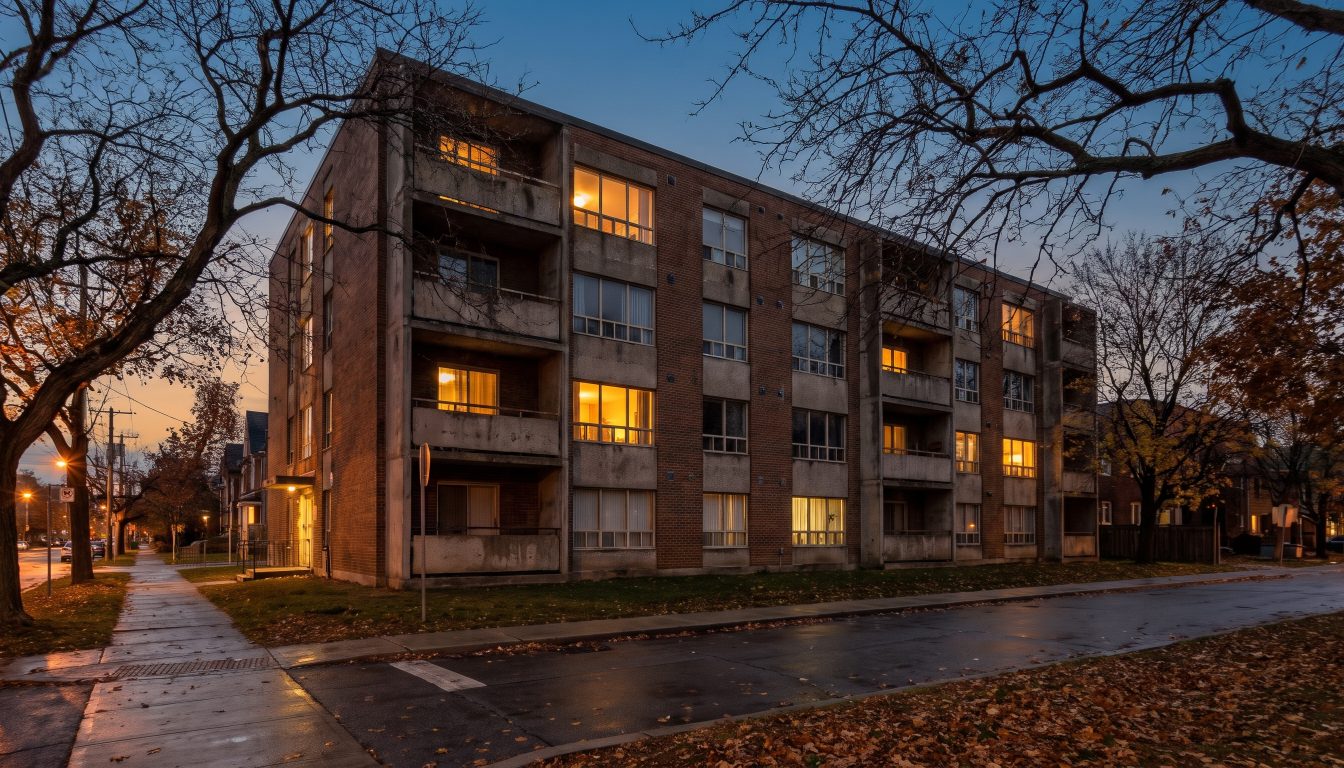
Every residential owner in Toronto must declare the property’s 2026 occupancy status by 30 April 2027, even if they live there. A home empty for six months or more without an exemption, or with no declaration, is taxed at 3% of its MPAC assessment. On the City’s average assessment of $692,140, that is about $20,764.
This guide is for anyone who owns a house, condo or townhouse in the City of Toronto and needs to file the Vacant Home Tax declaration in 2027. You will get the deadline, the status to pick, every exemption and the papers behind it, what the tax costs if you get it wrong, and what buyers and sellers must check, as of November 2026.
What is Toronto’s Vacant Home Tax in 2027?
The Vacant Home Tax (VHT) is a yearly City of Toronto tax on residential properties that sat empty for six months or more in a calendar year. Its goal is to push owners to sell or rent out empty homes. The money goes to affordable housing programs.
The part most people miss: every residential owner must declare, every year, even if you live in the home full time. The declaration you file in 2027 covers how the property was used from 1 January to 31 December 2026.
For the 2026 taxation year, Council set the tax at 3% of the property’s Current Value Assessment (CVA), the value on your MPAC notice. The City opened the 2026 declaration portal on 2 November 2026. For the 2025 year, more than 99% of owners declared, so the City is clearly expecting near-universal filing.
When is the Vacant Home Tax declaration deadline in 2027?
The deadline to declare the 2026 occupancy status is Friday, 30 April 2027. Here are the dates around it.
| Date | What happens |
|---|---|
| 2 November 2026 | Portal opens for 2026 declarations |
| 16 November 2026 | Last instalment due on 2025 VHT bills (after 15 September and 15 October) |
| 31 December 2026 | Deadline to dispute a 2025 VHT bill |
| 30 April 2027 | Deadline to declare 2026 occupancy status |
| Later in 2027 | Bills for properties declared or deemed vacant for 2026; the City has not posted the due dates yet |
| Early 2028 | Declaration for the 2027 occupancy year (the City sets the date each year) |
Source: City of Toronto Vacant Home Tax page (modified 2 November 2026) and news release of 2 November 2026.
How do I file my Vacant Home Tax declaration?
You need two numbers from your property tax bill, account statement or VHT notice: your customer number and either the address or the 21-digit assessment roll number. Then you can declare in one of three ways:
- Online through the City’s VHT portal. You get a confirmation number, and an email if you give one.
- By phone through 311, but only if the property was occupied.
- In person at a tax and utility counter at City Hall or a civic centre. You get a receipt.
The owner, or someone authorized to act for the owner, can file. If you own more than one property, you must file one declaration for each. You can check what the City has on file by signing in to the Property Tax Lookup and scrolling to the Vacant Home Tax section. Save your confirmation number. It is your proof if the City later says nothing arrived.
Which occupancy status should I choose?
| Status | When it fits | Tax applies? |
|---|---|---|
| Principal residence of the owner | You lived there, got mail and paid bills there for at least six months of 2026. You can have only one principal residence. | No |
| Occupied by someone other than the owner | Tenants with a written agreement of at least 30 days and a total of six months or more in the year, or family or friends using it as their principal residence for six months or more | No |
| Vacant with an eligible exemption | Empty six months or more, but one of the exemptions below applies (documents required) | No |
| Vacant | Empty six months or more with no exemption, or no declaration filed by the deadline | Yes |
Source: City of Toronto, Vacant Home Tax, occupancy status options.
A few cases the City addresses directly:
- Snowbirds and long trips. You can be away for long periods and still declare occupied, as long as it stays your principal residence.
- Working away in another city or country: same rule.
- Medical reasons: you can declare occupied if you are temporarily away for outpatient care or caring for someone.
- A business run from the home, by you or a tenant, can count as occupied.
- Newly built homes need a declaration only once MPAC has assessed them for that year.
No declaration is needed for parking spaces, condo lockers, vacant land without a structure, or properties fully assessed as multi-residential, commercial or industrial.
What are the Vacant Home Tax exemptions?
If the home was empty for six months or more, you must still declare it, and you can claim one of these exemptions with supporting documents. The City asks for copies, not originals, and says photographs will not be accepted as proof.
- Death of a registered owner. Up to three consecutive tax years if the owner died in that year or the two before. Document: death certificate.
- Principal resident in care. In hospital, long-term care or a supportive care facility for at least six months of the year; up to two consecutive years. Documents: a signed letter from the facility and proof the home was the person’s principal residence before.
- Repairs or renovations. Major work kept the home empty at least six months, required permits were issued, and the work went ahead without unnecessary delay. Documents: a description of the work, invoices or work orders, and permits.
- Transfer of legal ownership. The closing date fell in that tax year and ownership passed completely to a new owner. Adding or removing an owner or changing a name does not count. Document: the transfer deed.
- Full-time work in Toronto. The owner or spouse worked full time in Toronto for at least six months, needed the unit as a second home to be near work, and has a principal residence outside the GTA. Documents: proof of residence outside the GTA and an employer letter or contract for that year.
- Court order. An order prevented anyone living there for at least six months, and it states the home could not be occupied, rented or sold.
- Vacant new inventory. For developers with never-occupied, actively listed new units, for up to two years.
- Second home for medical reasons. The owner, spouse or dependant needs the property for medical reasons and the principal residence is outside the GTA, with a City medical treatment certificate form.
A sale or a renovation does not exempt you from filing. It is the reason you file.
Instant Home Valuation
What’s your home
worth today?
Answer six quick questions and get an instant value range built from current Toronto & GTA sale data — property type, size, condition, lot and location all weighted the way a real pricing conversation weighs them. Takes about ninety seconds.
Reading recent GTA sale data…
Building your estimate
Estimated market value
—
$0–$0
Most likely value $0 · roughly $0 per square foot
What moved the number
Starting from the area baseline for your property type, here’s what each answer added or subtracted.
Market context
Recent local averages for comparison.
—
A range is a starting point.
A strategy is what sells.
This model doesn’t know that your neighbour’s identical semi went $80,000 over asking last month, or which two upgrades actually pay back in your area. That conversation is free and takes twenty minutes.
How much is the Vacant Home Tax on a Toronto home?
The tax is 3% of your assessed value, which is roughly four times a full year of regular residential property tax at Toronto’s 2026 rate of 0.767311%.
| Assessed value (CVA) | Vacant Home Tax at 3% | Regular 2026 property tax |
|---|---|---|
| $450,000 (example condo) | $13,500 | $3,453 |
| $692,140 (City average) | $20,764 | $5,311 |
| $1,000,000 | $30,000 | $7,673 |
| $1,500,000 | $45,000 | $11,510 |
Source: my calculation using the City of Toronto VHT rate of 3% of CVA (2026 taxation year) and the 2026 total residential tax rate of 0.767311%. The $450,000 row is an example value.
The tax is charged on the 2016-based assessment, not on what the home would sell for today. That still adds up. For context, the median sale price of all home types in the City of Toronto from January to October 2026 was $820,000, according to TRREB’s October 2026 Market Watch, while the City’s average assessment is $692,140. Condo prices have dropped in most districts this year (for example, the condo apartment median in downtown district C01 was $600,000, down 6.6%, per TRREB MLS data via REALM, January–October 2026 vs 2025), but a falling price does not change the VHT, because the assessment has not changed.
If you get a VHT bill, it is paid separately. The City’s pre-authorized property tax plan does not take the VHT, and unpaid VHT is added to the tax account and collected like property tax. Late payments draw a 1.25% penalty on the first day, then 1.25% interest each month. My earlier 2026 Vacant Home Tax and land transfer tax guide covers how the tax fits with Toronto’s other charges.
What happens if I miss the April 30 deadline?
If the City has no declaration by 30 April, it will assume the home was vacant and send a VHT bill. You can fix this, but it takes work:
- Notice of Complaint. File one if you were billed but the home was occupied or exempt, if you want to change your declaration, or if your assessment changed. For a supplementary bill after an audit, you have 90 days from the date on the bill.
- Appeal. If the complaint decision goes against you, you have 90 days to appeal. The appeal is decided in writing by the City’s Deputy Treasurer, with no in-person hearing, and the decision is final.
The deadline to dispute a 2025 VHT bill is 31 December 2026. A false declaration, or failing to give information the City asks for, can mean a fine of up to $10,000 on top of any tax owing.
Who files the Vacant Home Tax declaration when a home is sold?
The City says buyers and sellers are both responsible for making sure a declaration was filed. It splits the cases like this:
- Sold during the year being declared (for example, the 2026 declaration on a home sold in 2026): either the buyer or the seller can file, and the property qualifies for the transfer of ownership exemption.
- Sold after that year (the 2026 declaration on a home that sells in 2027): the seller must file, because only the seller knows how it was used in 2026.
If no declaration is filed, the property is treated as vacant and the new owner is responsible for the previous owner’s VHT charges. Power of sale is not an exemption either: a buyer takes the property as is, unpaid taxes included.
So if you are selling in early 2027, file your 2026 declaration before closing and give the buyer a copy. If you are buying, ask for it. I cover the buyer’s side in detail in how the buyer can be left holding the Vacant Home Tax, and the two-homes problem in buying before you sell in Toronto.
The VHT’s “principal residence” test is the City’s own: you must live there at least six months of the tax year. It is not the same as the Canada Revenue Agency’s principal residence rules for capital gains. A home can be your principal residence for income tax and still fail the City’s six-month test, or the reverse. Answer each form on its own terms.
What if the City audits my declaration?
Declarations can be audited. If the City wants more proof, it writes to you and you have 60 days from the date of the letter to respond, through the City’s secure upload portal. Useful documents include a driver’s licence or Ontario photo card, vehicle registration and insurance, income tax notices of assessment, leases, home or tenant insurance, employment records, and estate documents. They must relate to the year under review. The City says to keep these records for at least three years.
If an audit finds the home was vacant, you will get a supplementary bill, and you can file a Notice of Complaint within 90 days of that decision.
File in the first week the portal is open, every year, and screenshot the confirmation. It takes a few minutes and protects you from a bill that can run past $20,000 on an average home. If you own a rental, keep the lease and proof of rent for each year in one folder. If you are listing a home in 2027, I ask sellers for their VHT confirmation along with the tax bill at the start, so the buyer’s lawyer is not chasing it a week before closing. For other cities that now use similar taxes, see my overview of vacant home taxes across Ontario.
What to do next
- Find your customer number and 21-digit roll number on your Toronto tax bill.
- Declare your 2026 status online before 30 April 2027 and save the confirmation number.
- If the home was empty for six months or more, collect the exemption documents now.
- If you are buying or selling in 2027, make sure the 2026 declaration is filed and a copy is in the lawyer’s file before closing.
- If you got a 2025 VHT bill you think is wrong, file a Notice of Complaint before 31 December 2026.
Need help with this? Talk to me.
I’m Jatin Dua, Broker of Record at RE/MAX Quantum Realty, and I’m the best agent to do this kind of work for you in Toronto and across the GTA. Over $100 million in GTA sales and 100+ families helped sell. Feel free to contact me any time: call or text 833-330-1925 or email [email protected].
Frequently asked questions
What is the vacant home tax declaration deadline in Toronto for 2027?
The deadline is Friday, 30 April 2027. That declaration covers how your Toronto property was used from 1 January to 31 December 2026. The City opened the portal on 2 November 2026. If you do not declare by the deadline, the City can treat the home as vacant and bill 3% of its assessed value.
Do I have to declare if I live in my home in Toronto?
Yes. Every residential property owner in Toronto must declare occupancy status every year, even if the home is your principal residence and you lived there all year. Choose the principal residence status and keep your confirmation number. Owners who skip the declaration can have their property deemed vacant and taxed.
How much is the vacant home tax in Toronto in 2027?
The Toronto Vacant Home Tax for the 2026 taxation year, billed in 2027, is 3% of the property’s Current Value Assessment from MPAC. On the City’s average assessment of $692,140, that is about $20,764. On a $450,000 condo assessment it is $13,500. The rate for the 2027 occupancy year is set by City Council.
What are the vacant home tax exemptions in Toronto?
Toronto’s Vacant Home Tax exemptions are: death of a registered owner, principal resident in care, major repairs or renovations, transfer of legal ownership in the year, full-time work in Toronto with a home outside the GTA, a court order, vacant new developer inventory, and a second home needed for medical reasons. Each needs supporting documents, and you must still file a declaration.
Does a rented condo count as occupied for the Toronto vacant home tax?
Yes, if it was rented properly. In Toronto, tenants must have a written agreement of at least 30 days, and the total occupancy must be at least six months in the year. Family members or friends count if they used the unit as their principal residence for six months or more. Gaps between tenants are fine as long as the total reaches six months.
What if I miss the vacant home tax deadline in Toronto?
If you miss Toronto’s 30 April deadline, the City will assume the property was vacant and send a Vacant Home Tax bill. You can dispute it by filing a Notice of Complaint with proof the home was occupied or exempt. If that is refused, you have 90 days to appeal in writing to the Deputy Treasurer, whose decision is final.
Who pays the vacant home tax when a Toronto house is sold?
The City of Toronto says buyers and sellers are both responsible for making sure a declaration is filed. If the home sells after the year being declared, the seller must file it. If no declaration is filed, the property is treated as vacant and the new owner is responsible for the previous owner’s VHT charges. Ask your lawyer to confirm it before closing.
Do I need to declare a parking spot or locker for the vacant home tax?
No. Toronto does not require a Vacant Home Tax declaration for parking spaces, condominium lockers, vacant land without a structure, or properties fully assessed as multi-residential, commercial or industrial. You still need to declare the condo unit itself every year by the deadline, which is 30 April 2027 for the 2026 occupancy year.
Is a snowbird’s home in Toronto considered vacant?
No, not if it remains your principal residence. The City of Toronto says owners can be away for long periods for travel, work or outpatient medical care and still declare the home occupied, as long as it is still their principal residence. You must still file the yearly declaration, due 30 April 2027 for 2026.
Sources
- City of Toronto: Vacant Home Tax (declaration, exemptions, disputes, payments)
- City of Toronto: City opens the 2026 Vacant Home Tax declaration period (2 November 2026)
- City of Toronto: One month remaining to submit 2025 Vacant Home Tax declaration (31 March 2026)
- City of Toronto: Property tax rates and fees (2026)
- TRREB Market Watch, October 2026
- blogTO: Toronto homeowners face hefty tax deadline (November 2026)
Related reading
- Average Property Tax in Toronto for 2027: Per Year, Per Month, by Home Value
- Toronto Property Tax Due Dates and Payment Options Explained
- GTA Property Tax Rates Compared: Toronto, Mississauga, Brampton, Vaughan and More
- Property Tax on Vacant Land in Ontario: How It Works
About the author — Jatin Dua, Toronto and GTA real estate broker
I am Jatin Dua, Broker of Record and co-founder of RE/MAX Quantum Realty Inc., Brokerage, Unit 101, 799 The Queensway, Toronto. I work with buyers and sellers across Toronto and the GTA and have helped more than 100 families sell. Four-plus years of active GTA transactions and over $100 million in sales volume.
Reach me at [email protected] or 833-330-1925, or book a call.
More from the library
- Buying Your Second Property in Ontario: Financing, Taxes and Strategy
- Vaughan Property Tax 2027: Rate, Average Bill and Due Dates
- Selling an Investment Property in Ontario in 2027: Taxes and Timing
- Caivan in Oakville: there is no “White Oaks” — it is Five Oaks, at 1303 Dundas Street West
- Top 5 Condo Buildings to Rent in Leslieville, Toronto (2026)
- The PJ Condos, 99 John St: Angled Brick Tower at Pearl and John
How this estimate is produced
The estimate blends recent selling prices for comparable units in the area with the details you entered: size, bedrooms, floor, exposure, parking, locker and condition. It is a statistical estimate, not an appraisal and not a formal opinion of value.
What it cannot see
- Interior condition and upgrades beyond what you told it
- Unit-specific issues: noise, an obstructed view, a pending special assessment
- Your reserve fund and where the maintenance fee is heading
- What is competing with you in your own building right now
What moves the number most
- Floor and exposure, which can separate otherwise identical units
- Parking and locker, each priced separately by buyers
- Kitchen and bathroom condition
- Maintenance fee per square foot against the rest of the building
Treat it as a range, not a price
A single figure to the dollar would be false precision. Use the estimate to decide whether a move is worth exploring. Before you price anything for the market, the number needs checking against what is actually selling and sitting in your building this month, and that takes a person. I will do that for you at no cost and with no obligation.
Market data is sourced from the Toronto Regional Real Estate Board. Information is deemed reliable but is not guaranteed. This tool does not provide an appraisal or a formal opinion of value, and it is not a substitute for advice on your specific property. Jatin Dua, Broker of Record, RE/MAX Quantum Realty.