

Published 29 September 2026 · By Jatin Dua, Broker of Record, RE/MAX Quantum Realty
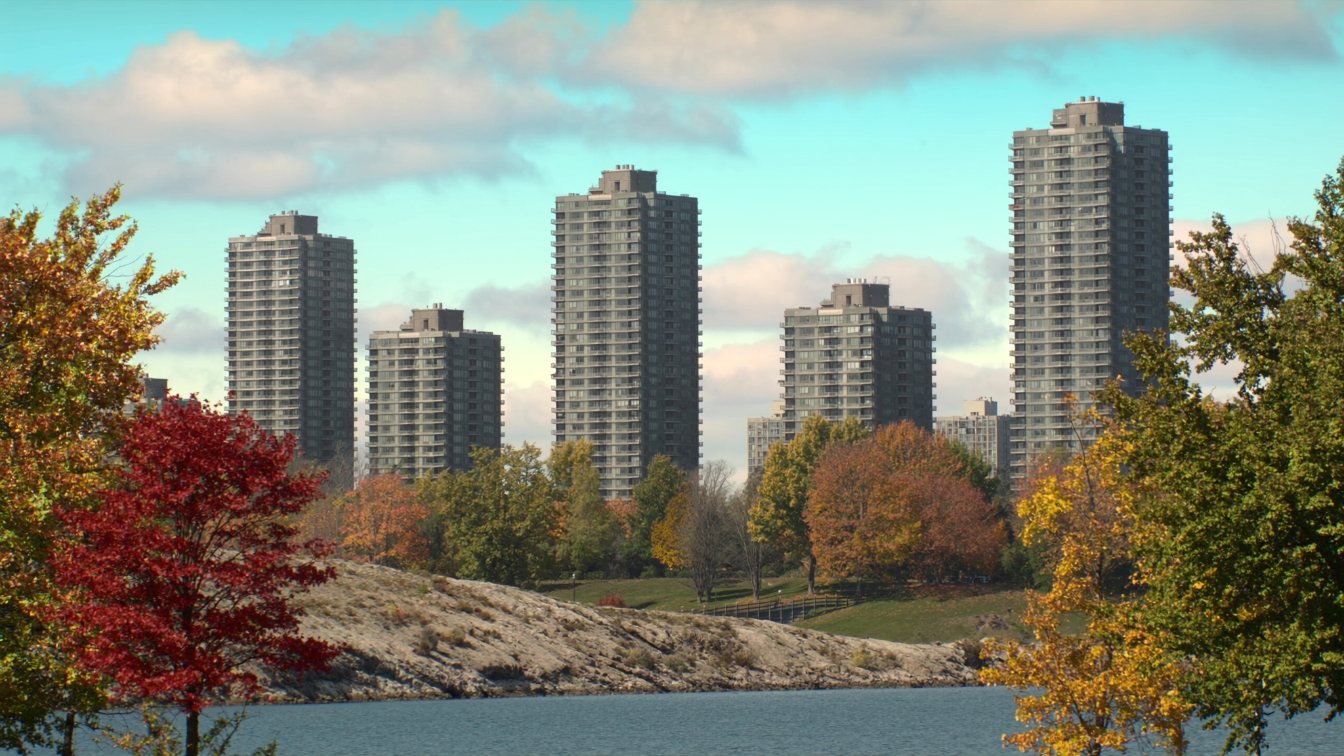
In August 2026 TRREB recorded 21 condo apartment sales in Brampton at an average of $434,457 and a median of $425,000. Units sold for 94 percent of their final list price on average, after 71 days on the market. There were 202 active listings, which works out to about 9.6 months of supply at August’s pace, and 81 new listings, a sales-to-new-listings ratio of about 26 percent. That is a clear buyer’s market and a slower one than Mississauga, Peel Region as a whole, Toronto or the TRREB average. Your unit will sit above or below the $425,000 median depending on size, layout, floor, parking, the building’s age and fees, and where in Brampton it is. In this market the price you list at matters more than anything else you do.
Brampton condo prices, August 2026
| Condo apartments, August 2026 | Brampton | Mississauga | Peel Region | City of Toronto | All TRREB areas |
|---|---|---|---|---|---|
| Sales | 21 | 109 | 130 | 885 | 1,330 |
| Average price | $434,457 | $495,052 | $485,264 | $651,648 | $617,593 |
| Median price | $425,000 | $500,000 | $481,500 | $550,000 | $530,000 |
| New listings | 81 | 357 | 443 | 2,303 | 3,579 |
| Active listings | 202 | 849 | 1,058 | 4,938 | 7,882 |
| Sale to list price | 94% | 97% | 96% | 96% | 96% |
| Avg. days on market | 71 | 45 | 50 | 39 | 41 |
| Months of inventory (my arithmetic) | 9.6 | 7.8 | 8.1 | 5.6 | 5.9 |
| Sales-to-new-listings (my arithmetic) | 26% | 31% | 29% | 38% | 37% |
Source: TRREB Market Watch, August 2026, condominium apartment tables. The last two rows are my own arithmetic: active listings divided by sales, and sales divided by new listings. This is one month of data, and 21 sales is a modest sample, so treat the Brampton figures as a snapshot rather than a trend. The average was only $9,457 above the median, which tells you there were no unusually expensive sales pulling the numbers around; the median is a fair anchor for a typical Brampton unit.
How Brampton compares with Mississauga and the rest of Peel
Peel Region’s condo figures are mostly Mississauga’s. Of Peel’s 130 condo apartment sales in August, 109 were in Mississauga and 21 in Brampton. Brampton is mainly a city of houses, so its monthly condo numbers swing more than Mississauga’s.
On price, Brampton’s median of $425,000 was $75,000 below Mississauga’s $500,000 and $56,500 below Peel’s $481,500. That gap is the heart of Brampton’s appeal to buyers: it is one of the more affordable ways into a condo in the western GTA. It also defines your competition. A buyer with a budget in the mid-$400,000s can look at your unit, at older or smaller units just across the border in Mississauga, and at units in Etobicoke’s northern districts. In Toronto’s W10 district (Rexdale, Thistletown, West Humber-Clairville, Mount Olive-Silverstone-Jamestown), the August median was $413,000 on just 10 sales. If you want to see how those neighbouring markets read, I have written up what a condo is worth in Mississauga and what a condo is worth in Etobicoke from the same TRREB tables.
Brampton was also slower than its neighbours on every measure of pace in August, and buyers who shop across the border negotiate accordingly.
What 9.6 months of inventory, 94 percent and 71 days mean for you
- About 9.6 months of inventory. At August’s rate of 21 sales, the 202 units for sale would take more than nine months to clear if no one else listed. Markets are usually described as balanced at around four to six months; Brampton was well above that.
- A sales-to-new-listings ratio of about 26 percent. Roughly one sale for every four new listings. New supply was arriving faster than buyers absorbed it.
- 94 percent of list price. This is the average across sales, measured against the final list price, so it already includes any price reductions made before the sale. As a purely illustrative example, 6 percent off a $425,000 list price is $25,500.
- 71 days on market. That is 32 days longer than the City of Toronto’s 39 and 26 days longer than Mississauga’s 45. Every extra month means another month of mortgage payments, maintenance fees and property tax, all out of your net proceeds.
None of this means Brampton condos do not sell. Twenty-one did in August. It means the ones that sell are the ones priced where buyers already agree with the number.
How to price honestly in a slow market
When supply is high, the market punishes optimism and rewards precision. This is the approach I use with Brampton sellers.
- Price from sold data, not from active listings. Asking prices tell you what other sellers hope for. With nine-plus months of supply, many of those listings will not sell at their asking price, and some will not sell at all. The three most recent sales of your layout, in your building or the most similar nearby buildings, are the real evidence.
- Know the competition. Your buyer is also viewing a handful of other units in the same price band. Be honest about whether yours is the best value among them.
- Respect the first three weeks. A new listing gets the most attention in its first two to three weeks, when saved-search alerts go out and agents with waiting buyers book showings. Starting high to test the market wastes that window.
- Set a review date before you list. Agree in advance what will happen if there are showings but no offers after a set period.
If you have already been on the market for a while, why a condo is not selling walks through the usual reasons, and most of them apply in Brampton as much as in Toronto.
What moves your Brampton unit above or below the median
- Building age, size and fees. Brampton has two very different kinds of condo stock. Older towers, many from the 1970s through the 1990s, particularly around Bramalea, tend to have large units, including generous two- and three-bedroom layouts, and higher monthly fees that often cover some utilities. Newer towers and mid-rise buildings have smaller, more efficient units and lower fees. A big older unit can offer more space per dollar; a newer unit usually appeals more to investors and first-time buyers who want lower carrying costs.
- Size and layout. A true two-bedroom, two-bathroom unit trades well above a one-bedroom, and a split layout with bedrooms on opposite sides suits roommates and families. A den that can close off as a small bedroom adds appeal.
- Location within Brampton. Downtown Brampton near the GO station, the Bramalea City Centre area, the Mount Pleasant area in the northwest, and the south end near the Mississauga border along Hurontario Street and Steeles Avenue each draw different buyers.
- Transit. Walking distance to Brampton, Bramalea or Mount Pleasant GO stations on the Kitchener line, or to a Züm rapid bus route, widens your buyer pool to commuters and to investors who rent to them.
- Parking and locker. Most Brampton buyers drive. A unit without parking has a noticeably smaller pool, and a second spot, where the building allows it, is a real selling point.
- Floor, view and exposure. Higher floors with open views sell for more; units facing a highway, a loading area or an active construction site sell for less.
- Condition. In a buyer’s market, a unit that needs work competes with move-in-ready units at the same price and loses.
- The corporation. The status certificate, the reserve fund and any special assessment all show up in what buyers are willing to offer.
Fees, the reserve fund and the older-building question
Maintenance fees matter more in Brampton than in many markets because so much of the older stock carries higher fees, and because Brampton’s buyers are often stretching to qualify. When a lender tests affordability, CMHC’s guidelines count 50 percent of the condo fee in the buyer’s debt ratios, against limits of 39 percent for gross debt service and 44 percent for total debt service. A higher fee reduces the mortgage a buyer qualifies for, which reduces what they can offer. That does not make a high-fee unit unsellable, but the fee has to be explained: what it includes and what the corporation has done with it. Read do high maintenance fees lower my condo value for the fuller picture.
Buyers and their lawyers will also read the status certificate. The corporation must provide it within 10 days of a request, for a fee of up to $100, and it discloses the reserve fund balance, any special assessment and any known issues. Ontario condominium corporations must update their reserve fund study at least every three years. In an older building, a healthy reserve fund reassures buyers; a special assessment will come up in negotiation. If that applies to you, see whether a special assessment lowers your condo value. Order the status certificate early so there are no surprises after an offer arrives.
The land transfer tax point
Brampton has no municipal land transfer tax; Toronto does. At $425,000, the Brampton median, a buyer pays $4,975 in Ontario land transfer tax (my arithmetic from the provincial brackets). The same purchase in Toronto would carry the City’s tax on top, another $4,975, for $9,950 in total. For a buyer weighing your unit against one in north Etobicoke, that is close to $5,000 of cash at closing they keep. It is worth pointing out in your listing.
How to get an accurate number for your unit
The city-wide median is a starting line, not your price. To get to your number:
- Run the estimator below. It uses your building, layout, size and features to give you a range in about a minute, before you speak to anyone.
- Get a broker price opinion. I look at the most recent sales of the same layout in your building, or in the two or three most similar buildings nearby, adjust for floor, view, parking and condition, and check the active listings you would be competing with. With only 21 sales across the city in a month, building-level evidence carries most of the weight. If your building has had no recent sales, how to price a condo when nothing in your building has sold explains how to work around it.
- Check what you will actually walk away with. In a slower market, your net matters more than the headline price.
Two tools help here: the AI condo value estimator below gives you a range in about a minute, and the net proceeds calculator turns any price into what actually lands in your account.
Sell now, wait, or rent it out?
I cannot tell you where prices will be next year, and one month of data cannot show a trend. What the August figures do show is plenty of choice for buyers, and more supply keeps coming across the GTA: Urbanation counted 4,295 completed, unsold new condos in the Greater Toronto and Hamilton Area in the first quarter of 2026. If you need to sell, pricing correctly from the start is the single best protection you have. If you do not need to, should I sell or rent out my condo walks through the numbers for holding. Either way, if you would like me to go through the recent sales that set the price for your Brampton unit, book a call or phone me at 833-330-1925.
Free tool — AI condo value estimator
Condo Valuation
What’s your condo
worth today?
Three quick steps. Condos don’t price like houses — your floor, your view, and whether you own parking move the number more than anything else. This weighs all of them.
Reading recent condo sales…
Estimated market value
—
$0–$0
Most likely $0 · about $0 per square foot
What moved the number
Starting from what comparable units in your area sell for, here’s what your specifics added or subtracted.
Market context
—
—
Two units, same floor plan,
$90,000 apart.
That happens constantly in condos — one has the parking, the right exposure, or a board that keeps the reserve fund healthy. A model can’t see your status certificate. I can.
Frequently asked questions
How much is my condo worth in Brampton?
In August 2026 Brampton condo apartments sold at a median of $425,000 and an average of $434,457 across 21 sales, according to TRREB’s Market Watch. Your unit can sit well above or below that depending on size, layout, floor, parking, the building’s fees and location. The most reliable guide is the most recent sales of your layout in your building.
How much is a 1 bedroom condo worth in Brampton?
TRREB’s monthly table does not split condo prices by bedroom count, so there is no official one-bedroom figure. One-bedroom units generally sell below the $425,000 August median for all condo apartments, and two-bedroom units above it, but the recent sales of one-bedroom units in your own building are the number to trust.
Are Brampton condo prices going down?
One month of data cannot show a trend. What August 2026 does show is a slow market: about 9.6 months of inventory, units selling at 94 percent of list price on average, and 71 days on market. Sellers who price above recent sales tend to reduce later.
How long does it take to sell a condo in Brampton?
Condo apartments that sold in August 2026 took an average of 71 days, compared with 45 in Mississauga, 39 in the City of Toronto and 41 across all TRREB areas.
Is now a good time to sell my condo in Brampton?
It is a buyer’s market, so the timing matters less than the price. If you need to sell, list at a price supported by recent sales of your layout, prepare the unit well and order the status certificate early. If you do not need to sell, compare selling with holding before deciding.
Is there a land transfer tax in Brampton?
Only Ontario’s. Brampton has no municipal land transfer tax, so a buyer of a $425,000 condo pays $4,975 in total, against $9,950 for the same price in Toronto.
Sources
- TRREB — Market Watch, August 2026 — condominium apartment tables by region and municipality
- CMHC — Calculating GDS / TDS — 50% of condominium fees counted; 39% / 44% limits
- Condominium Authority of Ontario — Status certificates — 10 days, up to $100, Condominium Act s. 76
- Condominium Authority of Ontario — Reserve funds and reserve fund studies — studies at least every three years
- Condominium Authority of Ontario — Special assessments
- Urbanation — Standing condo inventory hits record high in Q1 — 4,295 completed, unsold new condos, Q1 2026
Related reading
- How much is my condo worth in Mississauga?
- How much is my condo worth in Etobicoke?
- How much is my condo worth in Milton?
- Why is my condo not selling?
- Do high maintenance fees lower my condo value?
- How much will I walk away with when I sell?
- Brampton home values
About the author — Jatin Dua, Toronto and GTA real estate broker
I am Jatin Dua, Broker of Record and co-founder of RE/MAX Quantum Realty Inc., Brokerage, Unit 101, 799 The Queensway, Etobicoke. I work with buyers and sellers across Toronto and the GTA, and I have helped more than 100 families sell their condos. Four-plus years of active GTA transactions and over $100 million in sales volume. Every market figure here comes from TRREB’s published tables and every rule from the regulator or the legislation, so you can check all of it without asking me.
Reach me at connect@jatindua.com or 833-330-1925, or book a call.