
Published 18 October 2026 · By Jatin Dua, Broker of Record, RE/MAX Quantum Realty
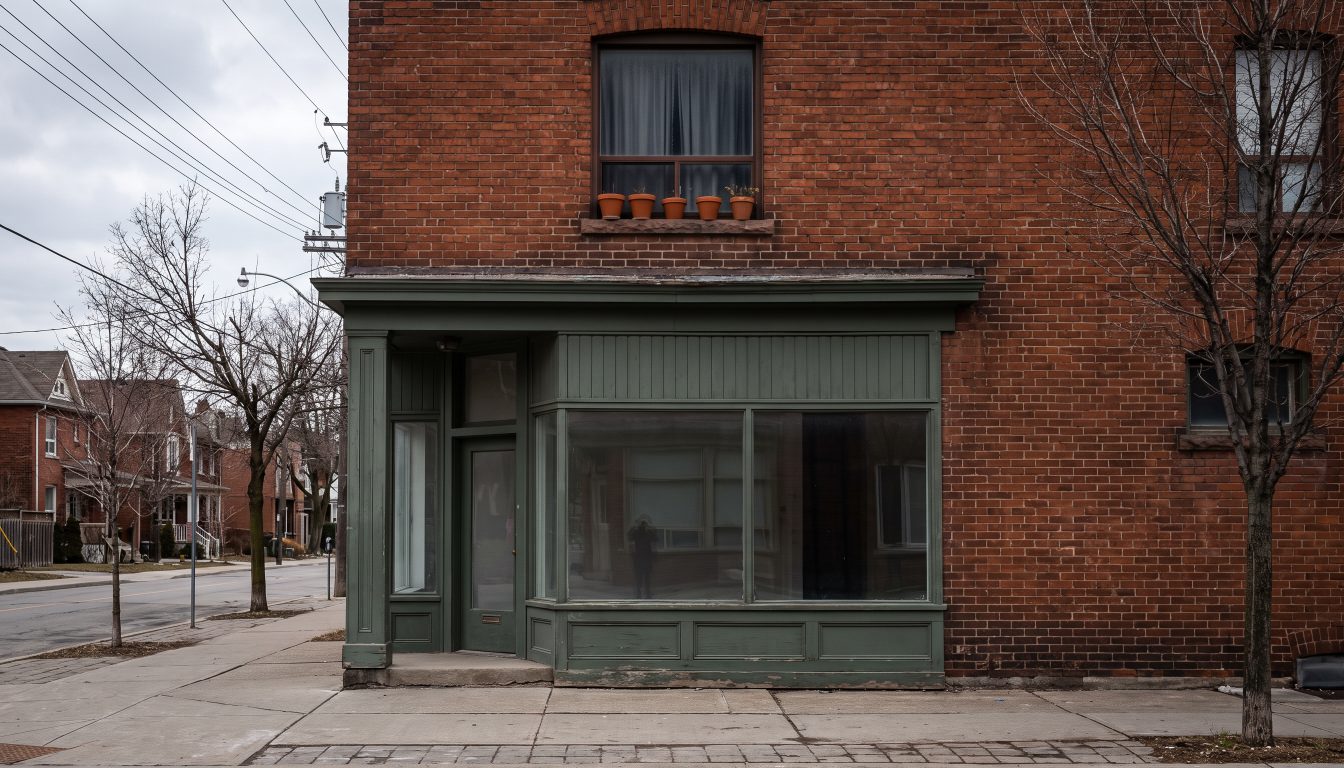
Toronto Zoning By-law 569-2013 has no defined “live-work unit”; a live/work property is legally either a dwelling unit with a home occupation (Section 150.5) or a mixed use building with a home and a permitted commercial use, most often in a CR zone. Since By-law 1508-2025 (enacted December 17, 2025), a home occupation can have two employees plus the operator, use up to the lesser of 25% of the unit or 100 m², and receive clients for an office, studio, service shop, custom workshop or education use. In Etobicoke, true shop-below, home-above stock sits mainly on The Queensway and Lake Shore Blvd W.
Want me to watch for storefront-plus-home buildings and work-friendly units? Tell me what your business needs and I will send matches as they come up.
Is there a “live-work unit” in Toronto’s zoning by-law?
This is the part most listings get wrong. I read Chapter 800 (Definitions) of Toronto Zoning By-law 569-2013 line by line, in the office consolidation that includes city-wide amendments up to April 30, 2026. There is no defined term “live-work unit” or “live/work unit” in Section 800.50. The alphabetical list jumps from “Lawfully Existing” and “Laneway Suite” straight to “Loading Space” and “Lot”.
What the by-law does define are three building blocks that, together, make a live/work arrangement legal or not:
- Dwelling Unit, 800.50(220): living accommodation for a single housekeeping unit with its own kitchen and bathroom facilities.
- Mixed Use Building, 800.50(475): “a building with a dwelling unit and a non-residential use.” A residential building is not a mixed use building.
- Home Occupation, 800.50(345), as replaced by By-law 1508-2025: “a business use within a dwelling unit, living accommodation or ancillary building or structure, where the dwelling unit or living accommodation is the principal residence of the business operator.”
So in zoning terms, a Toronto “live/work” property is one of two things: a dwelling unit with a home occupation in it, or a mixed use building where a commercial use and a dwelling unit sit in the same building (usually a shop below, living above). The words “live/work” on a listing are marketing language, not a zoning category.
Where does the term “live/work unit” actually come from?
The defined term lives in the building code, not the zoning by-law. According to the Ontario Building Officials Association’s note on the 2024 Ontario Building Code, Division A, Article 1.4.1.2 defines a live/work unit as a dwelling unit of not more than 200 m² that contains a subsidiary business and personal services occupancy (Group D) or a subsidiary low-hazard industrial occupancy (Group F1), used and operated by one or more persons of a single household.
That matters for construction and renovation: the code treats the whole unit as residential (Group C), so the barrier-free and commercial plumbing requirements for the work area do not apply in the same way they would to a stand-alone store. It does not, by itself, tell you whether a business is allowed there. Zoning answers that question. You need both to line up.
Which zones allow living and working in the same unit?
Here is how the main zones you will find in Etobicoke treat it, based on the current consolidation of By-law 569-2013.
| Zone | Dwelling units allowed? | Business uses allowed (examples) | Home occupation? | What it means for live/work |
|---|---|---|---|---|
| CR (Commercial Residential), Ch. 40.10 | Yes, in an apartment building, mixed use building or townhouse where the zone label’s “r” value is above 0.0 (townhouses not in Policy Areas 3 or 4) | Office, artist studio, personal service shop, medical office, wellness centre, production studio, financial institution; retail store, service shop, custom workshop and eating establishments with conditions | Yes, condition (45) points to Section 150.5 | The main zone for true shop-below, home-above buildings on main streets like Lake Shore Blvd W and The Queensway |
| CRE (Commercial Residential Employment), Ch. 50.10 | Yes, in permitted building types | Office, artist studio, custom workshop, service shop, retail service, production studio, software development | Not listed in the CRE “r” uses I reviewed; confirm per site | Allows more workshop-type uses, with some limits on labs and certain manufacturing in buildings with dwelling units |
| Residential Zone Category (R, RD, RS, RT, RM), Ch. 10 | Yes | On lots abutting a major street: small commercial uses (office, studio, personal service shop, retail store and others) up to 150 m², first storey only, with an entrance within 6.0 m of the street | Yes, Section 150.5, plus the barber/hairdresser and health-professional exceptions | Most houses: home occupation only. Major-street lots: a small ground-floor business plus a home is now possible |
| RA (Residential Apartment), Ch. 15.10 | Yes | Limited (retail store with conditions) | Yes, Section 150.5 | Condo and rental towers: home occupation rules apply, subject to the condo declaration |
Two things to check on any specific lot. First, look at the City’s Zoning By-law 569-2013 page and interactive map for the zone label. Second, look for a site-specific exception in Chapter 900. The City notes that exceptions can add uses or “prevail over” the standard rules, and many newer Etobicoke mid-rises were approved through their own amendments.
What changed with the home occupation amendment?
City Council adopted the home occupations amendment (Planning and Housing Committee item PH25.3) on November 12 and 13, 2025, and enacted it as By-law 1508-2025 on December 17, 2025. The current rules in Section 150.5 now read like this:
- Staff: two employees may work in the dwelling unit in addition to the business operator (150.5.20.1(6)).
- Clients on site: clients may attend for an education use, artist studio, office, service shop or custom workshop. Other home occupations still cannot have clients attend for consultations, services or picking up goods (150.5.20.1(2)).
- Size: the business may use the lesser of 25 percent of the unit’s interior floor area or 100 m² (150.5.40.40(1)).
- Ancillary buildings: a home occupation can now run from a garage or other ancillary building, and a lawful indoor parking space can be converted to business space without replacing the parking (150.5.80.1(1)).
- Music and dance lessons: only in a detached house or a detached ancillary building (150.5.20.1(4)).
- No warehouse: the premises cannot operate as a distribution warehouse (150.5.20.1(9)).
- Principal residence: the definition was tightened so the unit must be the principal residence of the business operator.
What is permitted and what is prohibited as a home occupation?
Section 150.5 sets out what a home occupation may not do, wherever it is located:
- Sell, rent or lease physical goods directly from the dwelling unit.
- Be an animal shelter or kennel.
- Be a vehicle repair shop, vehicle service shop or vehicle washing establishment.
- Be a manufacturing use.
- Have outdoor activities, services, display or open storage.
- Operate alongside a group home or residential care home.
- Involve any exterior alteration to the building (150.5.40.1(1)).
Two exceptions apply only in the Residential Zone Category (R, RD, RS, RT, RM), not in CR or RA zones:
- A personal service shop limited to barber, hairdresser, beautician, dressmaker, seamstress or tailor (150.5.20.1(7)).
- An office or medical office for a regulated health professional, with one employee. In an apartment building in that category, the unit must be on the first floor or in the basement (150.5.20.1(8) and 150.5.40.1(2)).
In practice, consultants, designers, bookkeepers, tutors, photographers editing at home, and online businesses that ship elsewhere all fit comfortably. A storefront retailer, a mechanic or a busy clinic does not, unless the property’s zoning allows a stand-alone commercial use.
Watch out
A listing that says “live/work” proves nothing on its own. One Queensway listing I reviewed said a permit was approved for “a live/work space, or two residential units”, and in the same breath said it was “subject to applicable zoning and required municipal approvals.” Before you firm up, get the zone label, any Chapter 900 exception, the building permit history, and (for a condo) the declaration. If the business you plan to run is not allowed, you are buying a home, not a work space.
Live/work unit vs home occupation vs ground-floor retail condo: what is the difference?
Buyers lump these together. They are three different products, with different rules and different buyers at resale.
| Home occupation | Live/work (mixed use) | Ground-floor retail condo unit | |
|---|---|---|---|
| Zoning basis | Section 150.5 inside a dwelling unit | Mixed use building with a dwelling unit and a permitted commercial use (usually CR) | A non-residential unit in a mixed use building; no dwelling |
| Who must live there | The business operator, as their principal residence | Anyone; the shop and home can be used by different people | No one; you cannot legally live in it |
| Business size | Lesser of 25% of the unit or 100 m² | Set by zone limits for the use | The whole unit |
| Walk-in retail | No sale of goods from the unit | Yes, if the zone permits a retail store | Yes, if the zone and declaration permit it |
| Signage | Small, unlit wall sign in residential sign districts | Commercial sign rules for the district | Commercial sign rules, plus condo rules |
| Typical HST on resale | Usually exempt as used housing | Commercial part may be taxable | Generally taxable |
| Financing | Residential | Often reviewed as mixed use or commercial | Commercial |
Where are the live/work properties in Etobicoke?
Most of Etobicoke’s live/work stock is not in condo towers. It is in older two- and three-storey buildings with a storefront at grade and an apartment above, on the commercial main streets: The Queensway in Stonegate-Queensway, Lake Shore Blvd W through Mimico, New Toronto and Long Branch, and parts of Bloor St W and Dundas St W. The table below lists only properties where a public listing I fetched in October 2026 described a combined commercial and residential setup or used “live/work” language. Listings change fast, so treat this as a map of where the stock is, not a list of what is available today.
| Property | Area | What the listing describes | Best for |
|---|---|---|---|
| 960A The Queensway | Stonegate-Queensway, near Islington Ave | Described as a “Live/Work freehold townhouse”: main-floor workspace with its own entrance (set up as a hair salon), a residential suite above and a lower-level suite | An owner-operator with a client-facing service business |
| 621B&C The Queensway | Stonegate-Queensway | Commercial storefront with a 3-bedroom apartment above; listing mentions a permit for a live/work space or two residential units, subject to zoning and approvals | A buyer who wants a storefront and rental income |
| 623–623A The Queensway | Stonegate-Queensway | Mixed-use commercial/residential: main-floor retail storefront, 3-bedroom unit on the upper levels, rear laneway parking | An end-user who opens a shop and lives upstairs |
| 708 The Queensway | Stonegate-Queensway | Two-storey brick commercial-residential building with two street-front commercial units and a self-contained 3-bedroom apartment | Investors, or an owner who occupies one storefront |
| 3369 Lake Shore Blvd W | Long Branch | Listing states “Zoned CR”: main-floor retail space with two self-contained two-bedroom apartments above, described as offering “live/work flexibility” | A retail or service operator who wants income above |
| 1494 Islington Ave (with 1 Rathburn Rd) | Princess-Rosethorn | Marketed as a “rare live/work opportunity”: a large house plus about 1,900 sq ft of separately addressed commercial space | A professional practice with a family home on the same lot |
Along Lake Shore, I also checked listings in several newer condo townhouse developments, including Birmingham (3058–3076 Lake Shore Blvd W), Minto’s Westshore (3526 and 3600 Lake Shore Blvd W), 29th Street Lofts (3400 Lake Shore Blvd W) and 2230 Lake Shore Blvd W. None of the listings I reviewed described units as live/work. They are residential condo townhouses, where any business would fall under home occupation rules and the condo’s declaration. If a builder sells “work-live” towns in the future, ask for the zoning by-law amendment that permits the commercial use.
For the wider corridor, my reference guide to The Queensway covers the main-street blocks, and this New Toronto and Long Branch guide covers the Lake Shore strip.
Can I run a business from my Etobicoke condo?
Zoning is only the first filter. A condo corporation’s declaration can restrict how units are used, and the Condominium Act, 1998 lets owners enforce it. Many residential condo declarations in Etobicoke say units are to be used only as private single-family residences, sometimes with a carve-out for a quiet home office that has no client traffic, no signage and no employees on site. That can be stricter than Section 150.5.
Before you buy, read the declaration, by-laws and rules in the status certificate package. My notes on reading a status certificate like a buyer’s lawyer show where use restrictions usually sit. In mixed use buildings, the commercial units often have their own clauses on hours, garbage, deliveries and signs.
My take
Most people who ask me for “live/work” in Etobicoke really need one of two things. If you are a consultant or online seller, a regular condo or house with a home office already works, and the 2025 amendment made it easier to have two staff and some clients. If you need walk-in customers, look at storefront-plus-apartment buildings on The Queensway and Lake Shore Blvd W, check that the zone label is CR or that a site exception covers your use, and budget for commercial financing. I help buyers, sellers and landlords with both types across Toronto and the GTA, and the zoning check always comes first.
How do lenders and insurers treat live/work property?
From the deals I have worked on, lenders look at how the property is actually used, not what the listing calls it. A house or condo with a home office is a normal residential mortgage. A building with a storefront and apartment above is often reviewed as mixed use, and once the commercial share is large or the business is the main tenant, many lenders move it to their commercial desk. Expect larger down payments, shorter terms and an appraisal that values the rent from both parts.
Insurance follows the same logic. A standard home or condo unit-owner policy is written for residential use, so tell your insurer about a home business, staff and client visits in writing. A storefront needs a commercial property and liability policy. If you own a condo unit, also read how the corporation’s deductible can be charged back to you. My guide to condo insurance and the standard unit walks through it.
What about HST and business-use-of-home deductions?
On GST/HST, the Canada Revenue Agency’s guide RC4022 says the sale of housing last used by an individual as a place of residence is exempt, while sales of commercial real property are taxable. In a mixed use building, that can mean the commercial portion is taxable on sale even when the apartment is not. Have your lawyer and accountant settle the allocation before the agreement is signed, not after.
For income tax, the CRA allows business-use-of-home expenses if the space is your principal place of business, or if you use it only to earn business income and regularly meet clients there. The CRA also warns that if you claim capital cost allowance on the business part of your home, capital gain and recapture rules apply when you sell. Ask your accountant before you claim it.
What signage is allowed?
Signs are controlled by the Toronto Municipal Code, Chapter 694, Signs, General, not the zoning by-law. In an R (Residential) sign district, Section 694-21 A(1) allows one wall sign identifying a permitted home occupation, no larger than 0.3 m², no higher than 3.0 m, one sign face, and not illuminated. That is roughly a nameplate beside the door. A storefront in a commercial sign district can have much larger first-party signs, but each sign still needs a permit unless it is exempt, and a condo may add its own limits.
How do I check a property before I make an offer?
- Get the zone label from the City’s interactive map and read the matching chapter (40.10 for CR, 10.x for residential zones).
- Search Chapter 900 for a site-specific exception on that address.
- Match your business to a defined use in Chapter 800 (office, personal service shop, retail store and so on).
- If it will be a home occupation, check it against Section 150.5: who lives there, staff, clients, floor area.
- For a storefront, confirm the commercial unit’s permitted use and whether a change of use permit is needed. My guide to change of use permits covers the cost and timing.
- For a condo, read the declaration and rules in the status certificate.
- Line up mixed-use financing and insurance quotes before the condition date.
Condo Valuation
What’s your condo
worth today?
Three quick steps. Condos don’t price like houses — your floor, your view, and whether you own parking move the number more than anything else. This weighs all of them.
Reading recent condo sales…
Estimated market value
—
$0–$0
Most likely $0 · about $0 per square foot
What moved the number
Starting from what comparable units in your area sell for, here’s what your specifics added or subtracted.
Market context
—
—
Two units, same floor plan,
$90,000 apart.
That happens constantly in condos — one has the parking, the right exposure, or a board that keeps the reserve fund healthy. A model can’t see your status certificate. I can.
Send me live/work units in Etobicoke
Tell me the business you plan to run and I will send properties where the zoning and building actually fit it.
I will come back to you personally, usually the same day. If it is urgent, call 833-330-1925.
Frequently asked questions
Does Toronto’s zoning by-law define a live-work unit?
No. Chapter 800 of Zoning By-law 569-2013 defines a dwelling unit, a mixed use building and a home occupation, but not a live-work unit. The term “live/work unit” is defined in the Ontario Building Code as a dwelling unit of up to 200 m² with a subsidiary business occupancy.
How many employees can a Toronto home occupation have in 2026?
Two employees may work in the dwelling unit in addition to the business operator, under regulation 150.5.20.1(6) as amended by By-law 1508-2025. Health professionals using the Residential Zone Category exception are limited to one employee.
Can clients visit my home business in Toronto?
Yes, if the home occupation is an office, artist studio, service shop, custom workshop or education use. Other home occupations still cannot have clients attend for consultations, services or picking up goods.
How big can a home occupation be?
The business may use the lesser of 25 percent of the unit’s interior floor area or 100 square metres, including any ancillary building the unit exclusively occupies. A lawful indoor parking space can now be converted to business space.
Can I open a shop in my Etobicoke condo unit?
Usually not. A home occupation cannot sell physical goods from the unit, and most residential condo declarations restrict units to residential use. For walk-in retail you need a commercial unit or a storefront in a mixed use building where the zoning permits a retail store.
Is HST charged when I buy a live/work property?
The resale of housing last used as a residence is generally exempt, but the commercial part of a mixed use building can be taxable. Have your lawyer and accountant split the price and confirm the HST position before you sign.
Where are live/work properties in Etobicoke?
Mostly in older storefront-plus-apartment buildings on The Queensway in Stonegate-Queensway and on Lake Shore Blvd W in Mimico, New Toronto and Long Branch. Newer Lake Shore condo townhouses I checked are residential only. See my Queensway guide for the corridor.
Sources
- City of Toronto — Zoning By-law 569-2013, Chapter 800 Definitions — Definitions of dwelling unit, mixed use building and home occupation; confirms no live-work unit definition
- City of Toronto — Zoning By-law 569-2013, Chapter 150.5 Home Occupation — Current home occupation rules: prohibited uses, employees, clients, floor area, parking
- City of Toronto — By-law 1508-2025 (home occupation permissions) — Amendment adopted by Council November 12-13, 2025 and enacted December 17, 2025
- City of Toronto — Zoning By-law 569-2013, Chapter 40.10 CR Zone — CR permitted uses, building types for dwelling units and home occupation condition
- City of Toronto — Zoning By-law 569-2013, Chapter 10.10 R Zone — Commercial uses on major streets in residential zones (150 m2, first storey)
- City of Toronto — Zoning By-law 569-2013, Chapter 50.10 CRE Zone — CRE permitted uses and limits on uses in buildings with dwelling units
- Ontario Building Officials Association — Barrier-free and plumbing requirements for live/work units (2024 OBC) — Building Code definition of live/work unit (200 m2, Group D or F1 subsidiary occupancy)
- City of Toronto — Municipal Code Chapter 694, Signs, General — Section 694-21 A(1) home occupation wall sign limits
- Canada Revenue Agency — Business-use-of-home expenses — Conditions for claiming home business expenses and CCA warning
- KeyHomes — Live Work Etobicoke listings — Public listing descriptions for the Etobicoke live/work and mixed-use properties in the table (October 2026)
Related reading
- The Queensway, Etobicoke: the reference guide
- Change of use permits for commercial tenants
- Reading a status certificate like a buyer’s lawyer
- Condo insurance: the standard unit and the deductible
- What no one tells you about New Toronto and Long Branch
About the author — Jatin Dua, Toronto and GTA real estate broker
I am Jatin Dua, Broker of Record and co-founder of RE/MAX Quantum Realty Inc., Brokerage, Unit 101, 799 The Queensway, Toronto. I work with buyers, sellers, investors and business owners across Toronto and the GTA. Four-plus years of active GTA transactions, over $100 million in sales volume and 100+ families helped sell. Every rule and fact here is linked to a source below, so you can check it without asking me.
Reach me at [email protected] or 833-330-1925, or book a call.