

Published 29 September 2026 · By Jatin Dua, Broker of Record, RE/MAX Quantum Realty
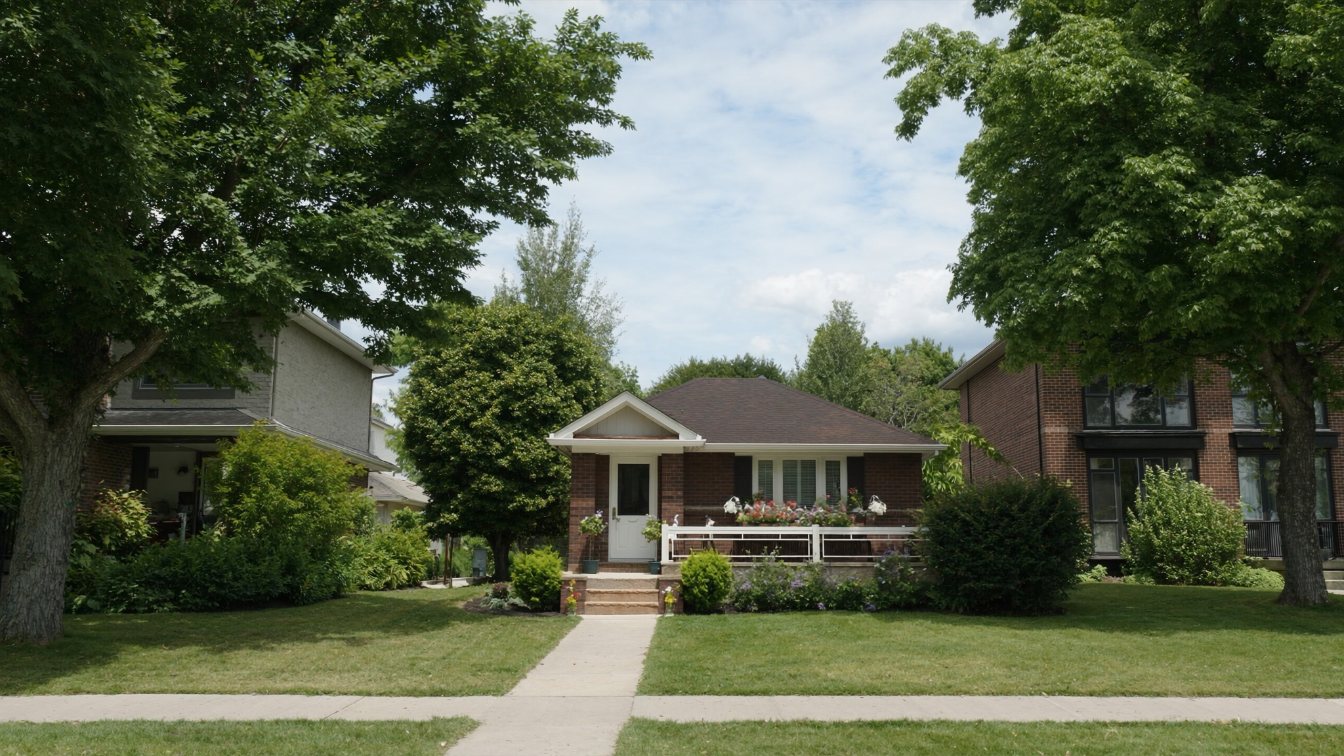
A teardown is a house bought for its land, so you are paying for what the zoning lets you build, not the house. Before you offer, confirm the zone and its height, setback and coverage rules, any trees 30 centimetres or more in diameter (they need a City permit to injure or remove), heritage status and ravine or conservation limits. Toronto requires a residential demolition permit with the replacement building’s paperwork. Because the property still contains a house on closing, land transfer tax is charged at house rates: on a $2,500,000 teardown the Ontario and Toronto taxes total $97,950, against $92,950 for a vacant lot at the same price (my arithmetic). Replacing one house with one house usually adds no development charge thanks to redevelopment credits, but confirm in writing; replacing it with a fourplex is generally exempt under the City’s multiplex rules.
What you are really buying
When you buy a teardown, the old house is worth little or nothing to you. You are buying the lot, its zoning, its trees, its neighbours and the street’s finished home values. The seller, on the other hand, often prices from the house: the renovated bungalow down the street, the assessment, the memories. Closing that gap is most of the negotiation.
A builder prices a teardown backwards: the value of the new house the zoning allows, less design, demolition, construction, permits, charges, financing and profit. Building for yourself, you skip the profit line, which is why end users can sometimes outbid builders.
If the lot is vacant already, how to buy a vacant lot in the GTA covers the steps; much of the checklist is the same.
Step 1: read the zoning for the house you want
Toronto’s zoning by-law sets the permitted building type, height, setbacks, lot coverage and, for some building types, floor space index. The Province’s planning guide is clear that a building that does not comply with the zoning by-law will not get a permit. So before you offer, sketch the house you want against the zone standards.
- Height and storeys. Check the zone and the height overlay; new houses are often limited by both.
- Setbacks and depth. Side yards and the rear setback decide the footprint more than frontage does.
- Lot coverage and density. Coverage applies to all building types; floor space limits apply to detached houses in many zones.
- Exceptions. A site-specific exception can add or remove permissions for one property.
If your design needs relief, the Committee of Adjustment hears minor variances. In 2026 the Toronto fee is $5,011.08 for a residential dwelling of three units or less, and $2,228.98 for additions or alterations to an existing one. A minor variance is heard at a public hearing and carries a 20-day appeal period, so build months, not weeks, into your timeline.
Step 2: trees, heritage and ravines
Three things stop more Toronto rebuilds than zoning does:
- Trees. Injuring or removing a tree 30 centimetres or more in diameter on private property needs a permit. A large healthy tree near the middle of the lot can set where the new house goes. Get an arborist’s opinion during your conditional period.
- Heritage. A designated property or a lot in a heritage conservation district adds a separate heritage approval. Our post on teardown or renovate a lakefront lot covers the heritage and shoreline side.
- Ravines and water. Lots near ravines, creeks and the lake can fall under the City’s ravine protection rules and conservation authority regulation. Under Ontario Regulation 41/24, development in a regulated area needs a conservation authority permit. See ravine lots in Toronto and conservation authority regulated land.
Bill 23 removed site plan control for residential projects of 10 or fewer units, but the regulations let municipalities keep it where any part of the parcel is within 120 metres of a wetland, lake or river, including creeks, or within 300 metres of an active heavy rail line. A rebuild near a ravine may still need site plan approval.
Step 3: the demolition permit and what it asks for
In Toronto, demolishing an existing house so a new one can be built on the same site is handled as a residential demolition permit with a replacement building. The City’s guide lists the paperwork:
- a survey or grading plan showing the existing house, property lines and lot area;
- the application to construct or demolish;
- an infill public notice declaration;
- the owner’s acknowledgement of demolition control conditions;
- a municipal road damage form, with a damage deposit for the street and sidewalk;
- designer information; and
- a tree declaration where trees could be damaged.
Because the permit assumes a replacement building, your design and zoning review need to be well advanced before the old house comes down. Budget for utility disconnections and, on older homes, hazardous material surveys.
Step 4: land transfer tax still counts the house
Ontario’s land transfer tax has an extra 2.5 percent bracket above $2 million that applies only when the land contains one or two single family residences. Toronto’s municipal tax follows the same rule and, since 1 April 2026, adds luxury brackets above $3 million for those properties. A teardown still contains a house on closing day, so you pay house rates even though you are about to knock it down.
| Price (illustrative) | Ontario tax, with a house | Toronto tax, with a house | Total with a house | Total if the same lot were vacant |
|---|---|---|---|---|
| $1,800,000 | $32,475 | $32,475 | $64,950 | $64,950 |
| $2,500,000 | $48,975 | $48,975 | $97,950 | $92,950 |
| $3,500,000 | $73,975 | $83,475 | $157,450 | $132,950 |
My arithmetic from the published brackets, before any first-time buyer refund. Below $2 million there is no difference. Above it, the house you plan to demolish costs you real money. Sellers sometimes offer to demolish before closing; that changes the tax, but it also shifts risk and permits onto the seller, so talk to your lawyer before you agree to it. Check any figure with the land transfer tax calculator.
Step 5: development charges and the redevelopment credit
Development charges are levied on new residential units. Toronto’s current schedule, effective 26 June 2025, is $137,846 for a single or semi-detached house under the non-rental rates, and for non-rental residential units the charge is now payable at occupancy rather than at permit, following Bill 17. Council removed the usual annual indexing for 2025 and 2026.
For a teardown, two rules usually help you:
- Redevelopment credits. The City’s overview says credits are available for redevelopment of land, so replacing one house with one new house generally nets out. Ask for the credit calculation in writing; timing rules can apply if the old house has been gone for a while.
- Additional units and multiplexes. Additional residential units in new and existing homes are exempt as prescribed by the Development Charges Act, and the City’s multiplex guide says most multiplexes of up to four units are exempt from development charges and from cash-in-lieu of parkland.
More on the numbers across the region in development charges in the GTA.
Step 6: one house, a house with suites, or a multiplex
This is the biggest decision on a Toronto teardown and it should be made before you offer, because it changes what the land is worth to you.
| Option | What the rules allow | Watch for |
|---|---|---|
| New detached house | Zone standards for height, setbacks, coverage and floor area | Minor variances for anything larger |
| House plus additional units | Provincial rules permit up to three units as of right on urban residential lots, such as a main house, a basement suite and a garden or laneway suite | Garden suite fire access, trees, separation from the main house |
| Multiplex | Four units city-wide in residential zones; six in Toronto and East York District and Ward 23 | Height caps, lot coverage, building code costs of more units |
See buying land to build a multiplex in Toronto and laneway suites in Toronto. Our five mistakes building a custom home in Toronto is worth reading before you hire a designer.
Step 7: conditions and pricing
For a teardown I usually recommend a conditional period covering a zoning review of your concept, an arborist’s tree report, a heritage and ravine check, a current survey and, on older lots, a look at drainage and soil. If the house has tenants, get legal advice before you firm up; demolition does not end a tenancy on its own.
For price, compare against recent teardown sales on nearby streets and against finished new-house sales, not against renovated houses. The estimator below gives a land-only range to start from.
The AI land value estimator below gives you a range for a lot or acreage in about a minute, from the same inputs a buyer’s appraiser starts with.
If you have a house in mind and want a second read on whether it is worth more as land, book a call or phone 833-330-1925.
Free tool — AI land value estimator
Land Valuation
What’s your land
worth today?
Three quick steps. Land doesn’t price like a house — what you’re allowed to build on it, how far along the approvals are, and whether services reach the lot line move the number more than anything else. This weighs all of them.
Reading recent land sales…
Estimated land value
—
$0–$0
Most likely $0 · about $0 per acre · $0 per buildable sq ft
What moved the number
Starting from what comparable land in your municipality trades for, here’s what your specifics added or subtracted.
What would raise it
Approvals are the biggest lever on land. Here is what each next step is worth on this parcel.
—
Development sites are listed at $1
for a reason.
Sellers let the market price them — and the market only pays for what it can see: the planning file, the servicing letter, the environmental reports. A model can’t read your file. I can, and I know which developers are buying right now.
Frequently asked questions
Do you pay land transfer tax on the house if you are going to tear it down?
Yes. Land transfer tax is based on what the property is on closing, and a teardown still contains a house. Above $2 million, Ontario’s extra 2.5 percent bracket and Toronto’s matching bracket apply only to land with one or two single family residences, so you pay house rates. On a $2,500,000 teardown in Toronto the two taxes total $97,950, against $92,950 for a vacant lot.
Do I need a permit to demolish a house in Toronto?
Yes. When you demolish a house to build a new one on the same site, Toronto handles it as a residential demolition permit with a replacement building. The City asks for a survey or grading plan, the application form, an infill public notice declaration, the owner’s acknowledgement of demolition control conditions, a road damage form with deposit, designer information and a tree declaration.
Do I pay development charges when I rebuild a house in Toronto?
Usually not for a one-for-one replacement, because the City gives credits for redevelopment of land. Toronto’s current rate for a new single or semi is $137,846, so confirm the credit in writing before you rely on it. Additional residential units and most multiplexes of up to four units are exempt under provincial rules and the City’s by-law.
Can I cut down a tree to build a new house in Toronto?
Not without a permit if the tree is 30 centimetres or more in diameter on private property. The City weighs the tree’s health and the design, and a healthy large tree can force the house to move. Get an arborist’s report during your conditional period so you know before you buy.
Is it cheaper to buy a teardown or a vacant lot in Toronto?
Vacant lots are rare in most Toronto neighbourhoods, so teardowns are usually the only option. A teardown carries demolition, utility disconnection and possibly hazardous material costs, and above $2 million it attracts higher land transfer tax. It often comes with services already at the lot line, which a vacant lot may not.
Sources
- City of Toronto — Residential demolition permit (with replacement building) — documents, demolition control conditions, road damage deposit
- Government of Ontario — Citizen's guide to land use planning: zoning by-laws — rezoning, minor variances, additional residential units, site plan control
- City of Toronto — Committee of Adjustment forms, submission guidelines and fees — fees effective 1 January 2026
- Environmental Registry of Ontario — Site plan for residential developments of 10 or fewer units (019-6822) — 120 m water and 300 m rail exceptions
- Hamilton Conservation Authority — Conservation Authorities Act and new O. Reg. 41/24 — in effect 1 April 2024
- Government of Ontario — Calculating land transfer tax — provincial brackets
- City of Toronto — Municipal Land Transfer Tax rates and fees — Toronto only
- City of Toronto — Development charge rates effective June 26, 2025 — the schedule the City lists as current
- City of Toronto — Development charges overview — exemptions, indexing freeze, payment timing
- City of Toronto — Non-rental residential development charges — payable at occupancy from 3 November 2025
- City of Toronto — Considerations when building multiplexes — zones, height, FSI, parking, DC and parkland exemptions
- City of Toronto — Garden suites — zones, emergency access, O. Reg. 462/24
Related reading
- Buying land to build a multiplex in Toronto
- Five mistakes building a custom home in Toronto
- Teardown or renovate a lakefront lot
- Development charges in the GTA
- Lot size, frontage and value in Toronto
- Ravine lots in Toronto
- Land transfer tax in Toronto
About the author — Jatin Dua, Toronto and GTA real estate broker
I am Jatin Dua, Broker of Record and co-founder of RE/MAX Quantum Realty Inc., Brokerage, Unit 101, 799 The Queensway, Toronto. I work with buyers and sellers across Toronto and the GTA and have helped more than 100 families sell. Four-plus years of active GTA transactions and over $100 million in sales volume. Every figure here comes from a published table, regulator or statute linked in the sources, so you can check all of it without asking me.
Reach me at connect@jatindua.com or 833-330-1925, or book a call.